This comparison examines the WEN BA3959 and RYOBI BS904G in real workshop conditions, focusing on performance, build quality, and usability to clarify key differences and practical tradeoffs.

Reviews You Can Trust
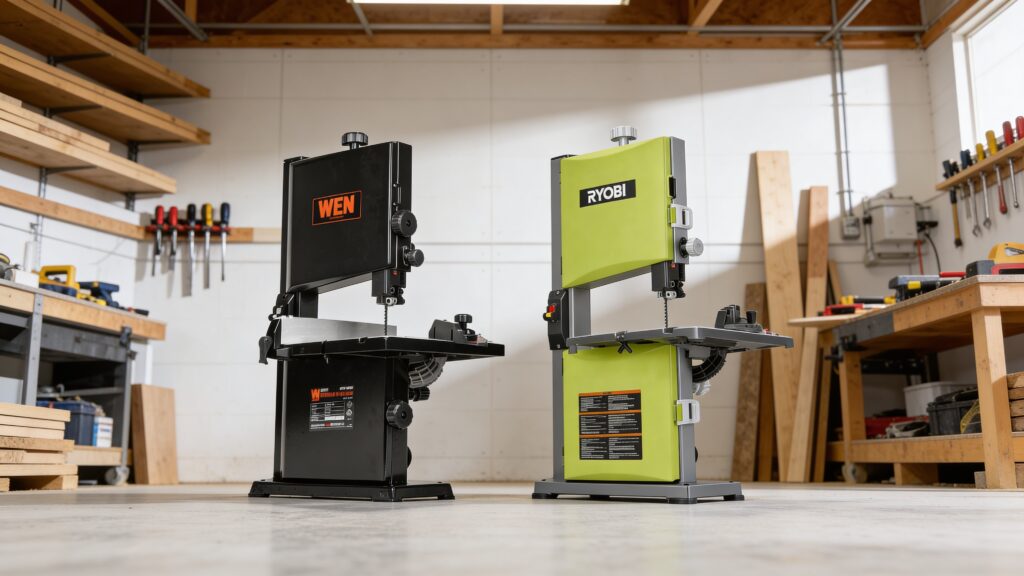
Head-to-head
WEN BA3959 vs RYOBI BS904G band saw: Which Band Saws Is Better?
A clean A/B view of what matters in a small-shop band saw: cutting capacity, table support, tracking confidence, ease of setup, footprint, and which tradeoffs make more sense for different kinds of everyday work.
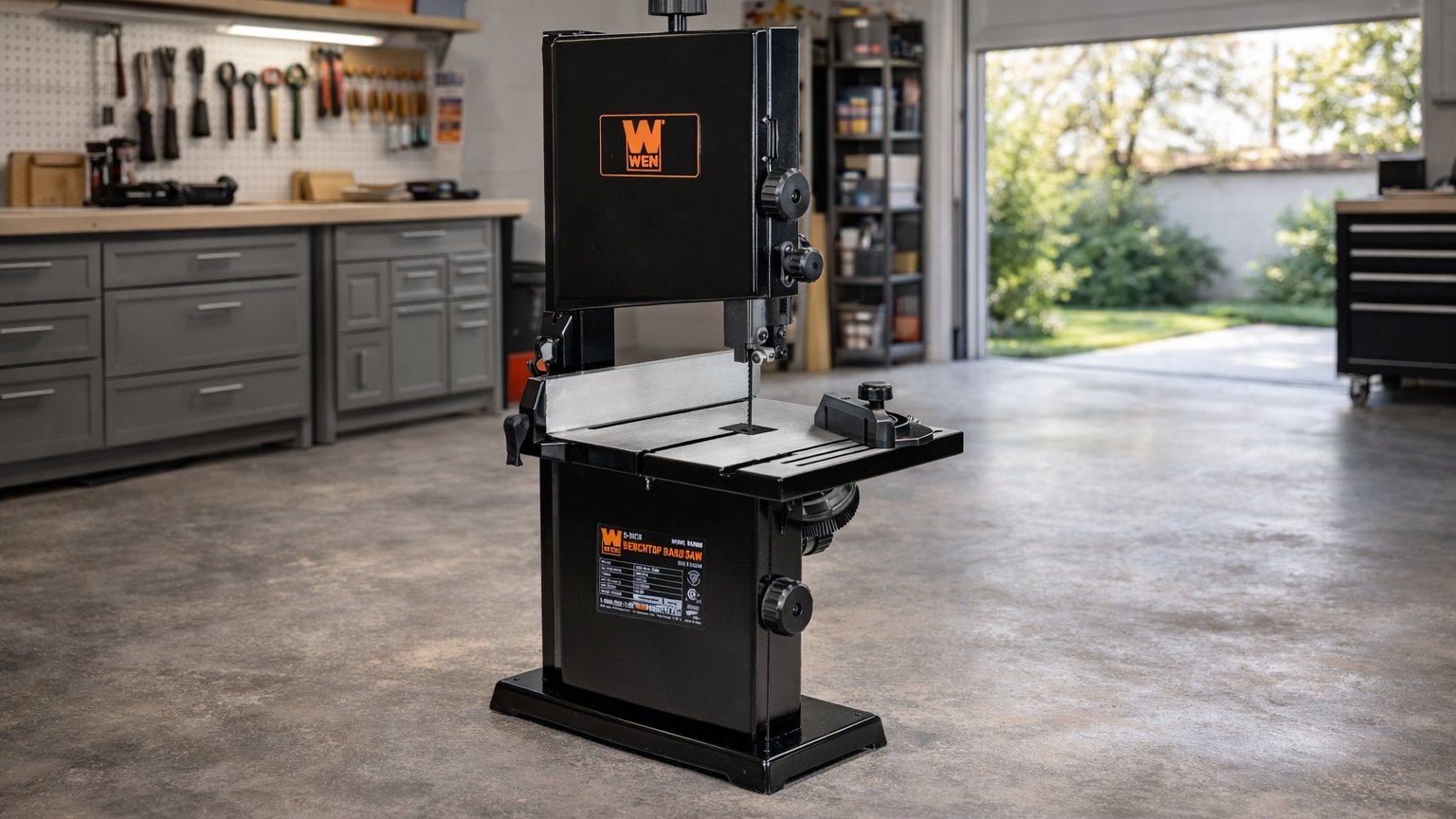
WEN BA3959 band saw
A compact 9-inch benchtop band saw aimed at light shop work, trim cuts, and hobby tasks where a smaller footprint matters more than outright cutting capacity or table support.
- Fits smaller shops more easily when floor space and storage flexibility matter
- Better suited to lighter curves, craft materials, and occasional weekend use
- Usually makes more sense when budget matters more than cut capacity
VS
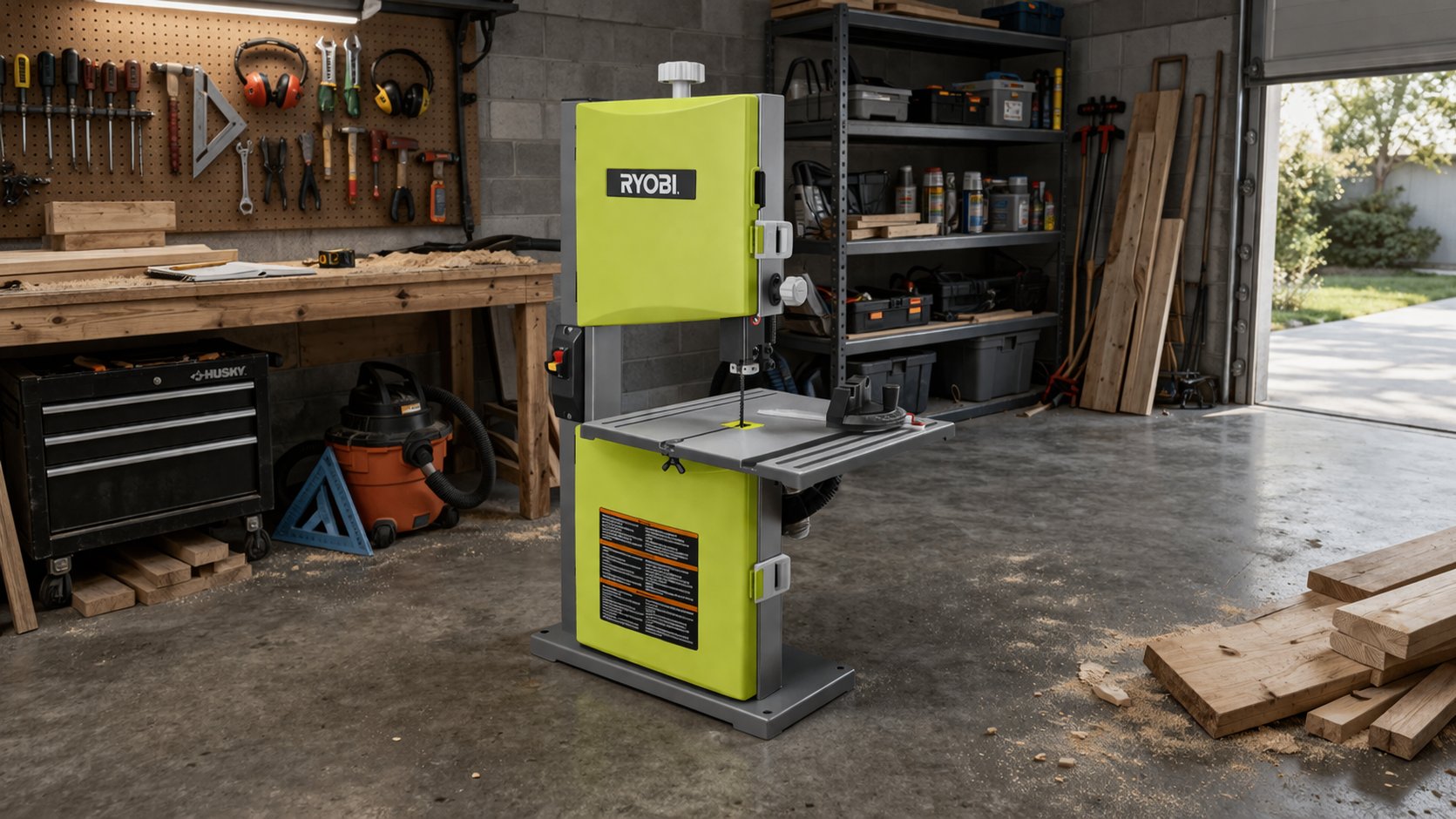
RYOBI BS904G band saw
Another small-format benchtop option, but one that generally makes a stronger case when you want a more complete everyday user experience for basic woodshop tasks and home projects.
- Feels like the more rounded choice for routine small-shop cutting and learning
- Better fit when you want an entry-level saw that is easier to live with day to day
- More convincing as a first band saw if you expect regular weekend use
Power under load
Adequate for lighter stock
Slightly more composed
RYOBI BS904G
Control & tracking confidence
Usable, more basic feel
More confidence-inspiring
RYOBI BS904G
Ergonomics (feel + fatigue)
Compact, easy to place
Still compact, slightly better workflow
RYOBI BS904G
Value (typical buy-in)
Budget-friendly
Better overall value
RYOBI BS904G
Design execution
Simple, entry-level
More balanced package
RYOBI BS904G
Real-world context
This comparison reflects a synthesis of professional reviews, manufacturer data, long-term user feedback, and use-case patterns to highlight how each band saw typically performs in everyday projects.
WEN BA3959 — Why people choose it
- Smaller footprint makes it easier to fit into tighter hobby shops or shared work areas
- Reasonable choice for lighter-duty curves, trim pieces, and occasional project work
- Often attractive to buyers who want a simple first band saw without spending much
RYOBI BS904G — Why people choose it
- More balanced day-to-day user experience for beginners and casual woodworkers (especially as a first shop saw)
- Feels easier to justify when you want a compact machine that still handles routine shop tasks well
- Stronger overall fit for buyers who want usability and value rather than just the lowest entry price
Verdict: Choose RYOBI BS904G if you want the more complete entry-level package for regular home-shop use, with a better overall balance of usability, control, and everyday value. Choose WEN BA3959 if your priority is a simpler, lower-cost saw for lighter cutting tasks, tighter spaces, and occasional hobby work where compactness matters more than refinement.