
What Makes Band Saws Different from Jigsaws

Band saws and jigsaws are often grouped together because both cut curves, yet they operate on fundamentally different mechanical systems. A band saw uses a continuous looped blade moving in one direction, while a jigsaw drives a short blade in a rapid up-and-down stroke. These distinct motions shape how each tool manages stability, material contact, and directional control, leading to frequent confusion about their roles.

This explainer breaks down those underlying mechanics, including blade movement, support structure, and cutting dynamics. It clarifies how each system interacts with the workpiece, how force is applied through the cut, and how design constraints influence behavior. By the end, the structural and functional differences between these tools will be clearly defined.

By: Review Streets Research Lab
Updated: April 19, 2026
Explainer · 8–12 min read
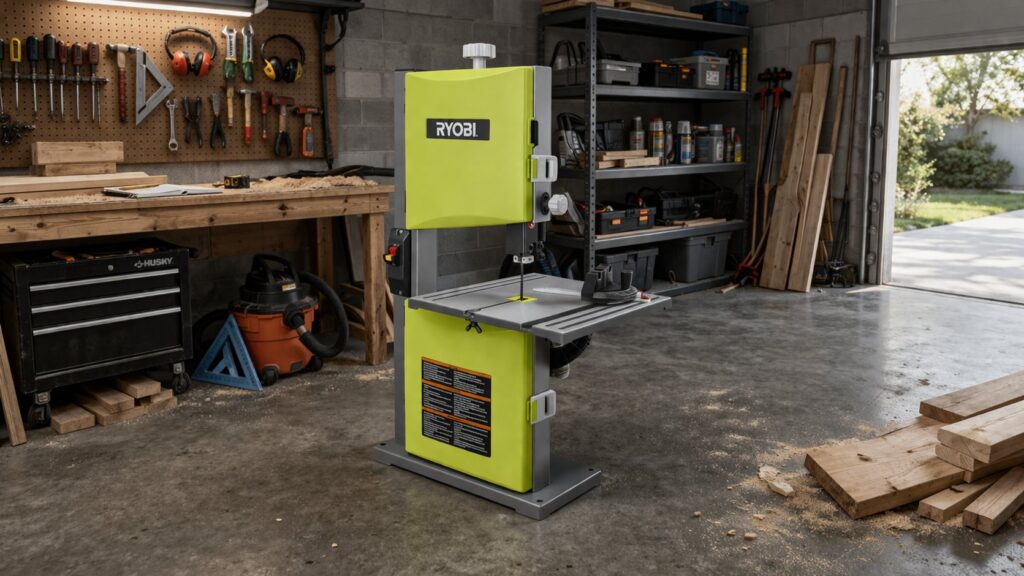
RYOBI BS904G band saw for home DIY woodworking projects
What You’ll Learn

How Band Saws and Jigsaws Differ Mechanically

A structured breakdown of how blade motion, support systems, and cutting mechanics define behavior, stability, and control across these two fundamentally different cutting approaches.

  • How continuous looped blades create constant downward cutting force and stability
  • What reciprocating blade motion changes in terms of contact and vibration
  • How fixed tables versus handheld bases influence material support and control
  • Why blade length and tension affect tracking, deflection, and cut consistency
  • How feed direction interacts with blade motion to shape cutting behavior
  • What causes wandering cuts, chatter, or loss of alignment during operation
  • How structural design limits or enables precision across different cutting paths

Tip: Think in terms of motion systems—continuous rotation versus reciprocation—to understand how force, stability, and control behave during cutting.

Definitions

Key Parts and Systems That Separate Band Saws from Jigsaws

Understanding these tools starts with the moving parts, support structures, and force paths that shape how each cutting system behaves.

Continuous Blade Loop

A band saw cuts with a long blade joined into a loop and driven in one constant direction. That uninterrupted motion creates a steady cutting path because the tooth movement, tension, and feed direction remain consistent throughout the cut.

  • Motion path: Teeth travel continuously in one direction without reversing
  • Force flow: Cutting force stays more uniform as material enters the blade
  • Tracking: Tension and wheel alignment keep the blade running predictably

Reciprocating Blade Stroke

A jigsaw cuts by driving a short blade up and down through repeated strokes. Because the blade repeatedly enters and exits the material, cutting force arrives in pulses rather than as a continuous stream.

  • Stroke cycle: The blade alternates between cutting engagement and release
  • Contact pattern: Material interaction changes constantly through each stroke
  • Vibration effect: Reversing motion introduces more visible movement into the system

Blade Tension System

Band saws depend on blade tension to keep the loop straight as it moves across the wheels. That tension works with the frame and guides to resist twisting, which helps the blade hold its path under load.

  • Stability: Tension reduces sideways wandering during the cut
  • Guide support: Upper and lower guides help control blade movement
  • Deflection: Lower tension allows the blade to drift more easily

Base and Table Support

The workpiece meets each tool differently because the support structure is different. A band saw presents a fixed table to the material, while a jigsaw carries its base across the material as the operator moves the tool.

  • Reference plane: A fixed table creates a stable cutting orientation
  • Tool movement: A moving base changes the support relationship throughout the cut
  • Material control: Stability depends on where support exists around the blade

Blade Guidance Structure

Each tool uses a different method to keep its blade aligned during operation. Band saws guide a tensioned loop at multiple points, while jigsaws support a narrower reciprocating blade closer to its mount and allow more free length below.

  • Support points: More guidance helps limit unwanted blade movement
  • Free length: Unsupported blade length increases the chance of deflection
  • Alignment: Guidance quality affects how faithfully the blade follows input

Cutting Force Path

The force acting through the cut follows a different path in each system. In a band saw, force is transmitted through a continuously moving loop into a supported table setup, while in a jigsaw it passes through a reciprocating blade, moving body, and handheld base.

  • Energy transfer: Continuous motion delivers force differently than repeated strokes
  • System load: Support structure determines how force is absorbed and redirected
  • Cut behavior: Blade motion and support together shape stability and tracking

Tip: The clearest mental model is to see each tool as a complete motion-and-support system, not just a blade making a cut.

Power Path

How Cutting Motion Moves Through Each Tool System

Band saws and jigsaws are defined by different motion paths, and that motion determines how force reaches the material. Once the movement pattern changes, support, stability, and cutting behavior change with it.

  • A band saw drives a continuous blade loop in one constant direction
  • A jigsaw moves a short blade through repeated up-and-down strokes
  • Continuous motion creates a steadier cutting rhythm through the workpiece
  • Reciprocating motion produces alternating engagement and release during each stroke
  • That motion pattern shapes vibration, tracking, and force delivery throughout the cut

The way motion travels through the tool system largely determines how controlled or interrupted the cut feels in use.

Motors

Blade Motion Defines the Core Mechanical Difference

The most important distinction is not simply blade shape but how each blade moves while cutting. That motion governs how the teeth meet the material and how consistently force is applied.

  • Continuous blade motion keeps tooth movement uniform from entry to exit
  • Reciprocating blade motion repeatedly starts and stops material engagement within each cycle
  • Uniform motion tends to reduce interruption in the cutting path
  • Reversing motion introduces more oscillation into the blade and tool body

Once blade motion is understood, many other structural differences become easier to explain.

Gearing

Support Structure Changes How the Cut Is Controlled

These tools do not support the material in the same way, and that changes how the blade is guided through the cut. A fixed table system behaves differently from a moving handheld base because the reference surface changes.

  • Band saws present the material to a stationary table and blade path
  • Jigsaws move across the material with the blade mounted to a portable body
  • A fixed support plane helps keep the workpiece relationship more consistent
  • A moving base changes the support context as the cut progresses

Control is shaped as much by the support structure around the blade as by the blade itself.

Heat Management

Blade Tension and Guidance Influence Tracking Behavior

Blade stability depends on how the cutting edge is restrained and supported during operation. Tension, guide placement, and unsupported blade length all affect whether the blade holds its intended path or begins to deflect.

  • Band saw blades rely on tension to stay aligned across the wheels
  • Guide assemblies help limit twist and sideways movement near the cut
  • Jigsaw blades usually have more unsupported length below the tool body
  • Less restraint makes deflection more likely when force changes during cutting

Tracking behavior is the visible result of how well the blade is stabilized by the surrounding system.

User Control

Force Path Explains Why Each Tool Behaves Differently Under Load

Force does not move through these tools in the same pattern because the blade system, support structure, and operator interaction are arranged differently. That full mechanical path determines how the cut responds when resistance increases.

  • In a band saw, force travels through a tensioned loop into a fixed support setup
  • In a jigsaw, force passes through a reciprocating blade and moving handheld body
  • Steadier force transfer usually produces a more continuous material response
  • Interrupted force transfer can make alignment and contact more variable

Real-world cutting behavior follows the complete force path, not any single part in isolation.

Quick Reality Check

Where Band Saws and Jigsaws Diverge in Use

A quick practical contrast shows how each tool’s motion system and support structure create different strengths, limits, and cutting behavior.

Band Saw System Behavior

A band saw delivers a steadier cutting path because its blade moves continuously in one direction under tension within a fixed support structure.

That arrangement keeps force flow more consistent as material passes across the table, which helps explain its stable tracking during longer, uninterrupted cuts.

Jigsaw System Behavior

A jigsaw behaves more variably because its short blade cuts through repeated up-and-down strokes while the tool body moves across the material.

Since blade contact is constantly starting and releasing, the system shows more vibration, changing force patterns, and greater sensitivity to blade deflection.

Common Myths

Misunderstandings About What Separates Band Saws from Jigsaws

These tools are often grouped by the shapes they cut, even though their blade motion, support structure, and force paths work very differently.

They differ only in size and shape

The real difference is mechanical, not visual. A band saw uses a continuous tensioned blade loop, while a jigsaw uses a short reciprocating blade, and that changes how force, stability, and tracking behave during the cut.

Both blades cut in basically the same way

They remove material through different motion systems. Continuous one-direction movement produces a steadier cutting path, while an up-and-down stroke creates repeated engagement and release that changes vibration and contact through each cycle.

Accuracy comes mostly from the operator

Operator input matters, but the tool’s structure matters first. Blade tension, guide support, table stability, and unsupported blade length all shape how faithfully the cutting edge follows its intended path.

Any difference is just about blade thickness

Blade dimensions matter, but they are only one part of the system. Motion type, guidance method, and how the material is supported have a larger effect on how each tool behaves under load.

Both tools transmit force the same way

Force follows a different path in each design. A band saw transfers cutting force through a tensioned loop into a fixed table setup, while a jigsaw sends it through a reciprocating blade and moving handheld body.

Tip: The clearest way to understand the difference is to think in systems: blade motion, guidance, support, and force path working together.

FAQ

Frequently Asked Questions About Band Saws and Jigsaws

Clear answers to common questions about blade motion, support systems, and how these tools behave differently during cutting.

What is the main mechanical difference between band saws and jigsaws?

The core difference is blade motion. A band saw uses a continuous loop moving in one direction under tension, while a jigsaw uses a short blade moving up and down, which changes how force is applied and how steady the cut remains.

Why does a band saw tend to feel more stable?

Stability comes from continuous blade motion combined with a fixed table and tensioned blade system. Because the blade does not reverse direction, force stays more consistent, reducing interruption and helping the cut track along a predictable path.

Why do jigsaws show more vibration during cutting?

Vibration comes from reciprocating motion. As the blade repeatedly accelerates, reverses, and disengages from the material, force fluctuates through each stroke, which transfers movement into the tool body and increases visible oscillation.

How does blade support differ between the two systems?

Band saw blades are supported by tension and multiple guide points near the cutting area, while jigsaw blades typically have more unsupported length below the tool. That difference affects how much the blade can twist or deflect under changing load.

What causes a blade to wander off the intended cut line?

Wandering usually comes from blade deflection. Lower tension, insufficient guidance, or increased unsupported blade length allow the cutting edge to shift sideways when resistance changes, altering the path away from the intended line.

Why does the support surface change how the tool behaves?

A fixed table keeps the material stable relative to the blade, while a moving handheld base changes that relationship throughout the cut. This shift affects how force is transferred and how consistently the blade engages the material.

How does cutting force move through each tool system?

In a band saw, force travels through a continuous blade loop into a fixed support structure. In a jigsaw, force moves through a reciprocating blade and handheld body, creating a more interrupted and variable force path during cutting.

Why do shorter blades behave differently than longer looped blades?

Short blades experience more localized bending because they are not tensioned across a full loop. A longer, tensioned blade distributes force along its length, which helps resist twisting and keeps the cutting path more stable.

Tip: When analyzing cutting behavior, trace the system from blade motion through support and force path to understand why stability or variation appears.

Bottom Line

Band saws and jigsaws differ through motion, support, guidance, and force path. Those system differences determine how each blade engages material, how stable the cut remains, and how the tool responds as resistance changes.

Once that mechanical structure is clear, it becomes easier to interpret cutting behavior as the result of interacting systems rather than surface-level similarity.

Next Steps

Go Deeper or Continue the Research

With the mechanical differences in view, these pages extend that understanding into broader category context, side-by-side analysis, and decision framework.

Band Saw Roundups

A broader category overview that organizes band saws by use case, format, and design priorities for readers refining their understanding.

Band Saw Comparisons

Focused matchup pages that isolate individual design differences and show how specific mechanical traits influence behavior in direct context.

Band Saw Buying Guides

Structured guidance that connects system-level concepts to practical selection criteria, clarifying which design details matter for different working needs.

Quick Summary

Band Saws vs Jigsaws

  • Band saws use continuous blade loops moving in one direction
  • Jigsaws cut with short blades driven through reciprocating strokes
  • Blade motion changes force flow, vibration, and material engagement patterns
  • Support structure affects tracking, stability, and blade deflection under load
  • These tools differ as complete motion-and-guidance systems, not appearances