
What Makes Brake Calipers Different from Brake Drums

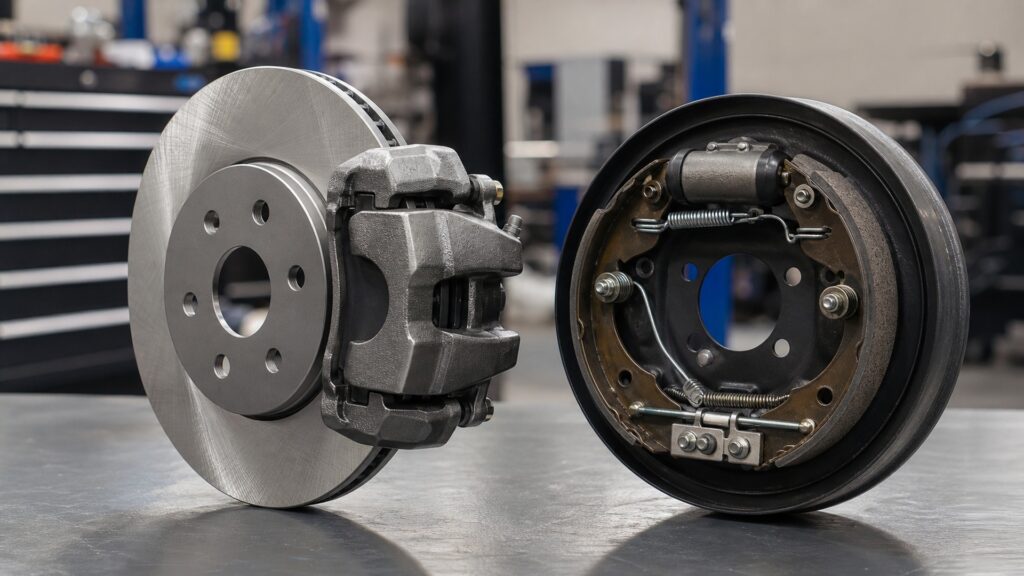
Brake calipers and brake drums both slow a vehicle by creating friction, but they do it with different architecture. Calipers clamp pads onto a visible rotor from the outside, while drum brakes push shoes outward against the inside of a rotating drum.

The difference matters because the two systems manage heat, service access, packaging, parking brake functions, and wear patterns in different ways. Understanding that split helps readers see why many vehicles use disc brakes in front, drums on some rear axles, or a mix shaped by cost and duty cycle.

By: Review Streets Research Lab
Updated: June 16, 2026
Explainer · 8-12 min read
what makes brake calipers different from brake drums brake caliper explainer image
What You'll Learn

How Disc Calipers and Drum Brakes Create Friction Differently

A practical comparison of clamp-style disc brakes and expansion-style drum brakes, including heat, service, packaging, and common tradeoffs.

  • How a caliper clamps pads against a rotor
  • How a drum system pushes shoes against an enclosed drum
  • Why disc brakes usually shed heat more easily
  • Why drums can package parking brake functions efficiently
  • How wear inspection and service access differ
  • Where each system can make sense on a vehicle

Tip: Read the concept as part of a system, then connect it back to the use case.

Definitions

Key Concepts That Define Brake Calipers vs Brake Drums

These definitions connect the main idea to the variables, limits, and practical signals readers need to compare options.

Brake Caliper

A disc-brake component that holds pads around a rotor and applies clamp force through hydraulic pistons.

  • Action: Squeezes pads inward from one or both sides
  • Visibility: Most parts are exposed for inspection
  • Limit: Needs wheel clearance and precise rotor alignment

Brake Drum

A rotating cylindrical housing that surrounds curved brake shoes.

  • Action: The drum turns with the wheel around the shoe assembly
  • Packaging: Encloses springs, adjusters, and parking brake hardware
  • Limit: Heat and dust stay more contained inside the assembly

Brake Shoes

Curved friction pieces that press outward against the inside of a drum.

  • Role: Create friction on the drum inner surface
  • Support: Held by springs, anchors, and adjusters
  • Limit: More hidden from quick visual inspection

Disc Rotor

A flat disc clamped by pads in a caliper system.

  • Role: Provides the friction surface for disc brakes
  • Heat: Exposed to air and often vented for cooling
  • Limit: Can warp, score, or corrode depending on use

Self-Energizing Effect

A drum-brake behavior where rotation can help pull a shoe into the drum.

  • Benefit: Can increase braking force with less hydraulic input
  • Tradeoff: Can make feel and adjustment more sensitive
  • Limit: Less relevant to typical caliper-style disc operation

Service Access

How easily a technician can inspect, clean, and replace friction parts.

  • Disc: Pads and rotors are often easier to see
  • Drum: Springs and adjusters require opening the assembly
  • Decision: Access affects labor time and diagnosis

Tip: Keep the definitions connected; the strongest answer usually comes from the whole system, not one term.

Friction Path

How Each System Turns Hydraulic Pressure Into Braking

Both systems begin with hydraulic pressure, but the mechanical path diverges at the wheel. A caliper moves pads inward onto a rotor; a drum wheel cylinder pushes shoes outward into a drum.

  • Disc brakes use clamp force across rotor faces
  • Drum brakes use outward shoe force against an internal surface
  • Both convert kinetic energy into heat
  • Hardware alignment determines how evenly friction is applied
  • Release springs and seals help parts return after braking

The same hydraulic input reaches very different mechanical layouts.

Heat Behavior

Why Calipers Usually Manage Heat More Openly

Disc brake rotors and calipers sit in open airflow, which helps heat leave the friction surfaces. Drum brakes enclose more of the friction event, which can retain heat during repeated stops.

  • Rotors expose friction surfaces to moving air
  • Vented rotors can move additional heat through internal vanes
  • Drums contain shoes, springs, and dust inside the housing
  • Repeated heat can change pedal feel, wear, and fade resistance

Heat management is one reason disc brakes dominate front braking on modern vehicles.

Packaging Tradeoffs

Why Drums Still Appear on Some Vehicles

Drums can package parking brake hardware compactly and may cost less in some rear-brake applications. Their enclosed layout can be useful, but it also changes inspection and cooling.

  • Rear brakes often do less total stopping work than front brakes
  • Drum assemblies can integrate mechanical parking brake functions
  • The enclosed design protects some parts while hiding wear signs
  • Lower cost can matter on economy or light-duty applications

Drums are not automatically obsolete; they reflect a different set of priorities.

Inspection and Wear

How Service Clues Differ Between the Systems

Disc brakes tend to show pad thickness and rotor condition more directly. Drum brakes often require removing the drum to inspect shoe lining, springs, leaks, and adjuster condition.

  • Disc pad wear can often be checked through the wheel or caliper opening
  • Drum shoe wear is hidden behind the drum
  • Drum hardware springs can weaken or corrode over time
  • Both systems can suffer fluid leaks and contamination

The easier system to inspect is not always the only system that works well.

Decision Context

How to Read Caliper-vs-Drum Claims

Claims about disc brakes and drums should be tied to vehicle use. Towing, hills, repeated stops, corrosion exposure, maintenance budget, and parking brake needs all affect the practical comparison.

  • Front brakes carry more stopping load during weight transfer
  • Rear brake design often balances cost, parking function, and stability
  • Performance use puts more value on heat shedding
  • Daily commuting may make service cost and corrosion resistance more noticeable

The right comparison is about duty cycle, not a universal winner.

Quick Reality Check

Where Brake Calipers vs Brake Drums Helps and Where It Has Limits

A practical check on what this concept clarifies, plus the points that still need vehicle-specific context.

What Brake Calipers vs Brake Drums Clarifies

It explains why disc brakes are often favored for cooling, inspection, and repeated-stop consistency.

It also explains why drum brakes can remain practical for rear braking, parking brake integration, and cost-sensitive designs.

Where the Shortcut Breaks Down

The comparison does not mean every disc setup is superior to every drum setup. Materials, sizing, tires, ABS calibration, load, and maintenance all affect real braking behavior.

A neglected disc brake can perform worse than a well-maintained drum system in everyday conditions.

Common Myths

Misconceptions About Brake Calipers vs Brake Drums

Common shortcuts and misunderstandings can make the topic seem simpler than it is.

Disc brakes are always better in every situation

Disc brakes usually have cooling and service advantages, but vehicle design, maintenance, and duty cycle still decide practical performance.

Drum brakes are only old technology with no purpose

Drums still appear where cost, packaging, and parking brake integration make sense, especially on some rear axles.

Calipers create friction and drums create stopping power differently

Both create friction to slow the wheel. The difference is clamp force on an exposed rotor versus shoe expansion inside an enclosed drum.

Drums never need maintenance because they are enclosed

The enclosure hides wear and contamination; it does not eliminate shoe wear, spring fatigue, wheel-cylinder leaks, or adjuster problems.

Tip: Treat strong claims as starting points for comparison, not final answers.

FAQ

Frequently Asked Questions About Brake Calipers vs Brake Drums

Concise answers to common questions readers may have after the main explanation.

What is the main difference between brake calipers and brake drums?

Brake calipers clamp pads onto a rotor from outside the disc, while drum brakes push curved shoes outward against the inside of a rotating drum.

Why are disc brakes common on front wheels?

Front brakes handle much of the stopping load during weight transfer, and disc brakes usually shed heat and recover from repeated stops more effectively.

Are drum brakes cheaper to service?

Sometimes parts can be less expensive, but labor and hidden hardware condition can change the total service cost.

Can a vehicle have calipers in front and drums in back?

Yes. Many vehicles use front disc brakes and rear drums because front brakes do more work while rear brakes can prioritize parking brake packaging and cost.

Do brake drums last longer than pads and rotors?

They can last a long time in light rear-duty use, but lifespan depends on driving, adjustment, contamination, corrosion, and hardware condition.

Bottom Line

Brake calipers and brake drums differ in how they apply friction: external clamp force on a rotor versus internal shoe expansion inside a drum.

The practical distinction is heat and access. Calipers usually make cooling and inspection easier, while drums can package rear-brake and parking-brake functions efficiently.

Next Steps

Go Deeper or Compare Your Options

Use these Review Streets paths to connect the explainer to related categories, comparisons, and next decisions.

Brake Calipers

Explore related Review Streets coverage in Brake Calipers.

Brake Drums

Compare how drum brake parts differ from caliper-based disc brake systems.

Quick Summary

Brake Calipers vs Brake Drums Explained

  • Calipers clamp pads onto an exposed rotor.
  • Drums push shoes outward inside an enclosed drum.
  • Disc brakes usually manage repeated heat better.
  • Drums can package parking brake hardware compactly.
  • Maintenance and duty cycle matter more than simple labels.