
Caliper Body
The metal structure that holds the piston and positions the pads around the rotor.
- Function: Carries clamp loads
- Check: Look for damage, leaks, or seized slides
- Decision: Replaced when the actuator or structure fails
Brake calipers and brake pads are easy to mention together because they sit in the same disc-brake assembly, but they do different jobs. The caliper is the hydraulic clamp and guide structure; the pads are the replaceable friction material that contacts the rotor.
That difference matters during diagnosis. Worn pads are expected service items, while a caliper problem usually involves movement, sealing, mounting, or release. Confusing the two can lead to replacing friction material while the part controlling its pressure is still sticking.
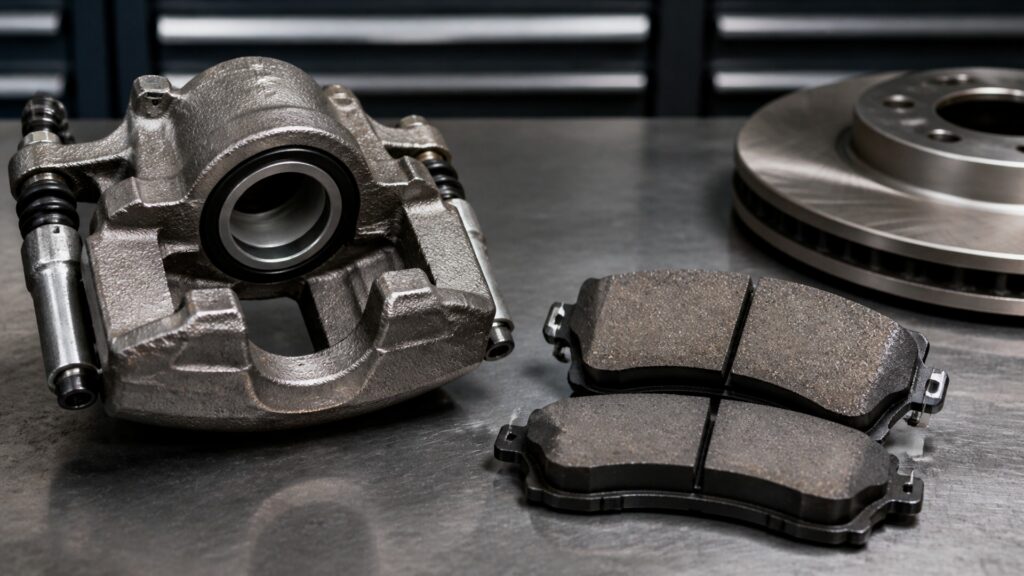
A clear explanation of brake calipers vs brake pads, focused on role, mechanism, fit, service limits, and repair decisions.
Tip: Read the concept as part of a system, then connect it back to the use case.
These definitions connect the main idea to the variables, limits, and practical signals readers need to compare options.
The metal structure that holds the piston and positions the pads around the rotor.
The friction block that presses against the rotor and wears down through normal braking.
The hydraulic moving parts inside the caliper that apply pressure to the pad.
The pad material chosen for bite, noise, dust, heat tolerance, and wear life.
The way the caliper lets the pads relax after pedal pressure drops.
The boundary between a normal pad job and a caliper repair.
Tip: Keep the definitions connected; the strongest answer usually comes from the whole system, not one term.
A disc brake needs both parts, but the force path is different for each one. The caliper receives pressure and creates clamp force; the pad supplies the friction surface that grips the rotor.
The caliper applies the force; the pad turns that force into friction.
Pads are designed to lose material slowly. Calipers are designed to move repeatedly without losing their basic geometry or sealing ability.
A worn pad is expected; a caliper that causes abnormal wear needs attention.
A pad replacement is not a cure for a caliper that cannot move or release. The decision turns on whether the friction material is simply consumed or whether the clamp mechanism is misbehaving.
The diagnosis should protect the new pads from the old problem.
Pads get hot during normal braking, but a caliper that holds pressure can keep heating the rotor after the stop ends.
Heat after braking is a movement clue, not just a friction clue.
Product listings can blur the distinction because calipers, pads, and kits are shown together. The useful check is whether the listing solves friction wear or clamp movement.
A good purchase matches the failed role.
This comparison clarifies why a disc brake needs both an actuator and a consumable friction surface.
It separates hydraulic movement problems from normal lining wear.
It helps readers understand why new pads can be ruined by a caliper that drags.
Rotor condition, hoses, fluid, and installation can still affect the same symptoms.
A pad wear pattern suggests a direction, but inspection confirms the cause.
Common shortcuts and misunderstandings can make the topic seem simpler than it is.
Pads are friction material; calipers are hydraulic and structural parts that control the pads.
Uneven wear often points to guide pins, piston travel, bracket rust, or release problems.
The caliper changes force handling; pad material is a separate friction choice.
If the caliper still sticks, the new pads can overheat or wear unevenly again.
Tip: Treat strong claims as starting points for comparison, not final answers.
Concise answers to common questions readers may have after the main explanation.
The caliper applies pressure and holds alignment; the pad is the replaceable friction surface against the rotor.
Yes. A sticking or leaking caliper can overheat, contaminate, or unevenly wear the pads.
No. Pads are expected to wear down; calipers usually fail through leaks, corrosion, damaged threads, or movement problems.
Contaminated, overheated, or unevenly worn pads may need replacement when caliper work is done.
Sometimes, but a pull can also come from caliper force, hoses, tires, rotors, or suspension issues.
Brake calipers and brake pads are partners, not substitutes.
The useful decision is whether the fault is in friction material or in the hydraulic part that positions and presses that material.
Use these Review Streets paths to connect the explainer to related categories, comparisons, and next decisions.
Use the Automotive Replacement Parts path for related brake component explainers and comparisons.
Use the Brake Components path for related brake component explainers and comparisons.
Use the Brake Calipers path for related brake component explainers and comparisons.
Compare brake pad role, wear, and replacement context.
Choose a retailer
Prices checked regularly. We may earn a commission at no cost to you.