
Brake Drum
The rotating metal shell with an internal friction surface.
- Role: Works with shoes
- Check: Diameter and surface condition
- Limit: Not used with disc pads
Brake drums and brake pads belong to different braking architectures. A drum is a rotating shell used by curved shoes, while brake pads are flat friction blocks used by calipers against rotors.
The distinction matters because replacing pads does not service a drum brake, and replacing a drum does not replace the friction lining. Readers comparing parts need to know whether they are looking at a friction surface, a friction material, or an entirely different system.
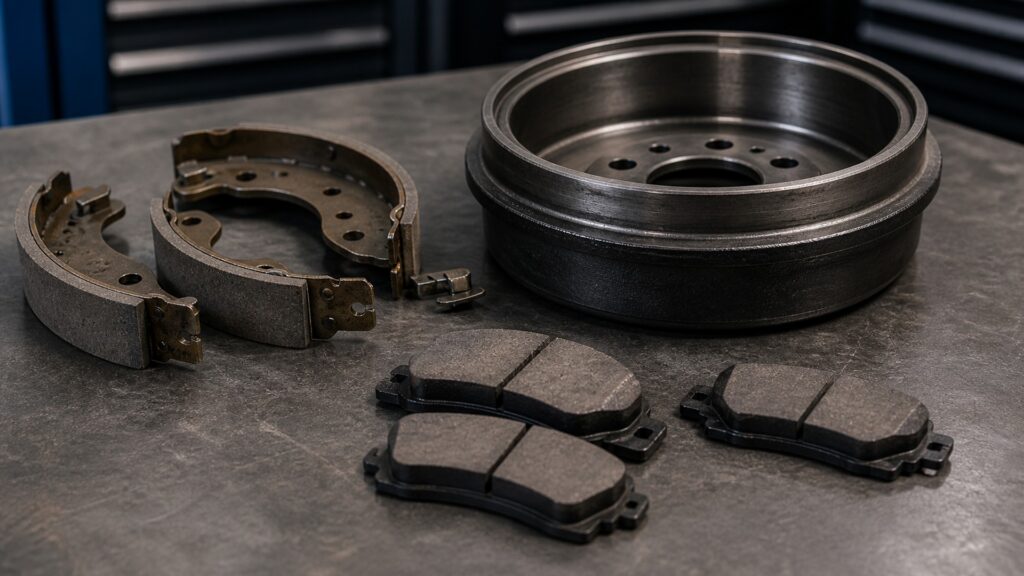
A practical explanation of brake drums vs brake pads for brake-component comparison and service decisions.
Tip: Read the concept as part of a system, then connect it back to the use case.
These definitions connect the main idea to the variables, limits, and practical signals readers need to compare options.
The rotating metal shell with an internal friction surface.
A flat friction block clamped against a rotor by a caliper.
A curved friction part that expands into a drum.
The flat disc-brake surface pads grip.
The inside cylindrical surface shoes press against.
The need to choose parts for the installed brake design.
Tip: Keep the definitions connected; the strongest answer usually comes from the whole system, not one term.
A drum brake and a disc brake turn pressure into friction through different parts.
The drum is not the drum-brake version of a pad.
The curved shoe is shaped to meet the drum's internal surface.
Shape reveals the system.
A shopper who mixes drums and pads may order a part that cannot solve the problem.
Correct repair starts with the brake architecture.
Pads lose thickness directly, while drums wear by diameter and surface condition.
Wear has to be read in the right system.
Before ordering, identify whether the vehicle corner uses a rotor and caliper or a drum and shoes.
The right part name prevents the wrong repair.
The comparison prevents a common category mistake between disc and drum brake parts.
It separates a metal rotating surface from friction lining.
It explains why shoes, not pads, are paired with drums.
Noise or vibration can come from several parts.
Vehicle fitment still decides the exact replacement.
Common shortcuts and misunderstandings can make the topic seem simpler than it is.
Drums are metal shells; shoes provide the lining inside them.
Pads are for disc systems, not drum assemblies.
A drum shell and brake shoes are usually separate parts.
Drum-brake symptoms require drum, shoe, hardware, or wheel-cylinder diagnosis.
Tip: Treat strong claims as starting points for comparison, not final answers.
Concise answers to common questions readers may have after the main explanation.
No. Drums are rotating shells; pads are disc-brake friction blocks.
The shoe lining wears against the inside of the drum.
Yes. It may have rear drums and front disc pads.
It depends on diagnosis: shoes, drums, hardware, and wheel cylinders are separate possibilities.
Pads are flat for rotors; shoes are curved for drums.
Brake drums and brake pads are not substitutes.
The practical takeaway is to identify the brake architecture before deciding which friction or surface part needs service.
Use these Review Streets paths to connect the explainer to related categories, comparisons, and next decisions.
Explore related Review Streets coverage in Automotive Replacement Parts.
Explore related Review Streets coverage in Brake Components.
Explore related Review Streets coverage in Brake Drums.
Compare brake pad role, wear, and replacement context.
Choose a retailer
Prices checked regularly. We may earn a commission at no cost to you.