What Makes Cable Machines Different from Home Gym Systems

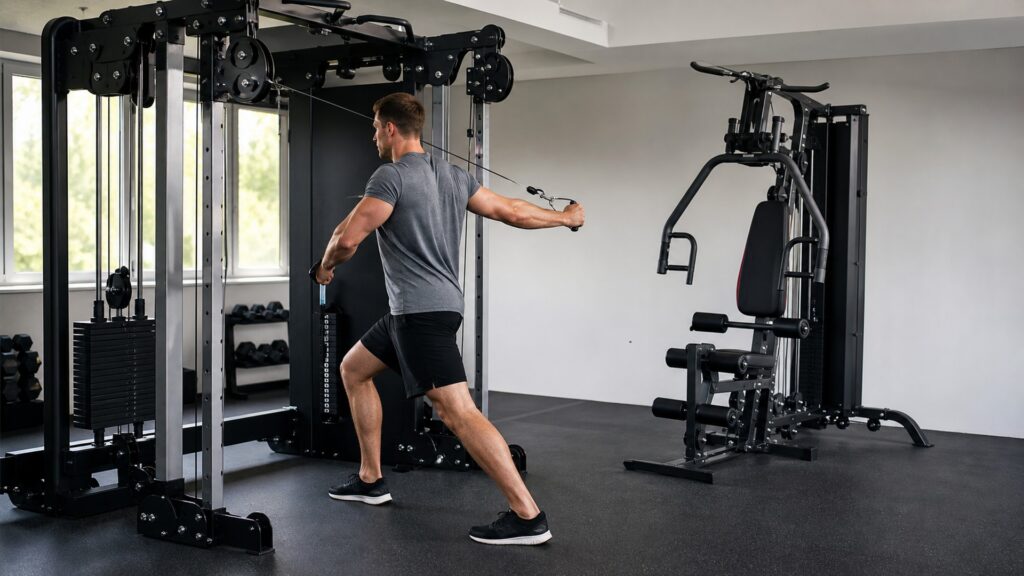
Cable machines are different from home gym systems because they focus on adjustable cable resistance, while home gym systems usually combine several training stations or functions into one broader setup. A cable machine is built around the line of pull. A home gym system is built around covering many exercise types in one unit.

The practical difference is specialization versus all-in-one coverage. Cable machines can be excellent for rows, pulldowns, curls, presses, rotations, and accessory work. Home gym systems may add presses, leg stations, benches, or guided paths that make the setup feel more complete but less cable-focused.

By: Review Streets Research Lab
Updated: September 25, 2026
Explainer · 8-12 min read
cable machines explainer hero image for Review Streets
What You'll Learn

How Cable Machines And Home Gym Systems Differ

A clear comparison of cable-focused training versus broader multi-station home gym equipment.

  • What a cable machine is designed to do well
  • How home gym systems combine several training stations
  • Why cable path and adjustability matter more on cable machines
  • Where home gym systems offer broader coverage
  • When one setup makes more sense than the other

Tip: Judge the machine by the exercises it makes easier to perform consistently, not by how many movements it claims to support.

Definitions

Key Concepts Behind Cable Machines Different from Home Gym Systems

These concepts clarify how cable machines fit into practical home strength training.

Cable Machine

A cable machine uses pulleys, cables, handles, and a weight or resistance source to create adjustable lines of pull.

  • Example: a functional trainer with two adjustable arms
  • Check: look at pulley range and cable smoothness
  • Limit: it may not include presses, leg stations, or benches

Home Gym System

A home gym system combines multiple exercise stations or training functions into one home setup.

  • Example: a multi-gym with press arms, pulldown station, leg developer, and cable station
  • Check: review every station you would actually use
  • Limit: broader coverage can make each station less flexible

Line Of Pull

Line of pull is the direction resistance comes from during an exercise.

  • Example: a high cable pulling downward during a lat pulldown
  • Check: match the cable angle to the movement
  • Limit: bad angles can limit range or comfort

Station Coverage

Station coverage is the number of distinct exercise areas built into the equipment.

  • Example: press arms, pulley station, leg extension, and row station
  • Check: separate useful stations from filler
  • Limit: more stations can require more space

Exercise Flexibility

Exercise flexibility is the ability to adapt the equipment to different body positions, handles, and movement goals.

  • Example: setting dual cables for flyes, rows, or anti-rotation work
  • Check: try several movements with different stances
  • Limit: flexibility still depends on frame design

Space Tradeoff

Space tradeoff is the balance between floor area, clearance, and the number of exercises supported.

  • Example: choosing a narrow cable tower instead of a large multi-station gym
  • Check: measure the workout area around the unit
  • Limit: compact equipment may still need room for movement

Tip: A cable machine is most useful when its movement path, resistance, and setup match the exercises a person will repeat.

Core Design

Cable Machines Start With The Pulley

The defining feature of a cable machine is adjustable resistance through a cable path. The frame, stack, arms, and attachments all serve that central job.

  • Pulley height affects exercise choice.
  • Cable smoothness affects training feel.
  • Dual cables can support balanced or independent movements.

A cable machine is best judged by how well the cable system works.

Broader Systems

Home Gym Systems Try To Cover More Stations

A home gym system may include a press station, pulldown, row, leg developer, bench, or fixed movement arms. That can make it feel more complete for users who want one machine to cover many basics.

  • Check which stations are truly useful.
  • Look for comfortable setup at each station.
  • Watch for features that add size without adding value.

A broad system is useful when its stations match the user's routine.

Exercise Feel

Cable Training Usually Feels More Adjustable

Cable machines often allow more body positions and movement angles than fixed stations. That flexibility can help with accessory work, unilateral training, and core movements.

  • Adjust cable height to match the exercise.
  • Use handles and straps that fit the movement.
  • Keep the body position stable through the full rep.

Cable flexibility is valuable when the user knows which movements they need.

Coverage

Home Gym Systems Can Be Simpler For Basic Routines

Some users want a clear station for chest press, rows, pulldowns, and leg work without arranging separate cable exercises. A home gym system may make that easier.

  • Fixed stations can reduce decision-making.
  • Guided paths may feel easier for beginners.
  • The tradeoff is less freedom in movement angle.

The broader system can be a better fit when simplicity matters more than cable flexibility.

Decision

Choose By The Exercises You Will Repeat

The better choice depends on the training plan. Cable machines make sense for adjustable pulling, pressing, isolation, and core work. Home gym systems make sense when several built-in stations match the routine.

  • List the weekly exercises first.
  • Match each exercise to the equipment's strongest station.
  • Do not pay for stations that will sit unused.

The distinction matters because the machines solve different home training problems.

Quick Reality Check

Where Cable Machines And Home Gym Systems Each Make Sense

The choice depends on whether adjustable cable work or broad station coverage matters more.

Cable Machines Fit When

The user wants adjustable lines of pull and flexible accessory work.

Space or training style favors a cable-focused setup.

Home Gym Systems Fit When

The user wants several built-in stations in one machine.

A guided all-in-one routine matters more than cable flexibility.

Common Myths

Misconceptions About Cable Machines And Home Gym Systems

The categories overlap, but they are not the same decision.

A cable machine is just a smaller home gym

It may be smaller, but its main value is the adjustable cable path.

A home gym system is always more complete

It is complete only if the built-in stations match the user's routine.

More stations mean better value

Unused stations add cost and size without improving training.

Cable machines are only for isolation work

They can support pulling, pressing, rotation, core work, and many accessory movements.

Tip: The strongest claims are worth checking against the actual exercises, space, and resistance range.

FAQ

Frequently Asked Questions About Cable Machines And Home Gym Systems

Short answers for choosing, using, and comparing cable machines.

Is a cable machine a home gym system?

It can be part of a home gym, but it is more specifically a cable-resistance machine.

Which is better for small spaces?

A compact cable tower or functional trainer may fit better, but clearance for movement still matters.

Which is better for beginners?

Beginners may prefer the clearer stations of some home gym systems, while cable machines work well when setup guidance is simple.

Can a cable machine replace a home gym system?

Sometimes, if the user's routine depends mainly on cable-based strength and accessory work.

What is the practical takeaway?

Choose cable machines for adjustable cable training and home gym systems for broader built-in station coverage.

Bottom Line

Cable machines differ from home gym systems by focusing on adjustable cable resistance rather than broad multi-station coverage.

The right choice depends on whether flexible cable paths or an all-in-one station layout better supports the weekly routine.

Next Steps

Go Deeper or Compare Your Options

Use these Review Streets paths to compare related categories and practical next decisions.

Cable Machines

Explore the cable machine category before comparing setups.

Home Gym Systems

Compare broader home gym systems with cable-focused equipment.