
Plate Substrate
Underlying structural material beneath the contact surface.
- Use: interpret construction
- Variable: metal and thickness
- Tradeoff: Often undisclosed
Ceramic and titanium styling tools differ in the materials and construction used to deliver heat at the hair-contact surface. Ceramic may describe a coating, plate layer, heater system, or solid component; titanium may describe a metal plate or a thin coating over another base.
Neither word tells the actual temperature, calibration, hot spots, edge finish, pressure, recovery, or durability. Ceramic designs often emphasize even-feeling distribution and approachable control; titanium surfaces may offer fast response, low mass, and durability. Compare the complete tool on prepared dry hair at conservative settings, especially because coating wear can expose a different surface over time.
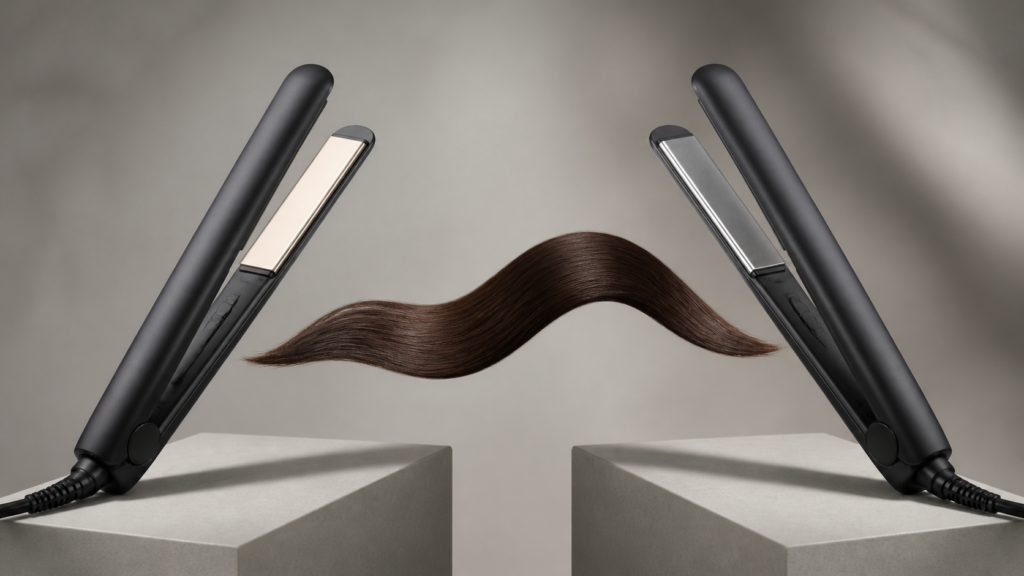
Compare how ceramic-based coatings or heaters and titanium-containing surfaces influence thermal spread, response, durability, glide, and user control without treating material names as temperatures or quality grades.
Tip: The headline material may be only the outermost layer.
These ceramic vs titanium styling tools concepts separate mechanism, application, limits, and purchasing consequences.
Underlying structural material beneath the contact surface.
Ceramic-containing layer applied over another plate.
Titanium or titanium-containing contact layer.
Consistency of temperature across the contact area.
How quickly temperature returns after contact.
Smoothness and shape where hair enters and leaves plates.
Tip: Use these terms to test ceramic vs titanium styling tools instead of relying on a front-label promise.
Ceramic may be a coating or heater; titanium may be a surface layer. Product documentation should clarify plate construction and warranty.
The headline material may be only the outermost layer.
Both types can heat evenly or unevenly depending on sensors, heaters, plate flex, and manufacture. Verify controls and test a hidden section low.
Material does not replace temperature control.
Fast thermal recovery supports consistent professional pacing but can punish hesitation. Slower behavior may feel forgiving yet require better sectioning.
Faster is valuable only when the user can control it.
Smooth alignment and floating plate movement can matter more than material label. Chips, peeling, gaps, or rough edges concentrate pressure and snag.
A worn premium material is still a poor contact surface.
Include controls, cord, hinge, plate size, auto shutoff, warranty, return policy, and expected coating life. A less glamorous tool can offer better repeatability.
Material is one specification inside total ownership.
Material can influence heat delivery and durability but cannot rank complete tools by itself.
The selected tool reaches the style with few smooth passes.
Its surface, controls, and recovery remain predictable over repeated use.
Either construction can run too hot or snag when poorly made.
Material branding cannot compensate for unsafe technique or damaged plates.
These claims flatten the variables that determine how ceramic vs titanium styling tools performs in a real routine.
Temperature depends on heater and controls, not the word titanium. A titanium surface may respond quickly, but either material can operate across a wide range.
Ceramic construction does not make heat harmless. High settings, long contact, wet hair, pressure, and repeated passes can damage fibers with any plate material.
Solid and coated designs have different durability and thermal behavior, but execution matters. Plate alignment, sensors, edges, warranty, and technique can outweigh construction category.
Hair condition, chemical history, strand diameter, sectioning, and user speed matter more than a coarse-hair rule. Fast response may be inappropriate for hesitant technique.
A display shows the tool's reported setting, not necessarily every point on the plate or hair. Calibration and uniformity require engineering and testing beyond the screen.
Tip: Test the exact ceramic vs titanium styling tools tool, setting, and routine before generalizing from its category.
The remaining decisions about ceramic vs titanium styling tools concern technique, compatibility, safety, upkeep, and value.
Choose the tool with conservative settings, stable control, smooth plates, manageable response, comfortable grip, and a return policy. Material alone cannot identify the safer learning curve.
Reduce heated styling and use the lowest workable exposure regardless of material. Existing bleach, breakage, or roughness calls for fewer passes and stronger emphasis on nonheated options.
Look for chips, peeling, discoloration, rough edges, new snagging, or visible substrate. Stop using damaged contact surfaces rather than polishing them with abrasive methods.
Titanium can offer durable surfaces, but actual longevity depends on coating thickness, substrate, impacts, cleaning, hinge alignment, and manufacture. Warranty evidence is more useful than the metal name.
Narrow plates improve access and short-hair control; wide plates cover long sections faster. Oversized plates can be awkward near roots or curves and encourage sections too large for even styling.
Conventional flat irons should be used on dry hair unless explicitly designed otherwise. Material choice does not remove wet-heat structural risk.
Ceramic and titanium descriptions point to parts of the heat-delivery construction, not fixed temperatures or universal quality. Thermal uniformity, response, surface finish, calibration, and wear define the practical difference.
Select the complete tool whose settings and response match the user's pace and hair condition. Smooth contact, conservative exposure, service life, and safety matter more than material loyalty.
These Review Streets paths narrow the next ceramic vs titanium styling tools decision by format, goal, and routine fit.
Compare dryers, irons, wands, multi-stylers, and their buying paths.
Explore airflow, heat control, attachments, ergonomics, and long-term versatility.
Choose a retailer
Prices checked regularly. We may earn a commission at no cost to you.