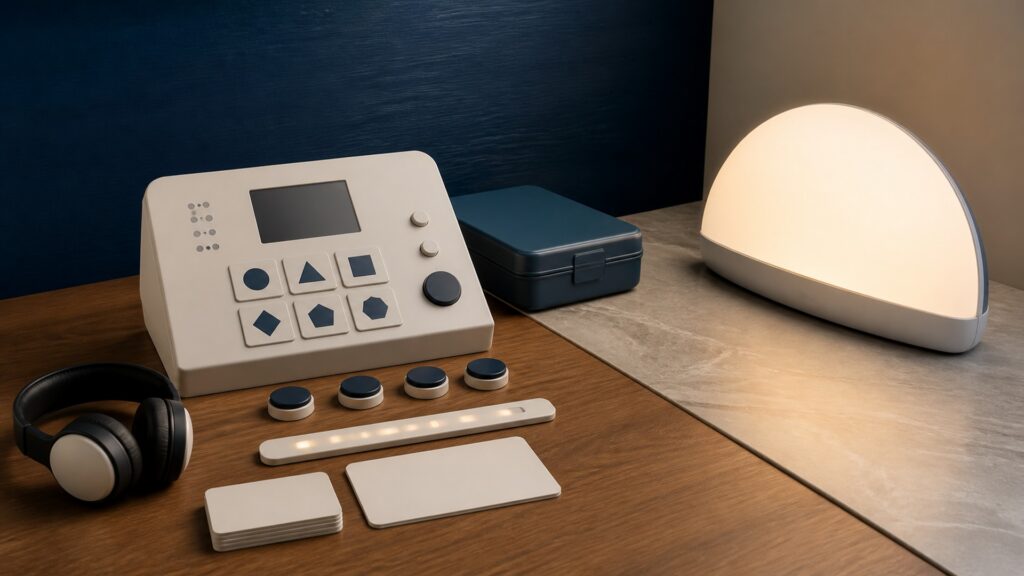
Separate learning goals from waking goals
The products enter a routine for different reasons even if both are used in the morning.
A user may complete reasoning exercises after breakfast to practice a defined cognitive domain. A bedside lamp may brighten over thirty minutes before the alarm to alter the waking environment. The exercise aims at task learning; the lamp aims at timed light exposure. Neither purpose contains the other.
- Name the cognitive practice goal
- Name the waking goal
- Keep the schedules distinct
- Avoid one broad wellness score
Morning use is a shared time, not a shared mechanism.
Compare response-driven adaptation with clock-driven brightening
The controlling input reveals the category difference.
Cognitive software changes sequence length or stimulus timing after analyzing accuracy and speed. A dawn lamp follows a programmed clock, brightness curve, or linked wake schedule. Even a “smart” lamp responding to a schedule is not measuring cognitive performance. Review the input before comparing automation features.
- Identify the data controlling each change
- Trace the next exercise trial
- Trace the illumination curve
- Do not equate programmability with adaptation
Automation describes control, not purpose.
Set up the environment each product actually needs
Training depends on accessible controls and stable task conditions; light depends on geometry and the room.
The tablet may require glasses, comfortable seating, and a consistent response method. The lamp needs safe placement, appropriate distance, unobstructed light, and awareness of ambient illumination. Changing curtains can alter exposure while leaving the device setting unchanged. Separate setup checklists prevent category errors.
- Prepare the training interface
- Place the lamp safely and stably
- Document distance and ambient light
- Use consistent conditions for comparison
Different physical pathways require different quality checks.
Measure trained performance and waking experience independently
One result cannot be used as evidence that the other product worked.
For cognitive training, inspect accuracy, time, difficulty, and delayed retention. For dawn simulation, track sleep schedule, waking experience, adherence, comfort, and the specific outcome supported by evidence. A better morning game score may reflect sleep or practice, but it does not isolate the lamp’s effect.
- Keep separate outcome logs
- Include training practice history
- Include actual sleep timing
- Avoid causal claims from coincidence
Independent measurement protects both products from borrowed conclusions.
Use separate safety and fallback plans
Exercise strain and light-related concerns require different controls.
Limit cognitive session dose, protect sleep, and stop for headache or distress. For the lamp, consider electrical stability, glare, timing, medication or eye-related guidance where relevant, and backup alarms. Persistent sleep difficulty, severe daytime sleepiness, or new cognitive decline deserves appropriate assessment.
- Protect sleep from late training
- Check lamp placement and comfort
- Maintain a reliable alarm backup
- Escalate persistent warning signs
Combining products does not combine their safety plans.