What Makes Compact Ellipticals Different from Front Drive Ellipticals

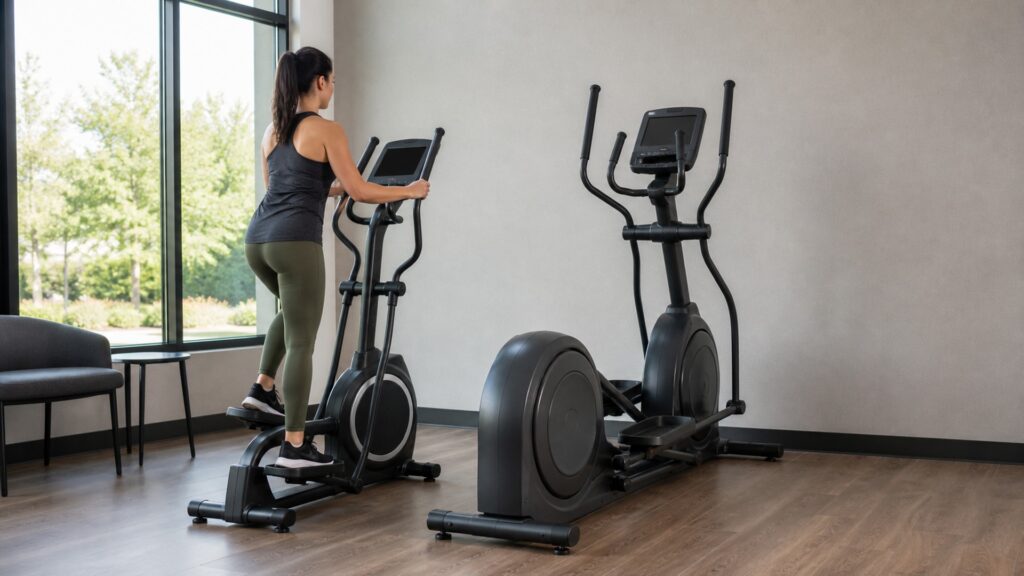
Compact ellipticals and front drive ellipticals both create low-impact stepping motion, but they prioritize different needs. Compact ellipticals focus on smaller footprint, easier placement, and practical home use in tight spaces. Front drive ellipticals usually use a larger frame with the drive system at the front.

The difference matters because compact design often trades some stride length, stability, or top-end feel for space savings. A front drive elliptical may feel more substantial, while a compact model may be easier to fit, move, and actually use in a small room.

By: Review Streets Research Lab
Updated: October 6, 2026
Explainer · 8-12 min read
compact ellipticals explainer hero image for Review Streets
What You'll Learn

Small-Space Fit Versus Larger Front-Drive Feel

A practical comparison of footprint, stride path, frame stability, resistance feel, storage, and who benefits from each elliptical style.

  • Why compact ellipticals prioritize space and placement
  • How front drive ellipticals usually feel larger and more planted
  • Where stride length can differ between designs
  • Why stability and weight matter during faster workouts
  • How storage needs change the decision
  • What to test before choosing either style

Tip: Judge a compact elliptical by the workout it can support in the space available, not by size alone.

Definitions

Key Concepts Behind Compact Ellipticals Different from Front Drive Ellipticals

These terms keep compact elliptical choices tied to stride, stability, resistance, footprint, and real home use.

Footprint

Footprint is the floor space the elliptical occupies during storage and use.

  • Example: a short-frame elliptical used in a small apartment
  • Check: measure the space around the machine, not only the frame
  • Limit: a small footprint can still feel cramped if stride clearance is poor

Stride Path

Stride path is the shape and length of the pedal motion.

  • Example: a shorter oval stride on a compact machine
  • Check: test whether the motion feels smooth at normal cadence
  • Limit: short strides may feel choppy for taller users

Resistance Range

Resistance range is how much effort the machine can add across settings.

  • Example: magnetic resistance levels for easy and moderate sessions
  • Check: try both low and higher settings
  • Limit: small machines may have less top-end challenge

Frame Stability

Frame stability is how steady the machine feels under stepping force.

  • Example: a compact frame that does not rock during faster cadence
  • Check: watch for wobble, flex, or shifting
  • Limit: lighter frames may move more on slick floors

Console Simplicity

Console simplicity is how easily the display and controls support a workout.

  • Example: quick resistance buttons and basic time tracking
  • Check: confirm controls are readable while moving
  • Limit: basic consoles may lack advanced programs

Storage Fit

Storage fit is how well the machine can be moved, parked, or kept ready between sessions.

  • Example: transport wheels for moving the elliptical after use
  • Check: test the actual move path and storage spot
  • Limit: portable does not always mean easy to lift

Tip: Compact design helps most when the stride, frame, and resistance still match the user's normal workout.

Footprint

Compact Models Prioritize Room Fit

Compact ellipticals are built around limited space. They may fit apartments, shared rooms, offices, or smaller home gyms more easily than full-size machines.

  • Measure use space, not just storage space.
  • Check pedal clearance and handle movement.
  • Leave room to step on and off safely.

A compact frame helps only when the whole setup fits.

Drive Layout

Front Drive Models Often Feel More Substantial

Front drive ellipticals place the drive system toward the front of the machine. Many models use larger frames that can feel steadier during longer or harder sessions.

  • Compare frame weight and floor contact.
  • Check whether the machine rocks at cadence.
  • Consider ceiling and room clearance too.

A larger frame can support a more planted feel.

Stride

Stride Feel Can Be The Biggest Difference

Compact models may use shorter or tighter stride paths. That can be fine for shorter users or moderate workouts, but it may feel cramped for taller users.

  • Test natural cadence.
  • Check knee and hip comfort.
  • Avoid judging by footprint before trying the motion.

The stride decides whether the machine feels usable.

Storage

Compact Machines Are Easier To Place And Move

A compact elliptical may be easier to keep in a living area or move after use. That convenience can matter more than maximum performance for many homes.

  • Check transport wheels and machine weight.
  • Confirm where it will live between workouts.
  • Avoid machines that are small but awkward to move.

The machine that fits the room is more likely to get used.

Decision

Choose Based On Space And Workout Demand

Choose compact when room fit and access matter most. Choose front drive when the user wants a larger, steadier machine and has the space for it.

  • Choose compact for tight rooms.
  • Choose front drive for a fuller machine feel.
  • Test stride before deciding.

The right choice balances space, motion, and stability.

Quick Reality Check

Where Each Elliptical Type Fits

The decision is small-space convenience versus a larger front-drive platform.

Compact Ellipticals Fit When

The user has limited floor space or needs easier placement.

Moderate low-impact cardio is the main goal.

Front Drive Ellipticals Fit When

The user has room for a larger frame.

A longer stride, stronger stability, or heavier workout feel matters more.

Common Myths

Misconceptions About Compact And Front Drive Ellipticals

Smaller is not automatically weaker, and larger is not automatically better.

Compact ellipticals are only for light use

Some support useful workouts, but the frame and stride need checking.

Front drive always feels smoother

Smoothness depends on design, stride path, and resistance system.

Footprint is the only space issue

Mounting, pedal travel, handles, and clearance also matter.

The two types are interchangeable

They can feel different enough that testing the stride matters.

Tip: The best compact elliptical is the one that stays stable and usable enough to become part of the routine.

FAQ

Frequently Asked Questions About Compact Versus Front Drive Ellipticals

Short answers for choosing compact ellipticals for real home workouts.

What is the main difference?

Compact ellipticals prioritize smaller footprint, while front drive ellipticals usually use a larger front-mounted drive layout.

Are compact ellipticals good for apartments?

Often, if the machine is stable, quiet, and has enough clearance for safe use.

Are front drive ellipticals better for tall users?

They may offer a fuller stride, but the specific stride length and motion matter most.

Can compact ellipticals provide a real workout?

Yes, when resistance, stride, and frame stability match the user's needs.

What is the practical takeaway?

Choose compact for space fit and front drive for a larger, more planted machine feel.

Bottom Line

Compact ellipticals differ from front drive ellipticals because they prioritize small-space fit over a larger front-drive platform.

The best choice depends on available room, stride comfort, stability, and workout intensity.

Next Steps

Go Deeper or Compare Your Options

Use these Review Streets paths to compare related categories and practical next decisions.