
Clamp Pressure
Force holding hair against an iron barrel.
- Use: control ends
- Variable: spring and section
- Tradeoff: Excess can crease
Curling irons and curling wands both use a heated barrel to set a temporary curve, but they control the section differently. An iron's clamp holds the ends and presses hair against the barrel; a wand relies on the user's hand to wrap and maintain tension.
The clamp can improve repeatability and end control, yet it may create a crease or concentrate heat when technique is poor. A wand offers flexible wrap angles and often a tapered silhouette, but puts fingers closer to the hot surface and demands consistent tension. Barrel diameter, taper, finish, temperature, section size, dwell, and hair condition matter more than format loyalty.
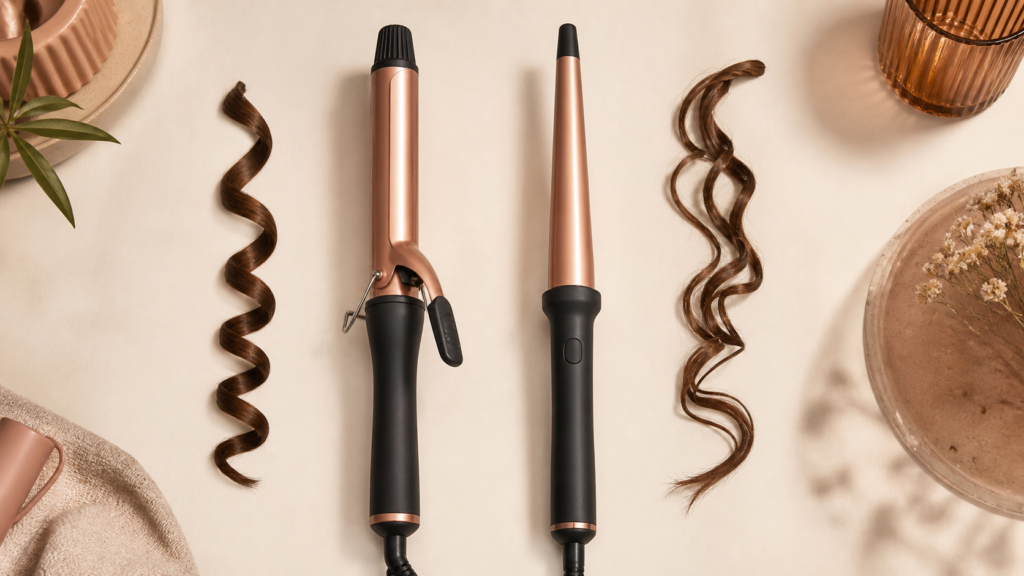
Compare clamp mechanics, wrap pattern, barrel geometry, end control, tension, burn risk, speed, learning curve, and curl consistency rather than ranking one format universally.
Tip: Control style should match hand skill, not trend.
These curling irons vs curling wands concepts separate mechanism, application, limits, and purchasing consequences.
Force holding hair against an iron barrel.
Hand placement of a section around a wand.
Width determining the approximate curl radius.
Change in barrel width from base to tip.
Ability to place and smooth the oldest tips.
How the finished curl leaves the barrel.
Tip: Use these terms to test curling irons vs curling wands instead of relying on a front-label promise.
Irons secure the section; wands let the user choose wrap placement. Test which method keeps tension low and ends organized.
Control style should match hand skill, not trend.
Short hair may not wrap a large barrel; very long hair can overlap on a short one. Tapers produce variation that may or may not suit the target.
Geometry sets the curl template before heat begins.
AAD advises leaving a curling iron in place only briefly. Prepared sections, suitable temperature, and consistent wrap reduce the urge to reheat the same hair.
The safest successful curl is the one not reheated.
Wands often need a heat glove; clamps can pinch. Both need a stable rest, safe cord path, dry surroundings, and full cooling before storage.
Burn prevention is part of format performance.
A wand may offer creative wraps; an iron may save time for uniform sets. Include hand mobility, dominant side, auto shutoff, cord, glove, stand, and return policy.
The better value is the tool that produces the style reliably.
Format changes how hair is secured and tensioned, not the fundamental thermal risk.
The tool creates the intended curl with short, repeatable contact.
The user can manage ends and tension without snagging or burns.
Either format can cause damage at excessive settings or dwell.
A shape that takes repeated correction is not an efficient match.
These claims flatten the variables that determine how curling irons vs curling wands performs in a real routine.
Removing a clamp avoids one pinch and crease mechanism but places fingers closer to the barrel. Gloves, hand control, scalp clearance, temperature, and dwell remain essential.
Clamp placement, direction, barrel angle, section size, and brushing determine the finish. An iron can create loose or modern texture when geometry and technique fit.
A taper offers multiple diameters but can make results less uniform and sections may slide. One barrel cannot reproduce every radius consistently.
A clamp can organize ends, but those tips are old and may receive concentrated heat or pressure. Use low exposure and avoid holding the ends under the hottest contact longest.
A heat-resistant styling glove reduces risk but may not protect against prolonged contact or exposed skin. Keep deliberate spacing and stop if grip becomes uncertain.
Tip: Test the exact curling irons vs curling wands tool, setting, and routine before generalizing from its category.
The remaining decisions about curling irons vs curling wands concern technique, compatibility, safety, upkeep, and value.
Many find a clamp easier for end control, while others prefer seeing the entire wrapped section on a wand. Practice unplugged and choose the method that feels stable.
A narrow barrel with usable access and good scalp clearance matters more than format. Large barrels and bulky clamps can be awkward on short sections.
Use the shortest contact that works at a conservative setting; AAD advises only a second or two for curling irons. Follow the tool instructions.
Letting the section cool can help the temporary shape set. Then separate or brush according to the style, using low force and avoiding repeated heated correction.
Use on fully dry hair unless a specialized tool explicitly directs otherwise. Conventional direct heated barrels on wet sections create unnecessary structural risk.
Replace it for damaged cord, unstable heat, peeling barrel, rough edges, failed clamp, loose stand, sparking, or burning odor.
Curling irons secure hair with a clamp; wands require manual wrapping and tension. That difference changes end control, repeatability, freedom, and burn risk, while barrel geometry and thermal exposure still govern the curl.
Choose the format that reduces redos and keeps hands, scalp, and fragile ends controlled. Conservative heat, brief dwell, full drying, and safe cooling matter with either design.
These Review Streets paths narrow the next curling irons vs curling wands decision by format, goal, and routine fit.
Compare dryers, irons, wands, multi-stylers, and their buying paths.
Explore airflow, heat control, attachments, ergonomics, and long-term versatility.
Choose a retailer
Prices checked regularly. We may earn a commission at no cost to you.