
Anhydrous Oil
Oil-rich formula containing little or no water.
- Use: provide slip and occlusion
- Variable: oil blend
- Tradeoff: Does not add water directly
Cuticle oils are usually fluid blends of oils, esters, or silicones designed to spread quickly around the nail folds and plate. Cuticle creams are commonly emulsions or balms that combine water-related ingredients with oils, waxes, emulsifiers, and sometimes humectants, leaving a more substantial film.
Those vehicle differences affect feel, placement, and persistence—not whether one reaches the nail matrix or makes nails grow faster. Oil suits precise, frequent application and massage; cream can cover broader dry skin and provide a longer-lasting barrier. Either may contain fragrance or allergens, interfere with immediate polish adhesion, or contaminate through direct-contact packaging.
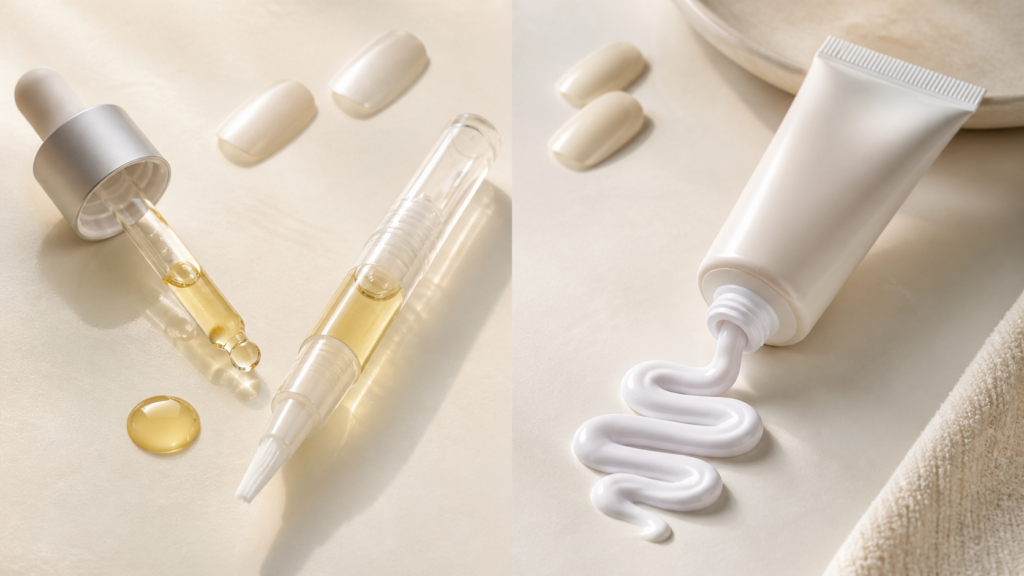
Compare fluid oil-rich vehicles with water-containing emulsions or richer balms by spread, occlusion, humectancy, absorption feel, applicator hygiene, placement, timing, polish compatibility, and cost rather than claiming one nourishes more deeply.
Tip: Oil is efficient when precision prevents waste.
These cuticle oils vs cuticle creams concepts separate mechanism, application, limits, and purchasing consequences.
Oil-rich formula containing little or no water.
Water and oil phases stabilized together.
Ingredient attracting and holding water in a formula or surface layer.
Reduction of water loss by a surface film.
Ability to place a small controlled dose.
Amount of conditioning feel remaining after handwashing.
Tip: Use these terms to test cuticle oils vs cuticle creams instead of relying on a front-label promise.
Pens, brushes, and droppers can deliver a tiny dose along each fold. Oil spreads well but should not run under lifted coatings or onto damaged skin.
Oil is efficient when precision prevents waste.
Cream suits rough fingertips and surrounding hand skin, especially at night or after washing. A balm can be even more occlusive but may transfer.
Cream earns its weight by covering more than the cuticle line.
Oils and creams can weaken polish adhesion when residue remains. Condition between manicures or remove surface residue exactly as the coating system directs.
Good timing preserves both barrier and manicure wear.
Natural oils can cause reactions; creams need preservation because they contain water. Stop after persistent burning, rash, swelling, or worsening splits.
Vehicle does not determine universal gentleness.
A small pen may cost more per milliliter but waste less; a cream tube can serve hands and nails. Include shelf stability and whether the applicator is washable.
The best value is the formula that gets applied consistently and cleanly.
Oil and cream deliver different surface films; neither permanently rebuilds the nail or treats inflamed and infected folds.
The chosen texture distributes cleanly over the intended skin and nail zones.
Comfort lasts until the next wash without objectionable residue.
Fluid oils can run; creams can collect around folds or feel heavy.
Ingredient prestige cannot replace tolerance and consistent use.
These claims flatten the variables that determine how cuticle oils vs cuticle creams performs in a real routine.
Most cuticle oils contain little or no water. They lubricate and can reduce water loss; creams may supply water and humectants within an emulsion.
Both mainly act on accessible surfaces. The nail matrix is protected beneath the proximal fold and is not cosmetically fed through ordinary application.
Plant oils and fragrances can irritate or sensitize some people. Natural source does not guarantee tolerance.
Residue reflects the surface film and dose. A thinner product may be equally useful when applied regularly without mess.
They can soften and protect surrounding skin, but a barrier break needs time, protection, and monitoring for infection rather than cosmetic sealing.
Tip: Test the exact cuticle oils vs cuticle creams tool, setting, and routine before generalizing from its category.
The remaining decisions about cuticle oils vs cuticle creams concern technique, compatibility, safety, upkeep, and value.
Use a quick oil after some washes and a more persistent cream or balm when practical. Reapplication matters more than choosing one format forever.
Yes, but the effects overlap. A cream or balm alone may already provide water-related ingredients plus occlusion; avoid needless buildup.
Condition ahead of time, then remove plate residue as directed. Do not strip surrounding skin aggressively just to improve adhesion.
They control dose but the tip contacts skin repeatedly. Keep them personal, wipe as directed, and replace after contamination or odor change.
Broken skin, preservatives, fragrance, acids, or other ingredients may sting. Stop use, rinse if needed, and choose a simpler formula after the barrier recovers.
A significant change in odor, color, or texture is a reason to discard it. Store closed and away from heat and light according to directions.
Cuticle oils are fluid, oil-rich surface conditioners; creams are emulsions or balms that can combine water, humectancy, emollience, and stronger occlusion. Their difference is vehicle and use pattern, not access to the nail matrix.
Choose oil for precise frequent placement and cream for broader persistent coverage. Keep applicators clean, separate conditioning from polish preparation, and stop after reaction or signs of infection.
These Review Streets paths narrow the next cuticle oils vs cuticle creams decision by format, goal, and routine fit.
Browse nail treatments, polish, removal, and care categories.
Compare cuticle oils by vehicle, applicator, feel, and routine fit.
Choose a retailer
Prices checked regularly. We may earn a commission at no cost to you.