What Makes Electric SUVs Different from Hybrid SUVs

Battery-electric SUVs use electricity stored in a rechargeable battery to propel the vehicle, while hybrid SUVs combine a combustion engine with electrical equipment. That difference changes where energy comes from, how it reaches the wheels, and what the owner must replenish and maintain. Similar quiet low-speed behavior does not mean the two systems work the same way.

The hybrid label also needs clarification. A conventional hybrid normally receives its external energy through fuel and does not plug in. A plug-in hybrid can charge from an external supply and use stored electrical energy for a portion of driving, while retaining an engine. Compare those three arrangements separately before deciding which suits your routine.

By: Review Streets Research Lab
Updated: September 30, 2026
Explainer · 8-12 min read
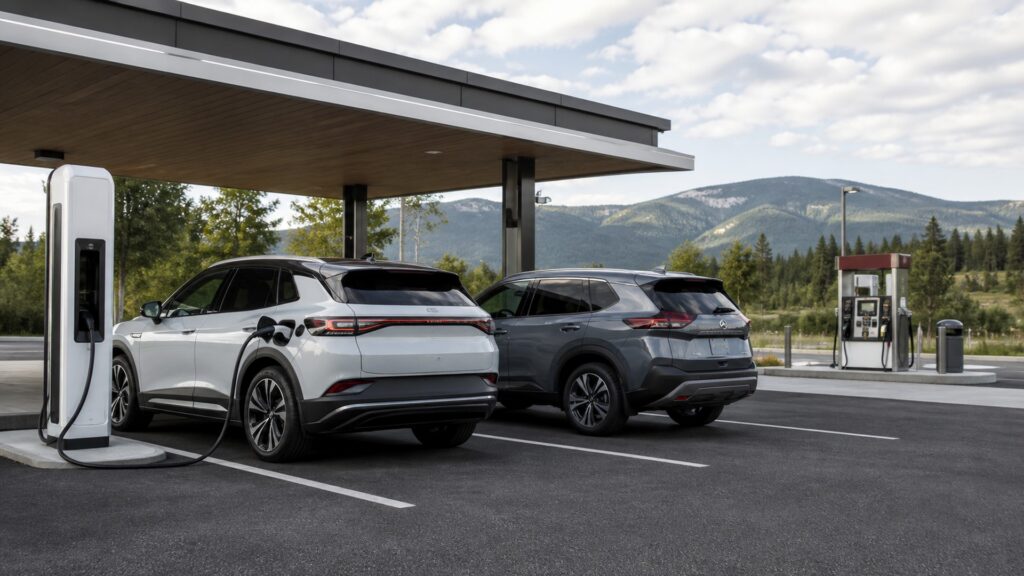
electric suvs explainer hero image for Review Streets
What You'll Learn

Compare Energy Sources Before Driving Impressions

The most useful differences concern refueling, charging, operating behavior, and upkeep.

  • Distinguish a battery-electric SUV from both hybrid types.
  • Follow the source of energy used for the journey.
  • Understand the limited role of braking energy recovery.
  • Match charging access to the powertrain that needs it.
  • Compare upkeep and costs for equivalent vehicle duties.

Tip: A vehicle moving under electric power at one moment is not necessarily a battery-electric vehicle.

Definitions

Three Powertrains and Three Supporting Concepts

Clear terms prevent misleading comparisons between electrified SUVs.

Battery-electric vehicle

A vehicle propelled by electric motors using a battery replenished through external charging.

  • Example: An SUV charges overnight before the next day’s trips.
  • Check: Verify charging compatibility and practical route capability.
  • Limit: It has no combustion engine to continue the trip on gasoline.

Conventional hybrid

A vehicle combining an engine and electrical drive equipment without normal external plug-in charging.

  • Example: The engine and motor cooperate while the driver refuels with gasoline.
  • Check: Identify the actual hybrid design and capabilities.
  • Limit: Electric-only operation varies and is not guaranteed for every hybrid type.

Plug-in hybrid

A hybrid with a battery that can receive energy from an external charging source.

  • Example: Regular charging supports electric driving before or alongside engine use.
  • Check: Check electric capability and engine-start conditions for the model.
  • Limit: The engine may operate even when usable battery charge remains.

Energy recovery

Capturing some vehicle motion as electrical energy during deceleration.

  • Example: The drive motor slows the vehicle while returning energy to the battery.
  • Check: Understand conditions that limit the contribution.
  • Limit: It does not recover all energy or eliminate external energy needs.

Energy management

Automatic coordination of power sources, battery use, and operating limits.

  • Example: A hybrid starts its engine when the system requires it.
  • Check: Read the mode descriptions and normal operating behavior.
  • Limit: The driver may not be able to force an electric-only state in every condition.

External energy supply

The fuel or electricity brought into the vehicle to support travel.

  • Example: A BEV uses charging, while a PHEV can use charging and fuel.
  • Check: Build costs and trip plans around the actual supply mix.
  • Limit: Recovered braking energy originally came from energy already used to move the vehicle.

Tip: Trace the whole trip’s energy supply, not just whether the engine is quiet at a stop.

What powers the journey

Start with the Energy That Enters the Vehicle

A battery-electric SUV receives its driving energy through charging. A conventional hybrid uses fuel as its normal external energy source, while its electrical system assists and recovers energy internally. A plug-in hybrid adds an external charging path and can reduce fuel use when regularly charged and used within suitable conditions.

  • Identify whether the vehicle has a charging port.
  • Separate battery-electric operation from hybrid electric assistance.
  • Check the vehicle’s stated operating modes.

A conventional hybrid does not obtain free energy by charging its battery while driving. Its engine and recovered motion supply the electrical side; fuel remains necessary for sustained use.

How the wheels are driven

Hybrid Layouts Differ from One Another

Battery-electric models use electric motors for propulsion. Hybrids can arrange engine and motor contributions in different ways, including mechanical paths and electrically mediated paths. Mild, full, and plug-in systems do not offer identical electric-driving behavior, so a generic hybrid label cannot explain the exact power flow.

  • Look up the specific hybrid architecture and capability.
  • Avoid assuming every hybrid can drive with its engine off.
  • Assess smoothness and response in ordinary use.

One hybrid may run its engine during a condition where another remains quiet. That difference can be normal system behavior rather than evidence that one driver selected the wrong mode.

Slowing and restarting

Energy Recovery Is Shared Technology, Not Unlimited Range

Many electrified vehicles recover some energy while slowing. This reduces energy that would otherwise become heat in friction braking, but the process has limits and losses. Battery state, temperature, traction, and system design can affect the contribution. Conventional braking equipment remains part of the vehicle.

  • Learn the fitted deceleration settings before relying on them.
  • Expect behavior to follow the manual’s operating limits.
  • Use the brake pedal whenever needed to stop safely.

A downhill stretch may return some energy to the battery, but it does not turn an electric SUV or hybrid into a vehicle that replenishes all its own energy. Plan charging or fuel stops for the full journey.

Living with the powertrain

Choose the Replenishment Routine You Can Support

A BEV needs dependable charging, whether at home, work, or suitable public locations. A conventional hybrid follows a fuel-stop routine. A PHEV offers both paths, but its value as a plug-in depends on whether charging is actually used. Evaluate the routine and longer trips separately.

  • Check regular charging permission and availability.
  • Map difficult routes for the energy supply required.
  • Consider the time and cost of normal replenishment.

A household unable to charge conveniently may prefer a conventional hybrid. A household with reliable charging and suitable routes may favor a BEV, while a PHEV warrants a separate calculation based on how often it will be plugged in.

Costs and service

Compare the Whole Vehicle, Not Just Fuel Savings

A hybrid retains an engine and its associated maintenance needs. A BEV removes those engine-specific tasks but still needs tires, brakes, support systems, and scheduled care. For cost comparisons, use the same carrying task and mileage, with realistic fuel and electricity prices rather than assuming the most favorable operating mode all year.

  • Include purchase, insurance, energy, and service expenses.
  • For a PHEV, estimate the actual share of charged driving.
  • Verify relevant warranties and current service requirements.

Comparing a large hybrid with a smaller electric SUV can mix a size difference into the powertrain result. Match passenger, cargo, and other requirements first so the cost comparison answers a useful question.

Quick Reality Check

Which Energy Arrangement Fits Which Routine?

Start with practical replenishment access after confirming the vehicle fits.

Battery-electric often suits…

Drivers with dependable charging and workable plans for recurring long trips.

Households ready to replace fuel stops with an electricity-based routine.

Hybrid choices can suit…

Conventional-hybrid owners who want electrical assistance while retaining a fuel-only replenishment routine.

Plug-in-hybrid owners who can charge regularly and have a reason to retain engine capability.

Common Myths

Misconceptions About Electric and Hybrid SUVs

Similar features can conceal different ownership requirements.

Are all hybrids plug-in vehicles?

No. Conventional hybrids normally do not accept external charging; plug-in hybrids do.

Does every hybrid offer meaningful electric-only travel?

No. Capability varies by hybrid type and vehicle design.

Can braking recovery keep the battery supplied indefinitely?

No. It recaptures only part of energy already used, with losses and operating limits.

Does a PHEV always keep its engine off when charged?

No. Conditions and system requirements can trigger engine operation; consult the exact model’s guidance.

Tip: Check the specific powertrain rather than relying on the presence of a battery or motor.

FAQ

Questions to Settle Before Choosing an Electrified SUV

Keep the energy arrangement and the household task connected.

Which is best without a dependable charger?

A conventional hybrid may fit that constraint more readily. Still compare the actual vehicle, route, and ownership costs.

Does a BEV need gasoline as backup?

A battery-electric vehicle has no combustion engine for that purpose. Its trip plan depends on adequate charge and charging access.

What should I check on a PHEV?

Review charging capability, electric-range expectations, engine-start conditions, fuel use after charged operation, and maintenance.

Can any of these powertrains work in a compact SUV?

Yes, size and powertrain are separate characteristics. Check which actual models meet your space and access requirements.

Bottom Line

Electric and hybrid SUVs differ in energy supply and powertrain design, not simply in how quiet they feel.

Separate BEV, conventional hybrid, and plug-in hybrid, then choose the arrangement your charging access, trips, and ownership plan can support.

Next Steps

Go Deeper or Compare Your Options

Use these Review Streets paths to compare related categories and practical next decisions.

Vehicles

Compare related vehicle choices against the same carrying needs and driving routine.

SUVs

Compare related vehicle choices against the same carrying needs and driving routine.

Electric SUVs

Explore Electric SUVs with your passenger, cargo, and ownership requirements in mind.

Further reading: Battery-electric components; Conventional hybrid basics; Plug-in hybrid components; Electrified-vehicle maintenance. Use the owner’s manual for the exact vehicle’s instructions and limits.