
What Makes Fall Detection Devices Different from Baby Nasal Aspirators

Fall detection devices communicate about a suspected event; baby nasal aspirators physically remove loosened mucus from an infant's nostril. One is an electronic sensing-and-alert category, while the other is a brief hands-on hygiene tool.

Their benefits, risks, and success measures have almost nothing in common. Fall protection depends on wear and responder routing. Aspiration depends on gentle technique, limited suction, clean components, and recognition that respiratory distress needs care rather than more suction.

By: Review Streets Research Lab
Updated: August 19, 2026
Explainer · 8-12 min read
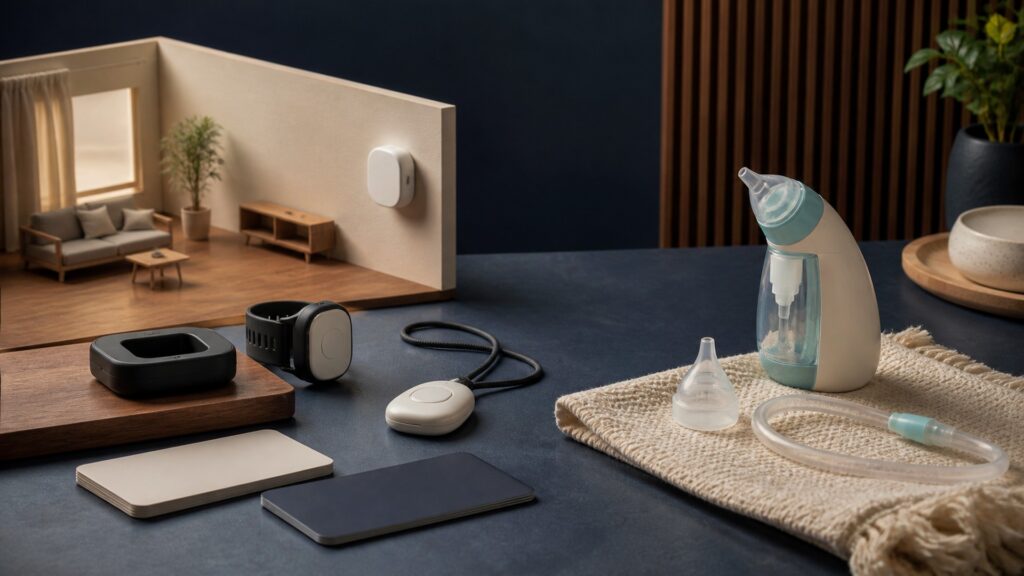
People-free editorial still life for What Makes Fall Detection Devices Different from Baby Nasal Aspirators
What You'll Learn

Contrast an alert pathway with controlled mucus removal

Follow what each product acts on, what result is visible, where harm can arise, and when human or clinical help becomes more important than the device.

  • Separate information delivery from physical action
  • Identify the relevant user and setting
  • Compare maintenance and contamination risks
  • Judge success with category-specific outcomes
  • Know when not to repeat use
  • Maintain the correct emergency response

Tip: Read the concept as part of a system, then connect it back to the use case.

Definitions

Six Concepts That Shape This Decision

These definitions connect the main idea to the variables, limits, and practical signals readers need to compare options.

Movement classification

Movement classification is software's interpretation that wearable or room-sensor data resembles a fall.

  • It supplies a reason to check an adult or older user's condition.
  • Validate routing through approved tests rather than simulated falls.
  • The output neither prevents injury nor explains its cause.

Suction pressure

Suction pressure is the negative pressure an aspirator applies at the nostril opening.

  • It helps mobilize accessible secretions when kept within the product's intended range.
  • Use the lowest effective setting and watch the baby's comfort.
  • Excessive force or insertion can irritate delicate tissue.

Alert recipient

An alert recipient is the monitoring center, caregiver, or contact who receives a possible-fall message.

  • That person interprets information and begins the agreed response.
  • Confirm names, numbers, and access instructions regularly.
  • A delivered notification does not guarantee immediate assistance.

Nostril seal

A nostril seal is the gentle interface that lets an aspirator draw loosened mucus without deep insertion.

  • Tip shape and positioning affect both effectiveness and irritation risk.
  • Follow age and model instructions for the seal.
  • Forcing a tip inward is unsafe and unnecessary.

Contamination control

Contamination control keeps mucus-contact parts clean, dry, and assigned as directed.

  • It matters to aspiration because secretions contact reusable surfaces.
  • Disassemble and clean the exact components named by the manufacturer.
  • Residue or trapped moisture can undermine hygiene even when the motor runs.

Escalation sign

An escalation sign is a symptom that calls for medical assessment instead of repeated consumer-device use.

  • For infants, breathing effort, color, feeding, hydration, and responsiveness carry more weight than mucus volume.
  • Write urgent contacts before congestion occurs.
  • Neither suction nor an app should delay emergency care for severe distress.

Tip: Keep the definitions connected; the strongest answer usually comes from the whole system, not one term.

Compare the Direct Jobs

The categories differ first in whether they observe or physically intervene.

A fall detector collects motion and sends information so another person can respond. A nasal aspirator applies controlled suction directly to loosened secretion near the nostril. Product listings that emphasize motors, batteries, or portability can obscure this fundamental separation.

  • Name the object being acted upon
  • Identify whether output is data or mucus
  • Ignore irrelevant shared features
  • Choose by the immediate problem

Once the direct action is clear, cross-category substitution stops making sense.

Place the User at the Center

Adult safety monitoring and infant airway care involve different vulnerabilities.

Fall wearables must remain comfortable and accessible through daily movement. Aspiration requires a calm, supported infant, careful tip placement, and short use. A baby cannot report pain or dizziness, so caregivers must watch behavior, color, breathing effort, and tolerance closely.

  • Confirm intended age
  • Stabilize the immediate setting
  • Observe tolerance continuously
  • Stop when distress increases

Population-specific instructions matter more than superficial hardware similarities.

Measure the Right Outcome

Success looks different for communication and mucus removal.

For fall detection, verify that a test alert reaches the correct responder with useful information. For aspiration, judge whether accessible mucus was removed and feeding or comfort temporarily improves without bleeding or irritation. Neither outcome proves the underlying health issue is resolved.

  • Test alert delivery safely
  • Observe secretion removal
  • Check comfort after use
  • Avoid broad medical conclusions

A useful outcome must remain tied to the category's narrow purpose.

Maintain the Relevant Components

Each ownership routine protects a different failure point.

Fall systems need charging, connection checks, contact updates, and software maintenance. Aspirators require cleaning of mucus-contact parts, drying, correct filter or reservoir assembly, and replacement of worn tips. Applying one category's maintenance logic to the other leaves important hazards untouched.

  • Follow the correct cleaning map
  • Keep communication accounts current
  • Inspect consumable parts
  • Store equipment dry and accessible

Maintenance should follow the path through which the product actually works.

Recognize When the Device Is Not the Answer

Both tools have a firm boundary at urgent human need.

A serious fall, head injury, fainting, or inability to rise requires appropriate help beyond an alert. An infant with blue color, pauses in breathing, marked chest pulling, limpness, poor responsiveness, or worsening feeding needs prompt clinical or emergency assessment rather than repeated aspiration.

  • Respond to severe symptoms
  • Avoid delaying emergency contact
  • Do not repeat painful technique
  • Document important events for care

The device may start or support action, but it does not replace that action.

Quick Reality Check

A sensor report versus a short physical procedure

The products differ in target, mechanism, user, maintenance, evidence, and foreseeable harm.

What the evidence can support

A fall system can communicate a possible event when its sensor and routing chain operate as intended.

A nasal aspirator can remove some accessible loosened mucus and may briefly ease congestion-related feeding or comfort.

What remains unresolved

Fall classification cannot diagnose injury, and aspiration does not treat the infection or condition causing congestion.

Neither category should be used outside its labeled age, placement, technique, and emergency boundaries.

Common Myths

Misconceptions That Distort the Decision

Common shortcuts and misunderstandings can make the topic seem simpler than it is.

Are these categories comparable because both may use a small motor?

No. A motor or battery is only a component. Fall products convert movement data into communication, whereas aspirators create controlled airflow to move mucus. Their users, desired outcomes, testing methods, maintenance, and safety limits remain unrelated.

Can stronger suction clear congestion faster and therefore work better?

More force can irritate nasal tissue, cause bleeding, and make the experience harder to repeat. Use the lowest effective setting, shallow approved placement, and brief attempts. Stop when pain, bleeding, or worsening distress appears.

Does a fall alert tell the recipient how badly someone is injured?

It indicates that sensor data met a threshold, not the diagnosis or severity. The recipient must establish contact, assess the situation, and follow the emergency plan. A missed classification also cannot be read as proof that no fall occurred.

Will nasal aspiration cure the illness behind a baby's congestion?

Aspiration removes some accessible secretion for temporary comfort; it does not cure viral illness, allergy, structural problems, or lower-airway disease. Persistent symptoms, feeding difficulty, dehydration signs, fever concerns, or breathing effort deserve appropriate clinical guidance.

Tip: Treat strong claims as starting points for comparison, not final answers.

FAQ

Questions to Ask Before Choosing

Concise answers to common questions readers may have after the main explanation.

Why would these products appear in one broad health-products taxonomy?

Both may sit within family safety or care categories and include compact powered hardware, but taxonomy proximity does not create functional similarity. Selection should start with the user and immediate problem, then follow the mechanism and response.

How is a fall detector tested without endangering someone?

Use its test mode, manual control, or monitoring-service procedure exactly as instructed. Announce the test, verify the recipient and speaker route, and never ask a user to drop, stumble, or simulate an uncontrolled fall.

What makes nasal aspiration safer and more tolerable?

Follow the age-specific instructions, loosen secretions as clinically appropriate, keep the tip at the entrance rather than inserting deeply, use gentle limited suction, clean contact parts, and stop if the infant becomes markedly distressed or bleeding occurs.

When should device troubleshooting stop?

Stop when a person may be injured, unresponsive, breathing abnormally, turning blue, severely distressed, or rapidly worsening. Begin the appropriate emergency response. Technical logs and cleaning can wait until immediate human safety has been addressed.

Bottom Line

Fall detection is an information system for a suspected movement event. Baby nasal aspiration is a controlled physical method for removing accessible mucus. Their only sensible comparison is the reminder that a device's primary job must match the immediate need.

Test fall-alert routing without staging danger, use aspirators gently and hygienically, and recognize the symptom or injury boundaries that call for human clinical or emergency care.

Next Steps

Go Deeper or Compare Your Options

Use these Review Streets paths to connect the explainer to related categories, comparisons, and next decisions.