
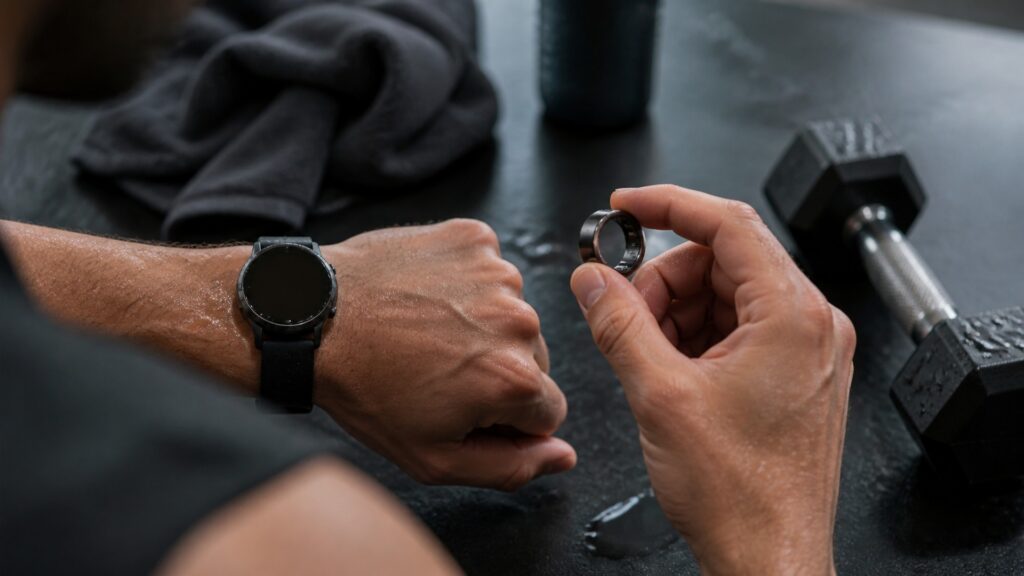
What Makes Fitness Watches Different from Fitness Rings

Fitness watches and fitness rings both track wearable data, but they start from different form factors. A watch has a wrist display, controls, and more room for battery, antennas, and workout features. A ring has a small body, finger-based sensor contact, and a design that often disappears more easily during sleep or daily wear.

That design split changes the whole experience. Watches are usually stronger when the user wants real-time screens, GPS workouts, and smart features. Rings are often about passive tracking, comfort, and overnight trends, with fewer on-device controls.

By: Review Streets Research Lab
Updated: September 2, 2026
Explainer · 8-12 min read
fitness watches explainer hero image for Review Streets
What You'll Learn

What to Understand About Fitness Watches vs Fitness Rings

This explainer separates the main mechanism, tradeoffs, limits, and decision points behind Fitness Watches vs Fitness Rings.

  • The central question behind What Makes Fitness Watches Different from Fitness Rings.
  • Which signals, movement patterns, or equipment constraints define Fitness Watches vs Fitness Rings.
  • How wrist display, finger sensor, and optical sensor contact affect the answer.
  • Where the useful rule of thumb stops being reliable.
  • Which setup or fit details change the practical result.
  • Why the explanation should not be turned into a medical or performance guarantee.
  • Where to go next on Review Streets without padding through breadcrumb ancestors.

Tip: For Fitness Watches vs Fitness Rings, start with the behavior you need to explain, then check whether the device, tool, or drill actually creates that behavior.

Definitions

Key Concepts That Define Fitness Watches vs Fitness Rings

These definitions connect the main idea to the variables, limits, and practical signals readers need to compare options.

Fitness watch

Fitness watch gives readers a concrete way to evaluate Fitness Watches vs Fitness Rings through wrist display.

  • Signal 1: watch how wrist display changes the drill, metric, fit, or device behavior.
  • Comparison role: separates context from broad labels.
  • Limit: product, setup, surface, and mode still matter.

Fitness ring

Fitness ring gives readers a concrete way to evaluate Fitness Watches vs Fitness Rings through finger sensor.

  • Signal 2: watch how finger sensor changes the drill, metric, fit, or device behavior.
  • Comparison role: separates context from broad labels.
  • Limit: product, setup, surface, and mode still matter.

Sensor placement

Sensor placement gives readers a concrete way to evaluate Fitness Watches vs Fitness Rings through optical sensor contact.

  • Signal 3: watch how optical sensor contact changes the drill, metric, fit, or device behavior.
  • Comparison role: separates context from broad labels.
  • Limit: product, setup, surface, and mode still matter.

Display layer

Display layer gives readers a concrete way to evaluate Fitness Watches vs Fitness Rings through GPS antenna.

  • Signal 4: watch how GPS antenna changes the drill, metric, fit, or device behavior.
  • Comparison role: separates context from broad labels.
  • Limit: product, setup, surface, and mode still matter.

Workout controls

Workout controls gives readers a concrete way to evaluate Fitness Watches vs Fitness Rings through battery size.

  • Signal 5: watch how battery size changes the drill, metric, fit, or device behavior.
  • Comparison role: separates context from broad labels.
  • Limit: product, setup, surface, and mode still matter.

Sizing constraint

Sizing constraint gives readers a concrete way to evaluate Fitness Watches vs Fitness Rings through screen interaction.

  • Signal 6: watch how screen interaction changes the drill, metric, fit, or device behavior.
  • Comparison role: separates context from broad labels.
  • Limit: product, setup, surface, and mode still matter.

Tip: If a claim about Fitness Watches vs Fitness Rings ignores wrist display or finger sensor, it is probably skipping the most important context.

Form Factor

The Watch Has Interface Space; the Ring Has Wearability Space

A watch can show metrics during a run, start workouts from the wrist, display notifications, and house buttons or a touchscreen. A ring gives up most of that interface to stay small and less intrusive.

  • Watches can show pace, heart rate, timers, and maps in real time.
  • Rings usually send most interaction to the phone app.
  • A larger case can support more controls and visible prompts.
  • A ring can feel less noticeable during sleep or desk work.
  • The better form depends on whether interaction or passive wear matters more.

The screen is not just a convenience; it changes how the wearable is used during activity.

Sensor Placement

Finger and Wrist Signals Behave Differently

Rings and watches place optical sensors on different body sites. A finger ring may maintain stable contact during some passive tracking, while a wrist watch has more motion and fit variation but more room for sensor hardware.

  • Finger fit can support overnight trends when sizing is correct.
  • Wrist sensors can struggle when the device is loose or bouncing.
  • Cold hands, ring fit, and finger swelling can affect ring comfort and readings.
  • Watch straps can be adjusted more easily during workouts.
  • Neither placement makes every metric automatically accurate.

Sensor placement changes signal quality and comfort in ways the spec sheet may not show.

Workout Use

Watches Usually Handle Active Training Better

Workout tracking often needs controls, live data, GPS, alerts, and quick visibility. Watches have a natural advantage because they can manage those interactions without requiring the phone for every check.

  • Built-in GPS is more common and practical in watches.
  • Buttons can be easier to use during sweat or cold conditions.
  • Screens make interval, pace, and zone feedback visible.
  • Rings may track workouts but often depend more on the app.
  • Lifting or gripping equipment can make rings less comfortable for some users.

For active sessions, the watch behaves more like a training dashboard.

Sleep and Daily Wear

Rings Often Win by Getting Out of the Way

A ring's strongest case is that it may be easier to wear continuously, especially overnight. A small device can collect passive trends without a bright screen, strap, or bulky case.

  • Sleep tracking benefits from a device the user will actually wear.
  • Rings can avoid wrist irritation for some people.
  • Watches can be removed for charging or comfort more often.
  • Ring sizing must be right or comfort can disappear.
  • A ring still may interfere with lifting, manual work, or swelling.

Passive tracking depends on comfort as much as sensor capability.

Decision Boundary

Choose by Interaction, Training, and Wear Time

The difference is clearest when the user names the main job. Watches fit real-time workouts and smart features. Rings fit passive trends and low-profile wear. Some users use both because the jobs are different.

  • Pick a watch for screens, GPS, controls, and app notifications.
  • Pick a ring for low-profile daily wear and overnight trend tracking.
  • Check ring sizing before assuming it will disappear on the hand.
  • Check watch battery if GPS sessions are frequent.
  • Treat health and recovery metrics as estimates on both form factors.

The form factor decides which data is easy to collect and which data is easy to use.

Quick Reality Check

Where Fitness Watches vs Fitness Rings Helps and Where It Needs Context

A useful explanation of Fitness Watches vs Fitness Rings should clarify the main pattern without pretending one rule covers every user, device, surface, or training goal.

What Fitness Watches vs Fitness Rings Clarifies

It explains why screen, battery, sensor placement, sizing, and workout controls shape the experience.

It gives readers a better way to compare Fitness Watches vs Fitness Rings without relying on vague claims or category labels.

Where the Shortcut Breaks Down

It does not prove rings are more accurate or watches are better for everyone; device model, fit, and activity type still matter.

Individual products, bodies, workouts, surfaces, sensors, and app algorithms can change the result, so broad claims need context.

Common Myths

Misconceptions About Fitness Watches vs Fitness Rings

Common shortcuts and misunderstandings can make the topic seem simpler than it is.

Fitness Watches vs Fitness Rings is just a preference

Preference matters, but this topic has real mechanics behind it. The useful comparison looks at wrist display, finger sensor, and the way the setup changes behavior.

The bigger or more advanced option is automatically better

A more complex tool or device can add useful capability, but it can also add distraction, setup demands, battery tradeoffs, or movement changes that do not fit the goal.

One metric or cue tells the whole story

Single numbers and simple cues are easy to remember, but they miss context. Fit, surface, load, sensor placement, activity type, and user intent can all change the meaning.

The same rule applies to every workout

The better rule depends on the task. A recovery question, a footwork drill, a GPS workout, and a strength session each ask the equipment or wearable for different information.

This explanation proves a health or performance outcome

It does not. The article explains mechanisms and decision boundaries; medical concerns, injury questions, and individualized programming require qualified guidance and more context.

Tip: Treat strong claims as starting points for comparison, not final answers.

FAQ

Frequently Asked Questions About Fitness Watches vs Fitness Rings

Concise answers to common questions readers may have after the main explanation.

What is the simplest way to understand Fitness Watches vs Fitness Rings?

Start with the main job: what the tool, device, or metric is supposed to reveal. Then check the setup details that control whether that job is actually happening.

Is Fitness Watches vs Fitness Rings always important?

No. It matters most when the decision depends on the mechanism described here. In simpler situations, comfort, consistency, cost, or basic usability may matter more.

Can the category label be trusted by itself?

Not fully. Labels are helpful starting points, but movement pattern, sensor placement, shell design, app behavior, battery life, fit, or stated product use often matter more.

What should readers avoid assuming?

Avoid assuming the explanation guarantees safety, recovery, calorie burn, injury prevention, or sport performance. Those claims need evidence and individual context beyond the category label.

How should this guide a comparison?

Use it to ask better questions. Compare the feature or tool against the task it must perform, then check whether the limits described here matter for your situation.

Bottom Line

Fitness Watches vs Fitness Rings matters when it changes the behavior readers are actually trying to understand.

The practical takeaway is to classify Fitness Watches vs Fitness Rings by mechanism and use context: what it measures, constrains, absorbs, displays, or asks the body to do, and where that explanation has limits.

Next Steps

Go Deeper or Compare Your Options

Use these Review Streets paths to connect the explainer to related categories, comparisons, and next decisions.

Wearable Fitness Trackers

Use this hub to compare watches, bands, rings, and heart-rate tools after the form-factor difference is clear.

Basic Activity Trackers

Use this path when the lighter, simpler end of the tracker category is more relevant than a full smartwatch.

Heart Rate Trackers Reviews

Use this path when the deciding factor is sensor placement and workout signal quality rather than screen size or app features.

Quick Summary

Fitness Watches vs Fitness Rings Explained

  • Fitness Watches vs Fitness Rings should be judged by behavior, not label alone.
  • wrist display and finger sensor are central clues.
  • Setup, fit, surface, activity type, and user context can change the answer.
  • Single scores or simple cues should not be treated as guarantees.
  • Next Steps should lead to related Review Streets destinations, not ancestor padding.
  • The explanation is practical context, not individualized medical or training advice.