What Makes Full Size SUVs Different from Compact SUVs

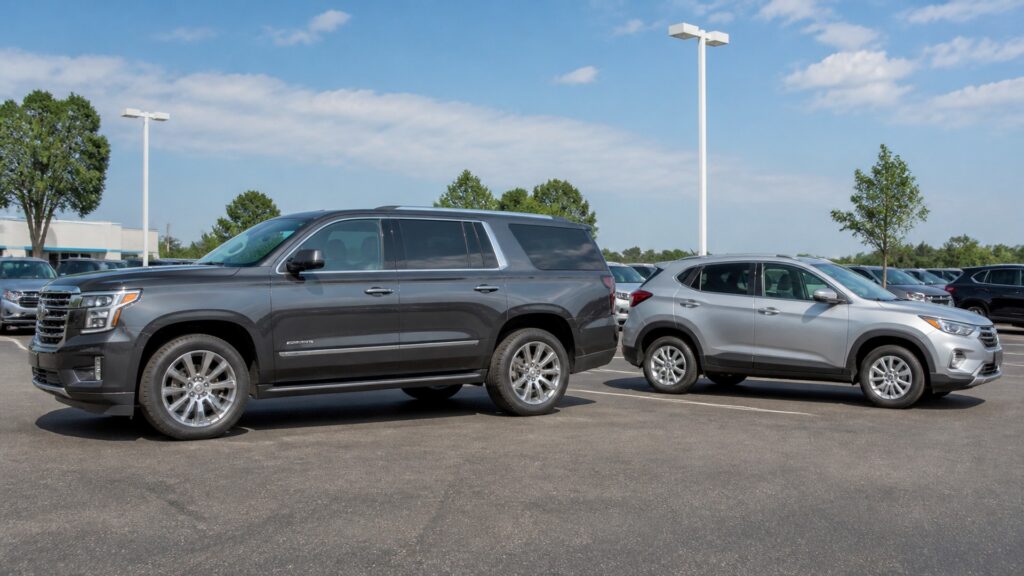
Full-size and compact SUVs differ most usefully in how much vehicle you must manage to carry the people and equipment you need. A full-size model generally offers a larger body and more room for substantial passenger and cargo tasks. A compact model generally asks less of a parking space and can be easier to accommodate in a crowded daily routine.

Those broad differences do not settle the purchase. Seating layouts, usable luggage space, payload, towing equipment, efficiency, and ride behavior vary by model. Compare specific vehicles with the same household load, then decide whether the larger footprint earns its place in ordinary life.

By: Review Streets Research Lab
Updated: September 30, 2026
Explainer · 8-12 min read
full size suvs explainer hero image for Review Streets
What You'll Learn

Compare Useful Capacity with Everyday Space Demands

The strongest comparison measures what you gain and what you must accommodate.

  • Keep required passenger positions occupied during cargo checks.
  • Assess rear-row access and comfort where relevant.
  • Measure parking approaches, not only the final space.
  • Verify rated work instead of inferring it from body size.
  • Price ownership for the actual configurations.

Tip: The right size is the one that handles recurring needs without creating an unnecessary daily burden.

Definitions

Size Differences That Affect Real Use

Use these measures to connect exterior size with a practical task.

Exterior footprint

The length and width the vehicle occupies, with relevant mirrors and clearances considered.

  • Example: A larger SUV requires more room in a narrow garage.
  • Check: Measure the vehicle and the approach to the space.
  • Limit: Published width may exclude mirrors.

Occupied-seat cargo space

The luggage area available while retaining every required passenger seat.

  • Example: Weekend bags must fit behind the third row rather than in its folded position.
  • Check: Test representative items with the normal seating arrangement.
  • Limit: Maximum cargo volume may describe a different seat layout.

Passenger access

The ease of reaching and using a seating position.

  • Example: A rear passenger must pass the second row to reach a third-row seat.
  • Check: Try the movement with ordinary restraints and seat positions.
  • Limit: Passenger count alone does not describe access or comfort.

Payload allowance

The permitted carried weight available for occupants and cargo under the vehicle’s specifications.

  • Example: People and luggage are counted together before a trip.
  • Check: Use the relevant label and account for added equipment.
  • Limit: A large cabin does not create unlimited carrying weight.

Rated towing configuration

The specific vehicle and equipment combination for which a towing limit is stated.

  • Example: A particular tow package is required for a listed capability.
  • Check: Match the exact version and every applicable limit.
  • Limit: The highest number in an advertisement may apply to another configuration.

Ownership burden

The combined money, time, and inconvenience involved in keeping and using the vehicle.

  • Example: A larger vehicle brings different parking and tire-cost implications.
  • Check: Use actual quotes and a realistic weekly routine.
  • Limit: Size alone cannot determine every ownership expense.

Tip: These checks allow a meaningful comparison even when two SUVs advertise similar features.

People and bags together

Compare the Space Left After Everyone Sits Down

A large cargo figure can be misleading when it assumes seats are folded. Start with all necessary occupants in suitable positions, then evaluate luggage shape, height, and access. Full-size models may better support a large group and its equipment, but the exact arrangement still needs a trial.

  • Set front seats for their regular occupants.
  • Retain every passenger position needed for the trip.
  • Try bulky items alongside ordinary bags.

A compact SUV may be entirely sufficient for a small household’s weekly use. A larger group with substantial luggage can reach a different result even if both households travel the same distance.

Cabin usability

Look Beyond the Number of Seats

A third row, where fitted, adds positions but also raises questions about access, legroom, headroom, and remaining luggage room. Second-row benches and individual seats produce different arrangements. The larger size class can offer useful options without guaranteeing that every seat suits every passenger.

  • Try entry and exit with the intended seating layout.
  • Check restraint fit and belt access in occupied positions.
  • Assess comfort over a representative period, not a quick sit.

If a passenger cannot reach the rear row without disturbing a regularly installed child restraint, that matters every time the vehicle is used. Compare that sequence directly instead of relying on a seating diagram.

The space around the vehicle

Account for the Larger Body on Ordinary Days

Extra body length and width remain present on solo errands. Parking aisles, narrow streets, garage openings, and passenger door clearance can make a full-size SUV more demanding to accommodate. A compact’s smaller footprint may provide enough practical benefit to outweigh capacity that is rarely needed.

  • Measure mirror clearance and usable garage length.
  • Check turning access into regular parking spaces.
  • Allow room to unload and open the liftgate.

For a household that carries a large group only occasionally, renting or using another suitable vehicle for those trips may be worth comparing with managing extra bulk every day. The frequency of the demanding task is part of the decision.

Work capability

Check Ratings Rather Than Assuming Bigger Means Enough

Full-size SUVs often enter a shortlist for towing or substantial carrying needs. Nevertheless, the exact powertrain, equipment, payload, and trailer setup determine suitability. A compact may meet a modest task; a full-size model may still miss a demanding one after people and cargo are accounted for.

  • Identify the actual load or trailer before comparing ratings.
  • Match required equipment to the vehicle being purchased.
  • Include passengers and luggage in the complete calculation.

A higher advertised towing maximum is not useful if the selected trim lacks the required equipment or the combined family load exceeds another limit. Assess the complete configuration, not a single number.

Cost and daily preference

Pay for Capacity You Will Use

Purchase price, energy consumption, tires, insurance, and maintenance can vary widely within either class. Use current quotes and vehicle-specific efficiency figures, then consider comfort and convenience. Do not infer body construction, propulsion, or safety solely from the size label.

  • Compare similar ownership periods and annual mileage.
  • Check replacement-tire and insurance quotes for each candidate.
  • Evaluate comfort and control on the roads you normally use.

A full-size SUV can be worthwhile when its room repeatedly avoids a genuine compromise. When a compact handles the same recurring task comfortably, its easier accommodation may be the more valuable advantage.

Quick Reality Check

Where Each Size Class Often Fits

Use these tendencies to guide a shortlist, then verify the candidates.

Full-size may fit when…

A large passenger group and its luggage travel together regularly.

A verified carrying or towing job justifies the larger body and ownership demands.

Compact may fit when…

The required people and equipment fit without recurring compromises.

Tight parking and frequent lightly loaded trips make exterior size especially important.

Common Myths

Misconceptions About SUV Size Classes

Broad labels leave several important details unresolved.

Does full-size always mean a usable third row for everyone?

No. Try the intended passengers and access route in the actual vehicle.

Are compact SUVs only suitable for city trips?

No. A compact that fits the passengers, luggage, and driving requirements can serve longer journeys.

Does every full-size SUV use the same construction?

No. Do not infer chassis design, powertrain, or drive system from size alone.

Can cargo volume substitute for a loading trial?

It helps compare specifications, but item shape, seat position, and the cargo opening can change practical usefulness.

Tip: Compare specific configurations whenever the decision depends on a precise capability.

FAQ

Questions for Choosing Between Compact and Full-Size

Start with how often the larger requirement really occurs.

Which size is better for a family?

The answer depends on the number of people, restraint needs, luggage, and access. Test the complete household arrangement.

Should I buy more space for one annual trip?

Compare the year-round cost and inconvenience with suitable alternatives for that trip. Occasional needs can justify extra size, but they should be explicit.

Will a compact always be cheaper?

No. Trim, powertrain, insurance, purchase terms, and use affect total cost. Compare the actual candidates.

What is the most revealing dealership check?

Try the normal passenger layout with representative bulky cargo, then assess your parking and access requirements.

Bottom Line

Full-size SUVs offer room for larger tasks; compact SUVs can make ordinary use easier to accommodate.

Choose from verified passenger, cargo, parking, and rated-work requirements rather than the size label alone.

Next Steps

Go Deeper or Compare Your Options

Use these Review Streets paths to compare related categories and practical next decisions.

Vehicles

Compare related vehicle choices against the same carrying needs and driving routine.

SUVs

Compare related vehicle choices against the same carrying needs and driving routine.

Full Size SUVs

Explore Full Size SUVs with your passenger, cargo, and ownership requirements in mind.

Further reading: Vehicle-specific towing information; Child-restraint fit guidance; EPA vehicle-label comparison. Use the owner’s manual for the exact vehicle’s instructions and limits.