What Makes Full Size SUVs Different from Hybrid SUVs

A full-size SUV is primarily a space-and-capability choice: a large body can offer a substantial passenger cabin, useful luggage space, and configuration-dependent towing capability. A hybrid SUV is defined by its engine-and-electric-drive system. It may be small, midsize, or full-size, so the two descriptions are not alternatives by themselves.

For a buyer who needs full-size space, the first task is to establish which vehicles meet the complete carrying requirement. Hybrid propulsion can then be compared within that shortlist. Choosing a smaller hybrid to save fuel is a different compromise from choosing a full-size hybrid instead of a conventional full-size model.

By: Review Streets Research Lab
Updated: September 30, 2026
Explainer · 8-12 min read
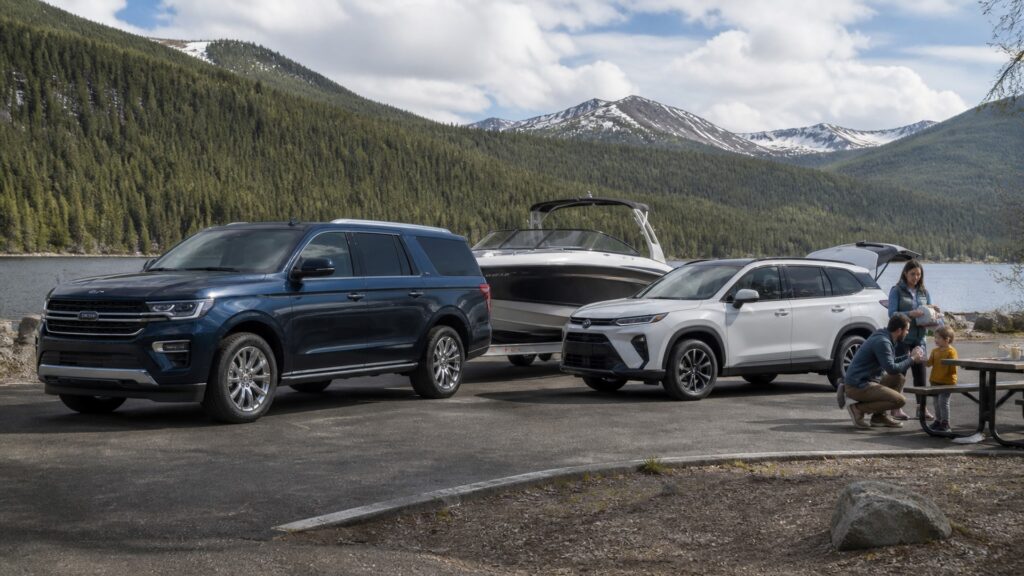
full size suvs explainer hero image for Review Streets
What You'll Learn

Start with Capacity, Then Compare Propulsion

Separate the requirements a large body meets from the benefits a hybrid system may provide.

  • Use passengers and luggage to establish the necessary layout.
  • Check standard and extended-length versions where relevant.
  • Verify load and towing capability on the exact configuration.
  • Understand what hybrid propulsion changes and leaves unchanged.
  • Compare equally useful vehicles before weighing costs.

Tip: A more efficient vehicle is not an equivalent substitute if it cannot perform the required trip.

Definitions

Terms for a Capacity-First Comparison

These definitions keep the body and powertrain decisions separate.

Full-size packaging

The passenger-and-cargo arrangement within a large SUV body.

  • Example: Several occupied rows coexist with a useful luggage area.
  • Check: Try the actual occupants and bags together.
  • Limit: Large exterior dimensions do not guarantee every layout works.

Hybrid propulsion

An engine-and-electric-drive system whose contributions are coordinated by the vehicle.

  • Example: A motor supports propulsion while the engine operates as required.
  • Check: Identify the specific hybrid type.
  • Limit: It does not define passenger count or body dimensions.

Usable third row

A rear seating area that the intended passengers can access and occupy appropriately.

  • Example: Regular rear passengers can sit without forcing an unsuitable second-row position.
  • Check: Check access, comfort, and restraint requirements.
  • Limit: An advertised seating position is not proof of suitability for every occupant.

Cargo depth behind occupied seats

The usable front-to-back floor space remaining with required rows upright.

  • Example: Travel bags fit without folding a seat needed by a passenger.
  • Check: Measure the intended seating arrangement.
  • Limit: A maximum volume figure may refer to a different layout.

Rated carrying task

The complete load that must remain within the vehicle and equipment limits.

  • Example: Passengers, luggage, and applicable trailer load are assessed together.
  • Check: Use the actual vehicle’s labels and instructions.
  • Limit: Cabin size does not replace a weight check.

Comparable configuration

A version meeting the same essential carrying and equipment requirements as another candidate.

  • Example: Two shortlisted SUVs both seat the household and support the intended trailer.
  • Check: Keep the required task constant when comparing energy use and price.
  • Limit: Comparing unsuitable versions can make a cost advantage misleading.

Tip: Confirm equivalent usefulness before comparing the operating costs.

Space requirement

A Full-Size Body Is Most Useful When the Rear Rows Stay Occupied

The reason to consider a large SUV is often the combination of people and belongings. A smaller hybrid may offer attractive fuel use while leaving insufficient luggage room behind occupied seats. Conversely, a household that rarely uses the rear row may not need full-size dimensions at all.

  • Test regular passengers in their intended positions.
  • Leave every needed row upright for the cargo check.
  • Compare the loading opening and floor shape with bulky items.

For example, a group traveling with six people and bags should assess that complete arrangement. Neither a hybrid badge nor an impressive seats-folded figure answers the question.

Body variants

Check Where the Extra Length Actually Goes

Standard and extended-length full-size vehicles may offer different cargo packaging. A longer body can be valuable behind the rear row, but requires more parking room. Hybrid versions may also have model-specific storage or equipment differences that need inspection.

  • Use dimensions for the exact body and powertrain version.
  • Check underfloor storage and spare-tire provision if they matter.
  • Measure garage access with doors and liftgate in use.

The correct choice is the arrangement that carries the load and fits its surroundings. Extra length that does not improve the required task is simply more vehicle to manage.

Verified capability

Large Size and Electric Assistance Both Need Rating Checks

Full-size models can offer substantial towing capability, and hybrid systems can provide useful drive assistance. Neither characteristic establishes a particular rating. The complete vehicle, equipment, passengers, and trailer must comply with the manufacturer’s limits.

  • Confirm the required powertrain and towing equipment.
  • Check carrying allowance as well as trailer limits.
  • Use the loaded trip rather than an empty-vehicle demonstration.

A full-size hybrid can be considered alongside other suitable full-size configurations when it meets the task. Do not assume it either loses or gains capability solely because it is hybrid.

Powertrain difference

Hybrid Changes Energy Management More Than Exterior Space

A hybrid coordinates an engine and electrical drive, with recovery of some braking energy and other design-dependent behavior. A conventional hybrid does not require routine external charging. A plug-in adds charging as another energy source and should be evaluated around how it will be used.

  • Identify conventional versus plug-in operation.
  • Compare model-specific city and highway estimates.
  • Test response, engine transitions, and braking feel.

A full-size hybrid still has a full-size footprint. Lower fuel use in one comparison would not make its garage or passenger-entry requirements disappear.

Ownership comparison

Compare Suitable Full-Size Choices Before Downsizing by Accident

Once the carrying requirement is established, compare actual purchase quotes, energy costs, service, insurance, and tires among suitable candidates. If considering a smaller hybrid, explicitly decide whether reduced space or capability is acceptable rather than treating it as the same vehicle at lower cost.

  • Use the same annual distance and ownership period.
  • Include charging requirements for any plug-in candidate.
  • Obtain quotes for the versions that meet the essential task.

This approach can lead to a conventional full-size SUV, a full-size hybrid, or a smaller vehicle if the original size requirement was overstated. The outcome should follow the actual use rather than a contest between labels.

Quick Reality Check

What Each Description Tells You

The labels answer different parts of the purchase decision.

Full-size tells you to examine…

Large-body passenger and cargo packaging.

Exterior fit and configuration-dependent capability.

Hybrid tells you to examine…

Engine-and-motor operation and model-specific energy use.

Hybrid type, charging where applicable, and service requirements.

Common Myths

Misconceptions About Full-Size and Hybrid SUVs

Avoid converting a useful description into a universal claim.

Choosing full-size means rejecting hybrid

A full-size SUV can have hybrid propulsion. Check the actual options and requirements.

A hybrid is always a smaller, cheaper substitute

Hybrids span different vehicle sizes and prices. Compare suitable configurations.

The larger body guarantees more allowable weight

Carrying limits are vehicle-specific and must be checked independently of space.

A hybrid powertrain removes full-size ownership costs

Parking, tires, insurance, and other costs still depend on the complete vehicle.

Tip: Describe the trip first; use vehicle labels to organize options rather than decide the result.

FAQ

Questions About Full-Size Versus Hybrid SUV Choices

Answers for a buyer whose main concern is carrying capacity.

What is the main difference between the categories?

Full-size describes general body size; hybrid describes propulsion. A vehicle can belong to both.

Can a smaller hybrid replace a full-size SUV?

Only if it meets the actual passenger, cargo, and capability needs, or you knowingly accept a different arrangement.

Should I compare full-size hybrids with conventional full-size models?

Yes, when they meet the same essential requirements. Then compare their actual cost, energy use, and driving behavior.

What should I verify first?

The complete passenger-and-luggage fit, applicable load and towing limits, and the vehicle’s access and parking requirements.

Bottom Line

Full-size SUVs answer a packaging question, while hybrid SUVs answer a propulsion question.

Establish the carrying task first, then compare suitable powertrains. A full-size hybrid may satisfy both descriptions, while a smaller hybrid is a separate size tradeoff.

Next Steps

Go Deeper or Compare Your Options

Use these Review Streets paths to compare related categories and practical next decisions.

Vehicles

Compare related vehicle choices against the same carrying needs and driving routine.

SUVs

Compare related vehicle choices against the same carrying needs and driving routine.

Full Size SUVs

Explore Full Size SUVs with your passenger, cargo, and ownership requirements in mind.

Further reading: Ford: configuration-specific towing; DOE: hybrid propulsion; DOE: plug-in hybrid operation; EPA: fuel-economy labels. Use the owner’s manual for the exact vehicle’s instructions and limits.