
Light Cure
Polymerization initiated by a compatible nail lamp.
- Use: form gel coating
- Variable: wavelength, dose and product
- Tradeoff: Under-cure leaves reactive material
Gel manicures and dip powder manicures create durable coatings through different systems. Gel products form or finish a polymer network under a compatible curing lamp. Dip systems build layers from adhesive resin, colored acrylic powder, activator, and top coat; the powder itself is not what cures under a lamp in a traditional dip process.
That difference changes application, thickness, correction, salon hygiene, and removal. Gel can create a thin continuous finish but requires correct lamp-product compatibility and limiting uncured skin contact. Dip builds thickness quickly and can be strong, yet communal dipping can spread contamination and aggressive filing or removal can thin the nail. Both can trigger allergy, hide nail changes, and cause damage when picked off.
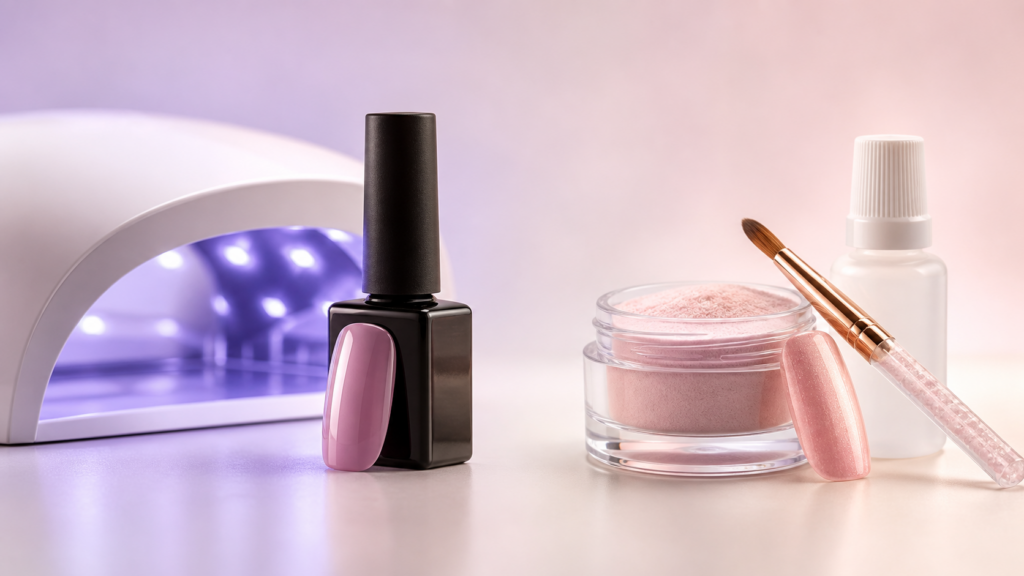
Compare light-cured gel polymer networks with resin-and-powder dip systems across application chemistry, cure or activation, thickness, shaping, hygiene, skin exposure, durability, removal, allergy, ultraviolet exposure, and serviceability without declaring a universal winner.
Tip: A durable coating is a chemical system, not interchangeable jars.
These gel manicures vs dip powder manicures concepts separate mechanism, application, limits, and purchasing consequences.
Polymerization initiated by a compatible nail lamp.
Adhesive liquid binding acrylic powder layers.
Liquid promoting hardening within a dip system.
Total thickness created over the natural nail.
Placing fingers into a powder container used by others.
Time and process required to soften or file the system safely.
Tip: Use these terms to test gel manicures vs dip powder manicures instead of relying on a front-label promise.
Gel base, color, top, and lamp should be compatible; dip resin, powder, activator, and top coat should follow one supported sequence. Do not improvise cure or swap reactive parts casually.
A durable coating is a chemical system, not interchangeable jars.
Flooded gel and resin increase allergy exposure; bulky dip changes leverage and may need aggressive shaping. Keep material on the nail plate and cure or activate promptly.
Precision protects both wear and surrounding skin.
AAD advises against double dipping into powder used by others. Powder can be poured into a disposable vessel or applied by a hygienic method.
Durability never outweighs infection control.
Gel may flex and peel at edges; dip may crack or lift as a thicker shell. Water under lifting and repeated spot repairs can hide damage.
The best wear fails visibly and removably.
Both commonly require acetone-based removal plus system-specific filing. Protect surrounding skin, ventilate, allow enough softening, and never peel or force off resistant material.
Removal is half the manicure decision.
Gel and dip are different durable coating systems; neither is inherently harmless, healthier, or suitable for every nail and service setting.
The system cures or activates fully with minimal skin contact.
Removal releases the coating without peeling nail layers.
Durability can increase removal time and conceal developing problems.
Technique and hygiene often matter more than the category name.
These claims flatten the variables that determine how gel manicures vs dip powder manicures performs in a real routine.
Dip systems use acrylic powder with reactive resins and activators. Powder form does not make the system natural or risk-free.
A hard surface does not prove complete cure throughout. Product thickness, lamp output, wavelength, time, and compatibility affect cure.
Traditional dip activation does not require a lamp, but some hybrid services add gel top coats. Ask what exact system is being applied.
It can reduce picking, but thickness and coverage can hide lifting, allergy, infection, or plate damage. Removal may also create trauma.
Peeling often removes layers of natural nail. Directed removal with adequate time is usually less mechanically destructive.
Tip: Test the exact gel manicures vs dip powder manicures tool, setting, and routine before generalizing from its category.
The remaining decisions about gel manicures vs dip powder manicures concern technique, compatibility, safety, upkeep, and value.
Both can last for weeks when well applied. Nail flexibility, length, preparation, work exposure, coating bulk, and lifting determine individual wear.
Gel is often applied thinner, but builder gels can be substantial and dip thickness varies by layers and filing. Inspect the actual service.
Both use reactive acrylate-related materials capable of sensitization. Minimize skin contact and stop after rash, itching, swelling, or nail lifting.
Follow AAD guidance, use broad-spectrum water-resistant sunscreen on exposed hands or UV-protective fingerless gloves, and avoid unnecessary cure cycles.
Do not place fingers into a communal powder jar. Use a fresh portion or a method that prevents cross-contact between clients.
Remove safely after persistent pain, lifting, green or dark discoloration, odor, swelling, rash, or trauma so the nail can be inspected.
Gel manicures form light-cured polymer coatings; dip manicures build resin-bound acrylic powder layers activated within the system. Their practical differences are cure, thickness, hygiene, repair, and removal.
Choose based on trained application, controlled skin contact, system compatibility, noncommunal powder handling, tolerable removal, and the ability to inspect nail changes—not maximum wear alone.
These Review Streets paths narrow the next gel manicures vs dip powder manicures decision by format, goal, and routine fit.
Browse nail treatments, polish, removal, and care categories.
Compare cuticle oils by vehicle, applicator, feel, and routine fit.
Choose a retailer
Prices checked regularly. We may earn a commission at no cost to you.