
Lipid Base
An oil-dominant vehicle made from plant oils, mineral oils, esters, or blends.
- Use: anticipate spread and weight
- Variable: viscosity and polarity
- Tradeoff: Richness can flatten fine hair
Hair oils and hair serums differ most reliably in formula design and intended finish, not in a simple natural-versus-synthetic split. An oil may be a single plant oil, an ester blend, or a silicone-rich product marketed as oil. A serum may be water-based, silicone-based, oily, or a hybrid carrying conditioning and styling ingredients.
Both can reduce friction, add shine, smooth flyaways, and protect the surface during handling, but their spread, weight, drying, residue, and heat claims vary. Oils are often used in tiny amounts for lubrication or pre-wash care; serums often emphasize a controlled film or styling finish. Compare the ingredient base, directions, dispenser, and tested result on the same hair zone.
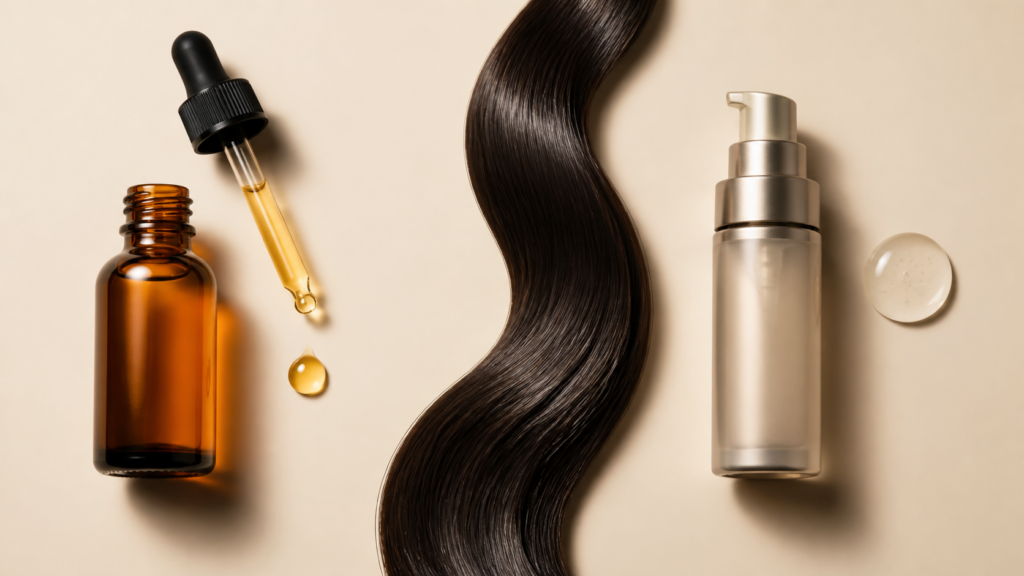
Compare composition, spread, penetration claims, film behavior, placement, finish, heat protection, buildup, packaging, and cost instead of treating oil and serum as fixed ingredient categories.
Tip: Two products called oil may behave less alike than an oil and a serum.
These hair oils vs hair serums concepts separate formula behavior, application choices, limits, and purchasing consequences before the mechanisms are compared.
An oil-dominant vehicle made from plant oils, mineral oils, esters, or blends.
The liquid or gel system carrying a serum's conditioning or styling ingredients.
A thin deposited layer that changes friction, shine, static, and water exchange.
Movement of selected materials into parts of the hair fiber under particular conditions.
Application before cleansing to modify swelling, friction, or shampoo exposure.
The actual mass or volume released by a pump, dropper, or pour opening.
Tip: Use the terms to test hair oils vs hair serums rather than relying on a front-label promise.
Ingredient lists reveal whether the product is predominantly plant oil, volatile silicone, water, ester, polymer, or mixture. This base affects spread and finish more than the front-label category, which has no single technical definition.
Two products called oil may behave less alike than an oil and a serum.
Both formats can align the surface visually and reduce fiber-to-fiber friction. Apply a measured amount to one section, spread through palms when directed, and judge shine, slip, separation, and movement after the product settles.
Dose determines whether smoothing reads as polish or grease.
A heavier oil before shampoo serves a different job from a quick-drying serum after styling. Some products support both, but the dose and removal burden change. Follow the intended timing before improvising another use.
One bottle can have multiple uses only when each use is tested independently.
A glossy serum is not automatically a heat protectant. Use a product that states compatible temperatures or styling directions, distribute it evenly, and keep tool temperature and passes appropriate for the hair's condition.
Shine is not evidence of thermal protection.
Droppers can overdeliver, pumps can clog, jars increase hand contact, and some plant-rich oils change odor over time. Include shelf guidance, travel leakage, wash frequency, stained fabric, and cost per small dose.
A concentrated product offers value only when the package makes restraint easy.
The practical difference lies in vehicle, film, timing, dose, finish, and claims—not a guaranteed ingredient or quality hierarchy.
A tiny lipid-rich dose supports pre-wash care or a richer finish without unacceptable residue.
The formula, removal plan, and dispenser suit the hair's density and routine.
A lighter, faster-spreading or explicitly heat-protective film better fits styling.
Precise pumping and quicker settling matter more than a traditional oil experience.
These hair oils vs hair serums claims collapse several variables into one rule and can lead to poor application or unnecessary purchases.
Either category may contain plant oils, silicones, esters, water, polymers, fragrance, or mixed systems. Marketing names do not establish origin; read the formula and evaluate performance without treating naturalness as quality.
Some oils show different affinities for hair under studied conditions, but penetration varies by material, damage, dose, and time. Many useful effects from both categories occur at the surface, and coating is not inherently inferior.
A serum can smooth and temporarily align frayed ends, reducing snagging and improving appearance. It cannot restore the original continuous fiber permanently; trimming removes the split rather than cosmetically disguising it.
Oil does not add water by itself, and excess can produce greasy separation or removal burden. Use moisture to describe fiber behavior carefully; apply the smallest amount that improves flexibility, slip, or appearance.
Gloss can result from a smooth film without validated thermal-use directions. Choose a formula explicitly intended for the tool and temperature range, distribute it properly, and still limit heat exposure.
Tip: Test the exact hair oils vs hair serums product, dose, and routine before generalizing from a category label.
The remaining hair oils vs hair serums decisions concern application, compatibility, frequency, safety, and value in an ordinary routine.
A light, precisely dispensed serum or dry-feeling oil may be easier, but fine hair does not require one category. Test a tiny amount on ends and judge movement, root lift, residue, and wash burden.
Only when the product is intended for scalp use and the scalp tolerates it. Oils can worsen residue or some conditions; stop for itching, rash, tenderness, or unusual shedding and seek appropriate care.
Follow the label. Damp application may aid distribution and detangling; dry application may target shine and flyaways. The same amount can feel heavier on dry hair, so test timing separately.
Yes, but define separate roles and reduce both doses. Stacking films can create weight and hide which product works; test each alone first, then combine only if the result clearly improves.
Watch for persistent coating, limpness, dull separation, reduced curl response, or repeated need for more shampoo. Confirm across a normal wash before using an aggressive clarifier or abandoning the formula.
Calculate cost per effective dose and include dispenser waste, wash burden, versatility, and shelf stability. A small expensive serum may outlast a cheap pour bottle if it delivers controlled results with less product.
Hair oils and serums overlap in ingredients and benefits, so their names do not settle the comparison. Vehicle, surface film, dose, use stage, explicit protection claims, and package control create the meaningful differences.
Choose the exact formula that improves slip, shine, or handling at a small repeatable dose. Test oil and serum on the same hair zone and include cleanup, buildup, and cost in the result.
These Review Streets paths narrow the next hair oils vs hair serums choice by format, goal, and routine fit.
Compare oil formats, weights, application methods, and hair compatibility.
Compare masks, oils, serums, and bond-focused formulas by goal and format.
Choose a retailer
Prices checked regularly. We may earn a commission at no cost to you.