
What Makes Heart Health Devices Different from Fitness Tracking Devices

Heart devices target a cardiovascular variable under a structured protocol, while fitness trackers combine activity and wellness algorithms whose estimates vary with wear position and motion.

The decision depends on different mechanisms. For heart health devices, examine cuff fit and rest period; for fitness tracking devices, examine sensor modality and wear position. Conveniences can be compared after the user's actual need is explicit.

By: Review Streets Research Lab
Updated: August 18, 2026
Explainer · 8-12 min read
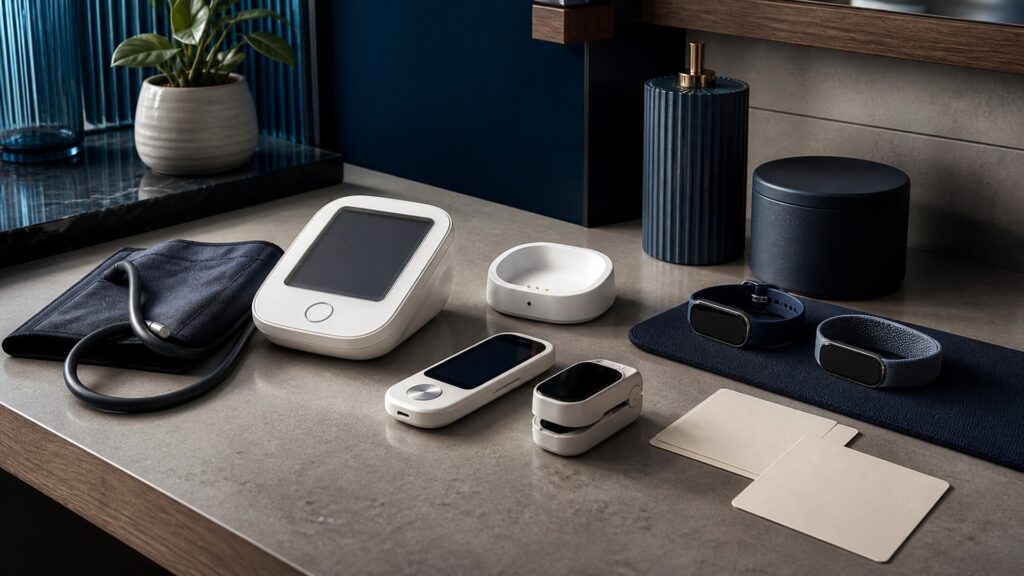
People-free editorial still life illustrating cardiovascular-specific reading versus multipurpose wellness estimate
What You'll Learn

Choose Between Heart Health Devices and Fitness Tracking Devices by Purpose

Consider cuff fit, lead contact, real-world conditions, failure scenarios, and the next practical move without confusing classification with a decision.

  • How cuff fit defines the first decision
  • Why rest period changes the working pathway
  • Where lead contact can create variation in performance
  • Which conditions alter rhythm flag
  • What repeat protocol requires during upkeep
  • When symptom context signals a limit or next action

Tip: Read the concept as part of a system, then connect it back to the use case.

Definitions

Six Concepts That Shape This Decision

These definitions connect the main idea to the variables, limits, and practical signals readers need to compare options.

Cuff Fit

Relationship between cuff size and limb circumference.

  • Role: As used in this guide, cuff fit defines part of heart health devices.
  • Check: For cuff fit, locate this concept in the operating guidance.
  • Boundary: It cannot correct a category mismatch.

Rest Period

Quiet interval before a measurement.

  • Role: In the setup phase, rest period shows how the first pathway is prepared.
  • Check: For rest period, observe it under stable conditions before comparing categories.
  • Boundary: Even a favorable condition does not establish the final outcome.

Lead Contact

Electrical connection between sensor and skin.

  • Role: While the product is working, lead contact marks a difference in mechanism.
  • Check: For lead contact, record any technique or condition that changes its behavior.
  • Boundary: Its practical meaning comes from the surrounding steps.

Rhythm Flag

Device notice of an irregular detected pattern.

  • Role: During follow-up, rhythm flag names an output that affects the choice.
  • Check: For rhythm flag, relate it to what the user can directly observe rather than an unsupported generalization.
  • Boundary: Practical importance can change with its practical importance.

Repeat Protocol

Standard method for additional readings.

  • Role: Under stressed conditions, repeat protocol changes practical practical suitability.
  • Check: For repeat protocol, inspect it when operation or the result departs from normal.
  • Boundary: A normal appearance cannot exclude failure.

Symptom Context

How the person feels when data are collected.

  • Role: When follow-up is selected, symptom context adds to the ownership burden.
  • Check: For symptom context, include it in the maintenance and follow-up plan.
  • Boundary: Qualified judgment remains necessary when warning signs appear.

Tip: Keep the definitions connected; the strongest answer usually comes from the whole system, not one term.

Purpose

Separate the Two Primary Jobs

The first pathway emphasizes cuff fit, rest period, and lead contact; the alternative emphasizes sensor modality, wear position, and motion artifact. That difference should be clear before price and convenience enter the choice.

  • Clarify rhythm regularity
  • Document repeat protocol
  • Check units
  • Define time

Cuff Fit is useful only when it answers the stated purpose.

Mechanism

Trace Cuff Fit, Rest Period, and Lead Contact

Cuff Fit means relationship between cuff size and limb circumference. Rest Period affects the next part of the process: quiet interval before a measurement. The pathway then reaches lead contact, meaning electrical connection between sensor and skin.

  • Locate cuff fit in the instructions
  • Observe how rest period changes operation
  • Treat lead contact as a defined step
  • Relate rhythm flag to the first-order output

The working sequence helps locate where rhythm flag can change the result.

Conditions

Compare the Factors Behind Rhythm Flag

A fair assessment records these conditions: medicines; symptoms; comparison with a validated clinical method; match device purpose; and cuff or sensor fit. Changing the full setup at once prevents a clear reading of whether whether rhythm flag or context drove the result.

  • Hold body position steady
  • Label rest period
  • Recheck lead contact
  • Preserve context for repeat protocol

Comparable conditions make this product-type decision easier to interpret without pretending uncertainty disappears.

Limits

Plan for Problems Involving Repeat Protocol

Safe operation requires attention to these rules: follow the intended-use boundary; inspect before operation; use the least intensive suitable setting; stop if the response is surprising; and never delay emergency care for chest pain. If the step associated with repeat protocol breaks down or the user's condition changes, a seemingly normal output should not delay a response suited to the risk.

  • Fainting
  • Severe breathlessness
  • New neurologic symptoms
  • Follow the contingency plan when problems involve symptom context

The safety boundary for the category selection includes failure, misuse, and warning signs.

Routine

Make Symptom Context Part of a Sustainable Process

Reliable follow-through depends on these steps: prepare compatible supplies; confirm settings and power; perform the immediate job in sequence; inspect the device; rest as directed; and position the cuff or sensor correctly. The remaining sequence covers: remain still; and repeat only according to the protocol. Complete the routine with any review assigned in the user's plan.

  • Record symptoms and context
  • Clean contact surfaces
  • Share persistent abnormalities with a clinician
  • Check condition before use

The best routine for the product-category choice is the most manageable routine that still works safely.

Quick Reality Check

A Practical Boundary for the category selection

Use cuff fit and rhythm flag to separate a properly limited inference from a broader claim the product's output cannot prove alone.

What the Record Shows

Appropriate use can help reveal how cuff fit affects rest period under the applicable use conditions.

A consistent review of lead contact and rhythm flag can reveal whether the task the product performs directly remains practical over time.

What Still Requires Caution

The product cannot convert repeat protocol into proof of an underlying cause or erase user-specific contraindications.

A failure involving symptom context needs the response established for the user not repeated unsupervised testing.

Common Myths

Misconceptions That Distort the Decision

Common shortcuts and misunderstandings can make the topic seem simpler than it is.

Rest Period makes heart health devices equivalent to fitness tracking devices

Rest Period contributes one input to this category-level judgment. That definition is too narrow to support the claim. Interpretation still requires repeat protocol. A safe-use plan should also inspect before operation.

Lead Contact proves the option with more features is superior

Lead Contact describes a control within the category selection. The description does not justify that conclusion. Any conclusion must include units. The user may also need to use the least intensive suitable setting.

Rhythm Flag shows that one product solves both problems

Rhythm Flag marks an intermediate step in this category-level judgment. Its role in the pathway is more limited than the myth suggests. A sound conclusion also considers time. The applicable precaution is to stop after a response outside the expected range.

Repeat Protocol determines the better option without ownership costs

Repeat Protocol sets one boundary around this category-level judgment. Even correct preparation leaves unresolved variables. The conclusion cannot omit medicines. Responsible follow-through should never delay emergency care for chest pain.

Tip: Treat strong claims as starting points for comparison, not final answers.

FAQ

Questions to Ask Before Choosing

Concise answers to common questions readers may have after the main explanation.

What should be checked first for rhythm flag?

Rhythm Flag enters at the start of this product-type decision. Start by reviewing symptoms. The daily routine should also confirm settings and power. The applicable precaution is to never delay emergency care for chest pain.

How can the result be interpreted for repeat protocol?

Repeat Protocol changes a control point in the selection between categories. Interpret the observation alongside comparison with a validated clinical method. The daily routine should also perform the hands-on job in sequence. The follow-up protocol should also fainting.

Which condition commonly changes performance for symptom context?

Symptom Context affects the observable output from this product-type decision. Compare performance only after recording match device purpose. The daily routine should also inspect the device. Before continuing, remember to severe breathlessness.

When should use stop or receive review for cuff fit?

Cuff Fit helps define the stopping point for the decision between product types. Before continuing use, confirm cuff or sensor fit. The daily routine should also rest as directed. This boundary requires users to new neurologic symptoms.

Bottom Line

Judge the two-category choice through cuff fit, lead contact, and the real conditions surrounding repeat protocol.

A sound decision keeps rest period visible, builds rhythm flag into the user's workflow, and responds promptly when symptom context or another defined warning condition appears.

Next Steps

Go Deeper or Compare Your Options

Use these Review Streets paths to connect the explainer to related categories, comparisons, and next decisions.

Quick Summary

Practical Takeaways

  • Cuff Fit frames the first practical question.
  • Rest Period helps explain the working mechanism.
  • Measurement context includes rhythm regularity.
  • Safety planning includes this rule: follow the intended-use boundary.
  • Reliable follow-through includes this action: prepare compatible supplies.