
Hydradermabrasion
Device-assisted exfoliation performed with fluid delivery and suction.
- Use: identify the HydraFacial category
- Variable: tip and vacuum settings
- Tradeoff: HydraFacial is a trademark
A HydraFacial is a branded, device-delivered treatment that combines cleansing, tip-based exfoliation, vacuum extraction, and solution or serum delivery in a staged session. A chemical peel applies a chemical exfoliant to create a controlled injury at a selected depth, from superficial to deep, followed by predictable shedding and repair.
The categories overlap because a HydraFacial protocol can include a mild peel solution, yet their centers of gravity differ. HydraFacial usually emphasizes surface refinement, congestion management, hydration, and little visible downtime; peels offer a much wider range of depth and recovery, with deeper treatments carrying greater potential benefit and greater risk.
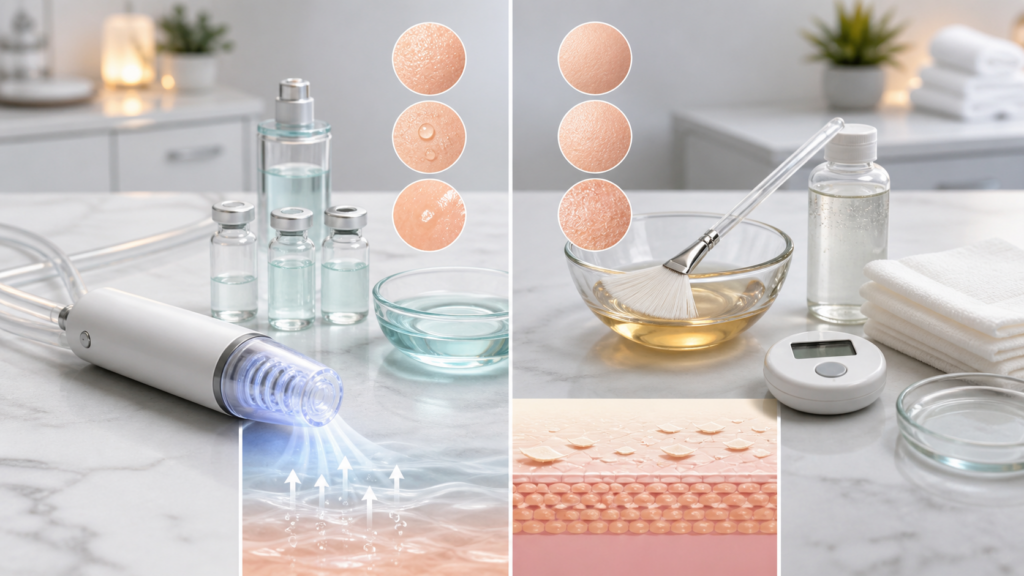
Compare a branded hydradermabrasion workflow with controlled chemical exfoliation by mechanism, treatment depth, customization, downtime, evidence, provider dependence, pigment risk, and purchasing fit rather than reducing the choice to hydration versus peeling.
Tip: Low downtime is a purchasing advantage, not proof of deeper change.
These hydrafacial vs chemical peels concepts separate mechanism, application, limits, and purchasing consequences.
Device-assisted exfoliation performed with fluid delivery and suction.
HydraFacial's branded tip, vacuum, and solution-delivery system.
How deeply a chemical peel affects skin layers.
Visible or procedural cue used to stop or progress treatment.
Removal of surface debris or follicular contents by suction or manual technique.
Darkening or lightening after irritation or injury.
Tip: Use these terms to test hydrafacial vs chemical peels instead of relying on a front-label promise.
This route can suit someone prioritizing cleansing, mild exfoliation, extraction, hydration, and quick return to routine, provided the exact solutions and suction suit the skin.
Low downtime is a purchasing advantage, not proof of deeper change.
Superficial, medium, and deep peels are not interchangeable. Provider scope, preparation, anesthesia, recovery, and complication planning become more important as depth increases.
A peel should be chosen by target and depth, not percentage alone.
Active infection, open skin, sunburn, uncontrolled dermatitis, recent procedures, healing history, cold sores, medicines, and pregnancy-related constraints may change or delay treatment.
A facial appointment still needs a safety screen.
Ask what actually changes: tip, vacuum, number of passes, peel solution, booster, treatment area, LED, or aftercare. Every add-on should have a purpose.
Customization is useful only when tied to a reason.
Even a gentle session can leave temporary sensitivity. Follow provider directions, use mild care, avoid picking and aggressive actives, and report unexpected blistering, swelling, pain, or pigment change.
The shortest downtime still deserves aftercare.
Both can exfoliate and improve appearance; neither is automatically appropriate for every diagnosis, skin tone, medication history, or event timeline.
The provider names the exact protocol, solutions, depth, and add-ons.
Pigment history, active irritation, infection, medicines, and sun exposure shape the choice.
Immediate glow is not the same endpoint as remodeling after a deeper peel.
Packages should be judged by total sessions, aftercare, and evidence—not debris shown in a collection jar.
These claims flatten the variables that determine how hydrafacial vs chemical peels performs in a real routine.
It may include a mild peel, but the branded workflow also uses specialized tips, vacuum extraction, fluid delivery, and hydration.
Superficial peels may produce little visible peeling; depth and response determine recovery.
Extraction can remove some contents temporarily, but pore appearance and congestion are influenced by ongoing biology and care.
Agent, pH, vehicle, layers, contact time, preparation, and skin response all affect peel behavior.
Irritation, sensitivity, bruising, reaction to solutions, and pigment change remain possible even with a gentler protocol.
Tip: Test the exact hydrafacial vs chemical peels tool, setting, and routine before generalizing from its category.
The remaining decisions about hydrafacial vs chemical peels concern technique, compatibility, safety, upkeep, and value.
Yes. Protocols may include a customized mild peel solution, so disclose exfoliant use and ask exactly what will contact the skin.
A familiar low-downtime treatment may be easier to schedule, but do not try a new procedure immediately before an important event.
That depends on the pigment diagnosis, skin tone, depth, and provider expertise; inappropriate inflammation can worsen discoloration.
Frequency depends on goal, response, protocol, and maintenance; monthly packages are not automatically necessary.
Training and legal scope vary by depth and location. Deeper peels require substantially more medical assessment and management.
Unexpected severe pain, extensive blistering, spreading redness, pus, fever, eye symptoms, or marked pigment change deserve prompt provider or medical advice.
HydraFacial is a branded device workflow centered on surface exfoliation, suction, extraction, and fluid delivery. Chemical peels use controlled chemical injury across a much broader range of depths and recovery profiles.
Choose by diagnosis, intended depth, skin and pigment risk, provider qualification, downtime, exact consumables, and total treatment plan. Neither name alone tells you how aggressive or effective a session will be.
These Review Streets paths narrow the next hydrafacial vs chemical peels decision by format, goal, and routine fit.
Browse professional products, equipment, and salon-focused beauty categories.
Compare skincare and hair-removal device technologies.
Choose a retailer
Prices checked regularly. We may earn a commission at no cost to you.