
Leave-On Dose
The small amount designed to remain through drying and styling.
- Use: control persistent conditioning
- Variable: strand density and dispenser
- Tradeoff: Excess can reduce volume
Leave-in conditioners and hair masks differ mainly in how they are formulated to be used. A leave-in remains on the hair in a controlled amount to support detangling, softness, static control, and styling. A mask is usually a richer rinse-off treatment given longer contact before excess product is removed.
Neither format is automatically stronger or more reparative. A lightweight mask may rinse cleanly, while a concentrated leave-in can create substantial film. Hair diameter, density, curl pattern, damage, climate, wash interval, and other styling products determine which format supplies useful slip without weight. Compare the exact directions, dose, placement, and result after drying—not the thickness in the jar.
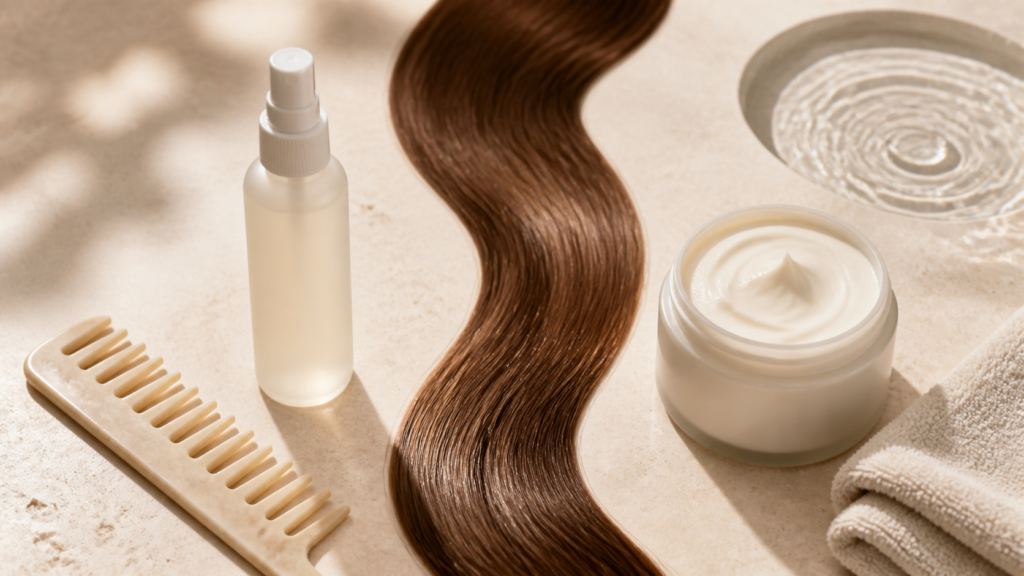
Compare residence time, concentration, placement, slip, styling role, rinse behavior, frequency, weight, and cost rather than ranking leave-on and intensive rinse-off formats.
Tip: Residence time is a design choice, not an invitation to improvise.
These leave-in conditioners vs hair masks concepts separate formula behavior, application choices, limits, and purchasing consequences before the mechanisms are compared.
The small amount designed to remain through drying and styling.
Conditioning material retained after a mask is rinsed.
The directed interval before a rinse-off product is removed.
The stage when lubrication is needed to reduce combing force.
Combined film from conditioner, mask, leave-in, serum, and stylers.
How a product's effect and residue behave until the next cleanse.
Tip: Use the terms to test leave-in conditioners vs hair masks rather than relying on a front-label promise.
A mask is built around application to wet hair, directed contact, and rinsing; a leave-in is dosed to remain. Swapping formats can leave too much material behind or rinse away a product never designed for that use.
Residence time is a design choice, not an invitation to improvise.
A leave-in can help detangle, reduce static, support curl grouping, or provide an explicitly claimed styling benefit after the shower. Select a texture that distributes evenly at a small dose and cooperates with later products.
A leave-in earns its place during handling, not from how creamy it feels.
A mask suits a wash-day interval when richer conditioning is useful but leaving the full application would be excessive. Saturate the target lengths, observe directed timing, rinse consistently, and judge whether the result survives drying.
A mask is successful when its retained deposit—not leftover excess—improves handling.
Regular conditioner, mask, leave-in, serum, and heat protectant can overlap. If the hair becomes limp, dull, sticky, or difficult to cleanse, remove one layer and retest before buying a clarifier or another corrective treatment.
More conditioning products can create less usable conditioning.
Masks often use more product per application; leave-ins may last longer but operate every styling day. Include dispenser control, frequency, detangling time, breakage during handling, and whether another product becomes unnecessary.
Value comes from a distinct job that the rest of the routine does not already cover.
Leave-ins provide a controlled persistent film; masks deliver a larger rinse-off treatment. Either can be light, rich, effective, or excessive.
Use a leave-in when post-shower detangling or styling needs continued support.
Use a mask when wash-day conditioning is insufficient but a heavy leave-on film is undesirable.
Using both without a separate purpose may flatten hair and increase cleansing burden.
Neither format permanently heals split ends or guarantees structural restoration.
These leave-in conditioners vs hair masks claims collapse several variables into one rule and can lead to poor application or unnecessary purchases.
Many are rich, but category names do not reveal active concentration or deposited amount. A concentrated leave-in may produce a stronger persistent film; compare the complete formula, directions, dose, and dried result.
It can for some routines, but others need rinse-off slip plus a smaller persistent layer. Decide from detangling, weight, curl behavior, and wash-cycle residue rather than assuming a universal substitution.
Longer contact is not automatically more effective and may increase irritation, residue, swelling, or transfer to skin and bedding. Follow the stated time unless the manufacturer explicitly supports overnight use.
Viscosity is a sensory property, not proof of deposition, strength improvement, or suitability. A thick mask can rinse lightly, while a fluid leave-in can coat heavily; test performance on the damaged zone.
Their effects may overlap rather than add cleanly. Stacking can reduce movement, attract residue, or complicate styling. Give each product a distinct job and lower both doses when testing them together.
Tip: Test the exact leave-in conditioners vs hair masks product, dose, and routine before generalizing from a category label.
The remaining leave-in conditioners vs hair masks decisions concern application, compatibility, frequency, safety, and value in an ordinary routine.
Only when the manufacturer provides that direction. A rinse-off mask may contain a dose or ingredient balance unsuitable to remain on scalp, skin, or hair, and improvised dilution can affect preservation.
Begin with labeled frequency and adjust for damage, strand diameter, wash schedule, and buildup. The right interval improves detangling and feel without persistent heaviness, stiffness, scalp residue, or extra cleansing.
Usually focus on mid-lengths and ends, especially weathered or tangled areas, unless the product directs scalp use. Begin with a small amount and add only after even distribution.
Either can work when the formula rinses or dries light at a controlled dose. Fine hair often reveals excess quickly, so prioritize dispenser accuracy, root avoidance, and retained movement over category labels.
They can change water-related feel, lubrication, and flexibility for a time, but results shift with washing and environment. Permanent moisture is not a useful claim for a nonliving, continually weathered fiber.
Use them on separate, similar wash days with the same shampoo and styling. Record wet detangling, dry softness, volume, frizz, residue, and duration rather than relying on in-shower richness.
Leave-in conditioners remain in a small dose to support handling and styling; hair masks deliver a larger treatment followed by rinsing. Residence time and wash-cycle role—not thickness or prestige—define the practical comparison.
Choose the format that fills a missing step, place it on the hair that needs it, and count every other conditioning film. Using both is justified only when their jobs remain distinct and the dried result improves.
These Review Streets paths narrow the next leave-in conditioners vs hair masks choice by format, goal, and routine fit.
Compare masks, oils, serums, and bond-focused formulas by goal and format.
Explore intensive conditioning options for slip, softness, damage, and moisture needs.
Choose a retailer
Prices checked regularly. We may earn a commission at no cost to you.