
Wet Vehicle
Fluid phase carrying pigment before a liquid foundation dries.
- Use: spread and build coverage
- Variable: emulsion and volatility
- Tradeoff: Can disturb underlying layers
Liquid foundation suspends pigments in a fluid or cream vehicle that spreads, then changes as water or volatile carriers evaporate. Powder foundation deposits dry pigments, binders, and texture-modifying particles directly, with pressure and tool pickup controlling the layer.
That format difference changes application more than it dictates a winner. Liquid often offers flexible spot-to-full coverage and a cohesive film; powder supports rapid, portable application and targeted shine control. Either can look matte or radiant, offer light or substantial coverage, cling to texture, transfer, or wear beautifully depending on formula, preparation, dose, tool, and the user's priorities.
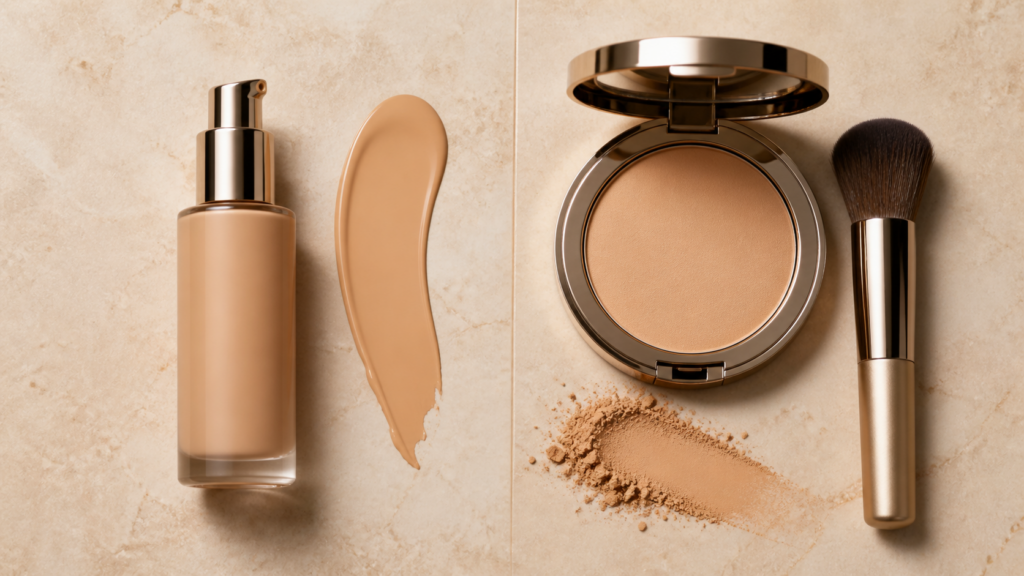
Compare a wet pigmented vehicle that forms a residual film with a dry particulate layer placed by brush or puff, focusing on coverage control, texture, oil response, portability, hygiene, correction, and removal rather than skin-type absolutes.
Tip: The easiest format is the one whose dose the user can repeat.
These liquid foundation vs powder foundation concepts separate mechanism, application, limits, and purchasing consequences.
Fluid phase carrying pigment before a liquid foundation dries.
Placement of pigment and powder without a continuous wet vehicle.
Material helping powder particles adhere and press together.
Amount a brush, sponge, or puff collects per contact.
Degree to which liquid residue forms a connected layer.
How fresh product integrates over worn makeup and oil.
Tip: Use these terms to test liquid foundation vs powder foundation instead of relying on a front-label promise.
Liquid gives open time for spreading before set; powder changes immediately with pickup, pressure, and passes. Pick the process that matches dexterity and available time.
The easiest format is the one whose dose the user can repeat.
Liquid can be spot-layered before set; powder can be pressed over discoloration or swept lightly elsewhere. Shade match affects perceived coverage in both.
Strategic coverage reduces texture and removal burden.
Powder may absorb surface oil yet catch on flakes; liquid may flex yet separate where sebum or sweat breaks the film. Combination skin may need different techniques by zone.
Skin changes across the face and through the day.
Pressed powder is convenient but can shatter and collect applicator residue; liquid pumps can leak but limit direct contact. Loose powder and open jars require careful transport.
Portable packaging should preserve both product and hygiene.
Include tool needs, shade testing, learning curve, touch-up quality, amount used, package waste, and return terms. A hybrid routine may use thin liquid plus selective powder.
Format value comes from the whole day, not the first five minutes.
Format determines how pigment reaches the skin, not a universal finish, coverage, safety, or skin-type rule.
The chosen format reaches even coverage with a controlled thin layer.
Touch-ups and removal fit the user's day without escalating buildup.
Liquids can separate or feel heavy; powders can dust, cake, or emphasize flakes.
Either can perform poorly over incompatible skin care or excessive product.
These claims flatten the variables that determine how liquid foundation vs powder foundation performs in a real routine.
Powder can manage shine, but dry or combination skin may also use a finely milled formula selectively. Oily skin can still experience caking or uneven pickup.
A liquid contains a fluid vehicle but can dry to a matte, fast-setting film. Hydration and comfort depend on the complete formula and skin preparation.
Pressed pigment, binders, tool density, and pressing technique can create substantial coverage. The tradeoff may be texture emphasis or heavier touch-ups.
A thin well-matched liquid can look seamless, but so can light powder. Applied thickness, shade, finish, lighting, and surface texture matter more.
Selective powder over set liquid is common and can control shine or add coverage. The combination fails mainly when dose, compatibility, or correction becomes excessive.
Tip: Test the exact liquid foundation vs powder foundation tool, setting, and routine before generalizing from its category.
The remaining decisions about liquid foundation vs powder foundation concern technique, compatibility, safety, upkeep, and value.
Pressed powder is often quicker for light coverage, while an easy-spreading liquid may be faster for even medium coverage. Include preparation and cleanup in timing.
Use the thinner, more flexible application that avoids accumulating around flakes or lines. Test formula and technique rather than assuming one format hides texture.
Only if the product directions support it. Moisture can alter payoff, preservation, and pan surface; keep wet tools out of products not designed for them.
Blot excess oil first, then press a small amount only where coverage is missing. Sweeping repeatedly over worn layers often increases caking.
A pump limits direct contact, while a compact can remain hygienic with clean, dry tools and regular applicator washing. Packaging alone is not a complete answer.
Yes. AAD suggests non-comedogenic labeling for acne-prone skin, but individual response, removal, tool hygiene, and the rest of the routine still matter.
Liquid foundation carries pigment in a wet vehicle that becomes a residual film; powder foundation places dry particles through tool pickup and pressure. Those mechanics shape blending, touch-ups, texture, and portability.
Choose the format whose dose, coverage, finish, wear, and correction are easiest to control over the normal skin-care routine. Use zone-specific or hybrid application when it provides a better result than format loyalty.
These Review Streets paths narrow the next liquid foundation vs powder foundation decision by format, goal, and routine fit.
Browse face, eye, lip, brow, primer, and setting categories.
Compare liquid foundation coverage, finish, shade, and wear.
Choose a retailer
Prices checked regularly. We may earn a commission at no cost to you.