What Makes Luxury Performance Cars Different from Muscle Cars

Luxury performance cars typically integrate strong road capability with a cabin and chassis intended to serve a broad comfort brief. Muscle cars give a prominent place to an expressive performance identity, often built around distinctive styling and powertrain character. The difference concerns the balance of priorities: both can be quick, comfortable, technologically sophisticated, and enjoyable to drive.

The categories are not separated by one engine type, price point, or drivetrain layout. To understand the difference, examine how the car delivers power, manages disturbance, accommodates people, and presents its controls. Those details reveal whether performance feels like one part of a refined daily vehicle or the most prominent part of its personality, while leaving room for substantial overlap.

By: Review Streets Research Lab
Updated: October 5, 2026
Explainer · 8-12 min read
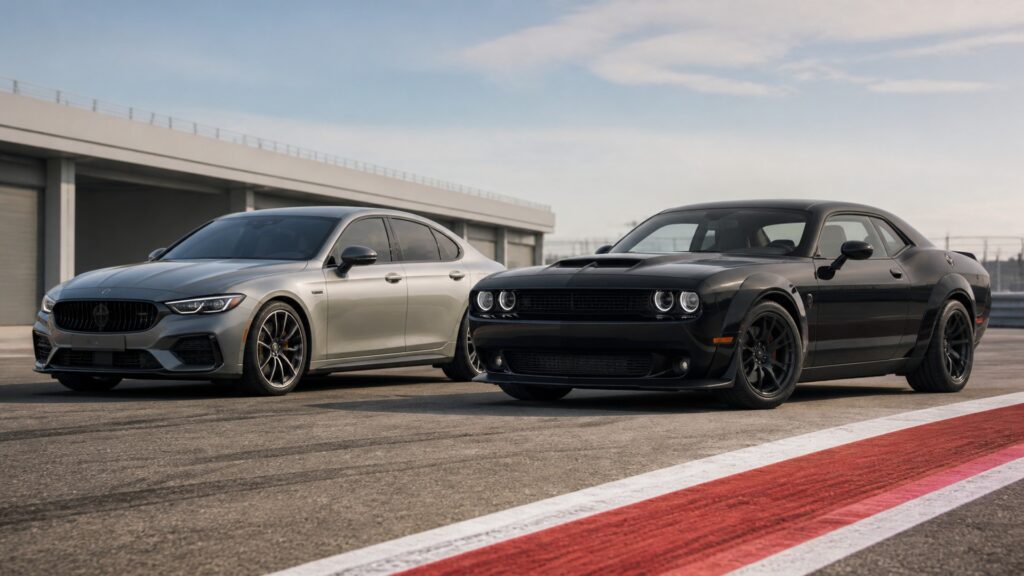
luxury performance cars explainer hero image for Review Streets
What You'll Learn

How Refinement and Performance Identity Shape the Car

Compare the complete experience without relying on fixed category stereotypes.

  • Understand the broad comfort brief of luxury performance design.
  • Compare how power is delivered and perceived.
  • Separate cabin isolation from a lack of driver feedback.
  • Assess chassis and control choices in both categories.
  • Use real configurations to judge practical and ownership differences.

Tip: Similar acceleration figures can coexist with very different cabin experiences and everyday responses.

Definitions

Six Ideas Behind the Different Priorities

These concepts describe the experience rather than assigning a universal winner.

Integrated refinement

The coordination of ride, noise, vibration, seating, and controls into a comfortable overall experience.

  • Example: a car remaining settled and easy to use during a long journey
  • Check: evaluate the combined result
  • Limit: one premium feature does not establish the whole experience

Performance character

The distinctive way a car communicates its propulsion and road behavior.

  • Example: a particular powertrain sound and response being central to its appeal
  • Check: identify what the driver actually enjoys
  • Limit: character is not a substitute for measured capability

Response calibration

The rules and settings that shape how a system reacts to inputs and conditions.

  • Example: a mode changing accelerator or transmission behavior
  • Check: learn the functions changed on the exact vehicle
  • Limit: different feel does not necessarily mean higher output

Cabin isolation

The reduction of unwanted sound and vibration reaching occupants.

  • Example: less intrusive road noise during steady travel
  • Check: distinguish unwanted disturbance from useful control feedback
  • Limit: quietness alone does not establish a good seat or ride

Chassis balance

The coordination of tires, springs, dampers, geometry, and controls for the intended use.

  • Example: a road setup balancing body movement with uneven-pavement comfort
  • Check: compare the complete fitted package
  • Limit: one sophisticated component cannot define the result

Everyday versatility

The ability to serve varied routine tasks within the vehicle's supported use.

  • Example: combining shared passenger trips with enjoyable road driving
  • Check: test the tasks that recur in ownership
  • Limit: versatility varies by configuration rather than category alone

Tip: Refinement and character can exist together. The question is how much emphasis the particular design places on each.

The brief

Luxury Performance Brings Several Expectations Together

A luxury performance car is expected to provide useful road response while serving comfort, accommodation, and equipment needs. That makes the combined experience important: an impressive powertrain cannot by itself deliver a satisfying cabin or convenient daily use. Muscle-car identity often places performance personality more visibly at the center. Neither emphasis excludes the other, and examples within each category vary widely.

  • Identify the experience the complete design prioritizes.
  • Consider passengers alongside the driver.
  • Allow for overlap rather than imposing an exclusive boundary.

A car that is enjoyable on a short solo drive may still need different seating or cabin qualities to suit frequent shared journeys. The design brief determines how strongly those tasks are prioritized.

Propulsion experience

Power Delivery Matters as Much as the Headline Figure

Output figures describe capability only partially. Transmission behavior, initial response, sound, and the operating range determine how propulsion is experienced. Luxury performance vehicles may aim for smooth delivery across a broad routine, while a particular muscle car may make a more expressive powertrain central to its appeal. These are model-specific choices. Modern offerings in both groups include varied propulsion arrangements.

  • Compare normal acceleration and steady travel.
  • Identify the actual powertrain and transmission.
  • Avoid treating one engine type as a category requirement.

BMW's hybrid M5 and Dodge's current Charger choices illustrate different propulsion possibilities. Neither example supports defining the categories solely by a traditional engine layout.

Refinement

A Quiet Cabin Can Still Communicate Through the Controls

Noise isolation and reduced unwanted vibration can improve comfort while steering, pedal response, and seating position provide useful interaction. A muscle car may deliberately emphasize a different sensory character, but loudness is not a direct measure of feedback or capability. Assess what reaches the occupants and whether it serves the intended use. The preferred combination is partly personal.

  • Evaluate unwanted noise separately from enjoyable sound.
  • Notice the clarity of steering and pedal response.
  • Include a realistic length of drive.

A subdued cabin can suit long journeys without preventing engaging control response. Another driver may value a more pronounced mechanical character even when both cars perform well.

Chassis and settings

Sophisticated Hardware Appears in Both Categories

Both luxury performance cars and modern muscle cars can offer advanced damping, braking, and control systems. Their presence does not establish identical behavior because dimensions, tires, settings, and packaging still differ. BMW's adaptive chassis systems and Ford's Mustang performance equipment provide examples of this shared sophistication. Compare the actual road result rather than counting features or assuming one category has exclusive access to a technology.

  • Check the fitted tire and suspension package.
  • Understand which adjustments the car actually provides.
  • Test the response on representative roads.

Two cars with adaptive damping can still ride differently on the same surface. The system is part of a complete design, not a promise of one standardized experience.

Practical consequences

Judge Accommodation and Ownership From the Exact Car

Seating access, luggage space, operating controls, maintenance requirements, and cost can matter more in ownership than a category argument. Luxury performance designs often emphasize a broad daily role, but body styles differ. Muscle cars can also provide practical arrangements. Use the exact configurations and condition to decide whether the benefits you want justify the compromises and costs. Neither price nor badge settles that assessment.

  • Try recurring passenger and luggage tasks.
  • Compare actual insurance and maintenance requirements.
  • Match the car to an only-car or occasional-use role.

A driver who values refined shared travel may prefer a particular luxury performance car. Someone whose practical needs are already met may prefer a muscle car's specific character. Both choices can follow the evidence.

Quick Reality Check

A Difference in Emphasis, With Room for Overlap

The complete configuration determines the experience.

Luxury performance often emphasizes

Road capability combined with a broad refinement and accommodation brief.

A coordinated daily experience across performance, cabin comfort, and equipment.

Muscle-car identity often emphasizes

A distinctive performance personality expressed through styling and propulsion.

The appeal of a particular model's character, while still allowing comfort and sophistication.

Common Myths

Misconceptions About Luxury Performance and Muscle Cars

Simple hierarchies overlook the variety of real vehicles.

Luxury performance cars are always quicker

The result depends on the models, conditions, and performance measure.

Muscle cars lack advanced chassis technology

Modern examples can offer sophisticated hardware and controls.

Quietness means the car cannot be engaging

Useful control response and cabin isolation can coexist.

A premium badge guarantees better everyday use

Seats, access, controls, and practical needs must still be checked.

Tip: Describe the concrete difference and its consequence for the driver or passengers.

FAQ

Questions About the Luxury Performance and Muscle-Car Difference

The categories provide context, while specific vehicles provide the evidence.

Can a muscle car also feel luxurious?

Yes. Comfort, equipment, and refinement can overlap substantially.

Is all-wheel drive a defining difference?

No. Modern configurations vary, so compare the actual drivetrains.

Does adaptive damping guarantee a comfortable ride?

No. Tires, suspension design, settings, surface, and personal preferences all contribute.

Why compare the controls as well as performance figures?

Their placement and response affect ordinary use even when maximum performance is irrelevant.

Which should I choose?

Compare desired character, recurring comfort, passengers, practical tasks, and actual ownership costs for the exact cars.

Bottom Line

Luxury performance cars usually emphasize integrating road capability with refinement and daily accommodation, while muscle cars often foreground a distinctive performance identity.

Both can share technology, comfort, and speed. Judge the complete car by the experience and practical role it delivers.

Next Steps

Go Deeper or Compare Your Options

Use these Review Streets paths to compare related categories and practical next decisions.

Vehicles

Explore vehicle categories and roles.

Further reading: BMW M5 integrated performance example; BMW adaptive chassis explanation; Ford Mustang performance equipment; Dodge Charger powertrain choices.