What Makes Luxury Performance Cars Different from Sports Cars

Luxury performance cars typically aim to deliver strong road performance while accommodating a broad range of everyday comfort and passenger needs. Sports cars place driving response and involvement at the center of their identity, sometimes accepting tighter packaging or fewer comfort priorities to achieve a particular experience. The distinction is an emphasis, not a rule: a sports car can be luxurious, and a luxury performance car can be an engaging driver's car.

The meaningful differences appear in the complete design. Mass, seating layout, noise isolation, chassis tuning, and power delivery influence how each vehicle feels and what it can accommodate. Compare actual models rather than assuming that every sports car is small and firm or that every luxury performance car is large and soft.

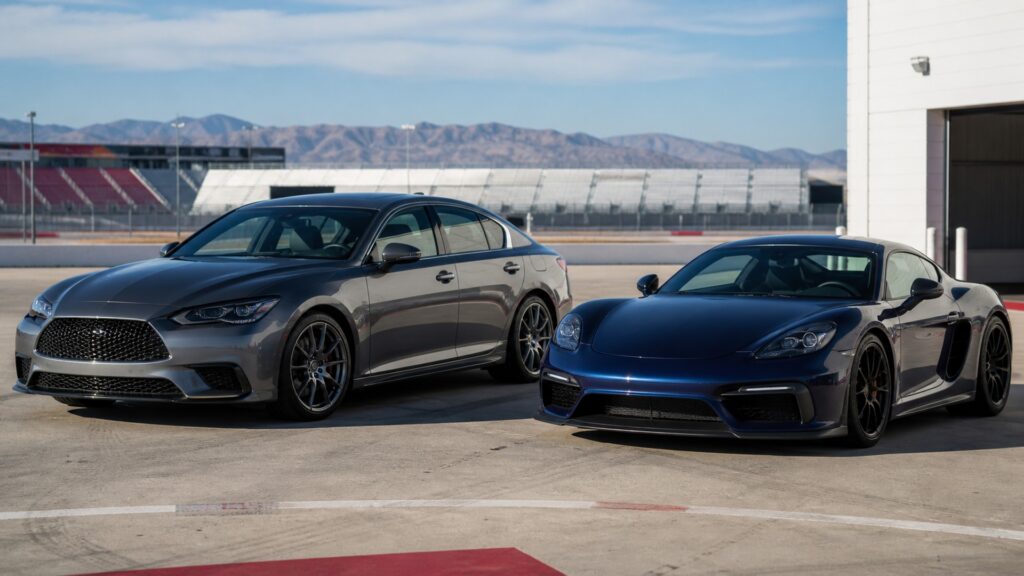
By: Review Streets Research Lab
Updated: October 5, 2026
Explainer · 8-12 min read
luxury performance cars explainer hero image for Review Streets
What You'll Learn

Comparing Driver Focus With a Broader Comfort Brief

Understand where the design priorities differ and where they overlap.

  • Separate driving involvement from acceleration figures.
  • Connect packaging and equipment with vehicle mass.
  • Understand ride and body-control compromises.
  • Compare cabin isolation with useful feedback.
  • Choose according to the complete car and its intended role.

Tip: Ask which experiences and everyday tasks the design prioritizes, rather than which category sounds faster.

Definitions

Six Design Concepts Behind the Difference

These concepts help explain the balance without creating an artificial boundary.

Driving involvement

The interaction and feedback a driver values in controlling the car.

  • Example: preferring a particular steering response or transmission
  • Check: evaluate the controls at normal road speeds
  • Limit: involvement is partly a personal preference

Refinement

The management of unwanted noise, vibration, and ride disturbance.

  • Example: a settled cabin during a long paved journey
  • Check: assess the fitted tires, seats, and chassis
  • Limit: quietness alone does not establish comfort

Packaging

The allocation of space to people, luggage, and mechanical components.

  • Example: a two-seat roadster and a sedan arranging space differently
  • Check: try actual passenger and luggage needs
  • Limit: exterior size is not a complete usability measure

Vehicle mass

The amount of matter that must be accelerated, slowed, and redirected.

  • Example: a lighter design requiring less force for the same acceleration under comparable conditions
  • Check: consider mass alongside output and grip
  • Limit: low mass alone does not guarantee superior performance

Body control

The management of roll, pitch, and continued body movement.

  • Example: the chassis settling after a road disturbance
  • Check: consider springs, dampers, tires, and geometry together
  • Limit: maximum stiffness is not always the best solution

Operating range

The set of conditions over which the intended behavior is supported.

  • Example: a road setup accommodating varied pavement and daily loads
  • Check: check the exact vehicle and equipment
  • Limit: a wide range of settings does not remove physical limits

Tip: An engineering compromise is not necessarily a flaw. Its value depends on whether the chosen balance serves the driver and passengers.

Design brief

Luxury Performance Usually Carries More Everyday Objectives

A luxury performance design often combines road response with cabin comfort, passenger accommodation, and a broad equipment offering. A sports-car design may concentrate more strongly on a particular driving experience. These goals can coexist, but each adds requirements to the overall package. The useful comparison identifies the priorities of the specific cars, not an assumed hierarchy of seriousness or quality.

  • Identify the main role each car is intended to serve.
  • Compare passenger needs with driver preferences.
  • Allow for overlap between the descriptions.

A performance sedan used for frequent shared journeys solves a different packaging problem from a compact roadster used mainly by one or two people.

Mass and space

Packaging Choices Influence the Physical Car

Seats, body dimensions, structure, powertrain, and equipment all contribute to mass and space allocation. A compact sports car can use a lightweight approach to deliver response, while a luxury performance vehicle may combine substantial output with a different accommodation brief. Neither arrangement is universal. Mazda's MX-5 illustrates the compact, lightweight approach; it does not define every sports car.

  • Compare actual mass and dimensions.
  • Check the usable seating and luggage arrangement.
  • Consider output together with the load it must move.

Two cars with similar acceleration can achieve it through different combinations of power, mass, gearing, and traction, then feel different in everyday maneuvers.

Chassis balance

Comfort and Body Control Must Be Coordinated

Both categories depend on suspension and tires to manage road disturbances and vehicle movement. Adaptive damping can vary supported behavior, but it does not make tire choice, travel, or geometry irrelevant. A sports car need not be uncomfortable, and a luxury performance car need not feel detached. The balance is set by the complete hardware and calibration.

  • Test imperfect pavement as well as smooth roads.
  • Compare the exact wheel and suspension package.
  • Distinguish damping adjustments from other chassis changes.

A firmer setting can feel more immediate on one surface yet less composed on another. More adjustment choices do not guarantee that every driver will prefer the result.

Cabin experience

Isolation and Feedback Are Different Design Questions

Reducing unwanted disturbance can improve comfort without removing all useful information about the car. Steering response, seating position, pedal behavior, road noise, and vibration contribute differently to the experience. Luxury performance designs often devote substantial attention to the cabin environment; sports cars vary in how much of the mechanical experience they emphasize. The driver's preference matters alongside the engineering.

  • Assess the information you receive through the controls.
  • Evaluate unwanted noise separately from enjoyable character.
  • Include a realistic length of drive.

A quieter car can still provide clear steering and braking response. A more vocal car is not automatically more communicative in every useful sense.

Actual use

Choose the Configuration That Fits the Role

BMW presents the M5 around both performance and long-journey comfort, showing how these aims can be combined. A sports car can also offer premium equipment and useful comfort. Compare the actual seating, ride, controls, route needs, and ownership requirements. Category names help describe priorities, but they do not establish which vehicle is more suitable for a particular household or journey.

  • Try the recurring tasks the car must perform.
  • Compare actual ownership costs and support needs.
  • Treat event preparation as a separate requirement.

A dedicated weekend role may favor one balance, while an only-car role with frequent passengers may favor another. Neither outcome requires declaring one category universally better.

Quick Reality Check

Overlapping Categories, Different Emphases

Look at the design priorities and the exact configuration.

Luxury performance often emphasizes

Road capability integrated with refinement and passenger accommodation.

A broad everyday role alongside strong performance.

Sports-car design often emphasizes

A particular driving response and sense of involvement.

Packaging and chassis choices centered on that experience, with varying comfort priorities.

Common Myths

Misconceptions About Luxury Performance and Sports Cars

The labels cannot supply a complete description of every vehicle.

Sports cars are always uncomfortable

Ride and seating vary widely; evaluate the actual car.

Luxury performance cars cannot be engaging

Refinement and clear, enjoyable response can coexist.

Every sports car is lighter

Mass depends on the specific design, powertrain, and equipment.

A sport setting turns any luxury car into the same thing

Settings operate within existing hardware and packaging constraints.

Tip: A useful verdict describes the actual differences and why they matter to the intended use.

FAQ

Questions About the Luxury Performance and Sports-Car Difference

Specific vehicles often overlap more than broad descriptions suggest.

Can a vehicle fit both categories?

Yes. The descriptions are not universally exclusive engineering classifications.

Does horsepower settle the comparison?

No. Mass, delivery, chassis response, comfort, and practical requirements also matter.

Why compare the exact tire package?

Tires contribute to response, noise, ride, and suitability for conditions.

Is adaptive suspension necessary for a good ride?

No. It is one approach to managing chassis behavior, not a guarantee or a universal requirement.

Which should I choose for frequent passengers?

Test actual access, space, comfort, and luggage needs. Do not assume the answer from the label alone.

Bottom Line

Luxury performance cars usually balance road capability with a broader comfort and accommodation brief, while sports cars emphasize driving experience in varied ways.

The categories overlap. Compare the physical design, fitted equipment, cabin experience, and intended role before choosing.

Next Steps

Go Deeper or Compare Your Options

Use these Review Streets paths to compare related categories and practical next decisions.

Vehicles

Explore vehicle categories and roles.

Further reading: BMW M5 performance and comfort example; BMW adaptive damping explanation; Mazda MX-5 design example.