
Exterior footprint
The space occupied by the truck's dimensions.
- Example: length and width affecting a regular parking space
- Check: measure the exact configuration
- Limit: compact does not supply an exact measurement
Midsize and compact pickups overlap in their basic purpose: carrying passengers and an open-bed load in a vehicle smaller than many full-size trucks. Their differences become clearer in the physical package, underlying structure, drivetrain choices, and range of rated work. A category name helps organize the search, but it cannot specify the capabilities of an individual truck.
Many familiar midsize designs use a separate frame and offer truck-oriented drivetrain equipment, while some modern compact pickups use an integrated body structure and prioritize a smaller everyday package. These are useful design patterns, not universal definitions. Compare the actual vehicles before turning a tendency into a purchasing rule.
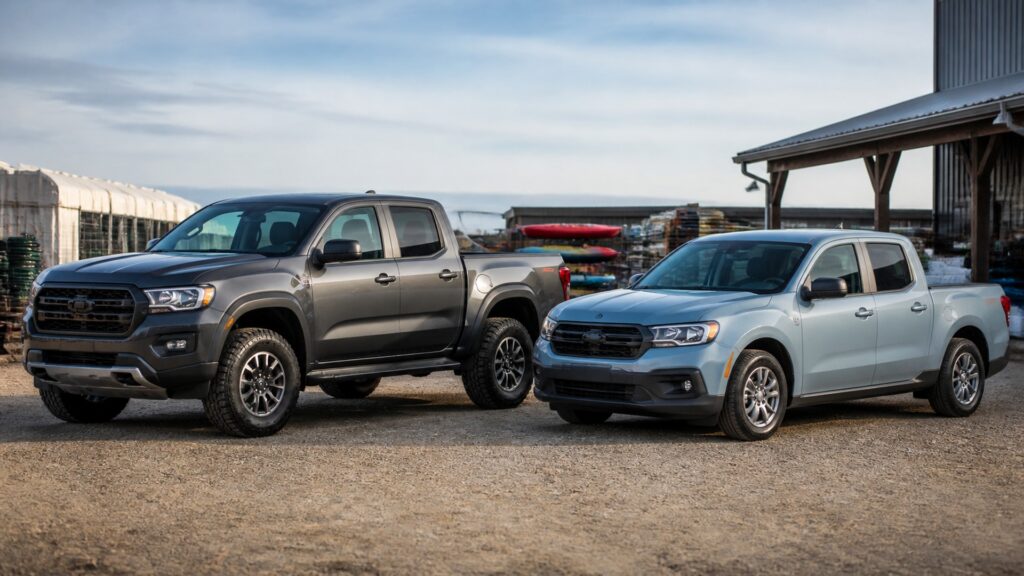
Compare the physical design and its practical consequences.
Tip: A structural description explains how a truck is built; its published ratings establish what that configuration is permitted to do.
These terms connect construction and packaging with actual usefulness.
The space occupied by the truck's dimensions.
A design in which the body is carried on a separate structural frame.
A design using an integrated load-bearing body structure.
The components and functions that transmit power to the driven wheels.
The shape and arrangement of the available carrying space.
A load or towing limit for a specific equipped vehicle.
Tip: Construction, equipment, dimensions, and ratings provide complementary information. None is a complete substitute for the others.
A compact pickup typically emphasizes a smaller footprint, while midsize designs occupy a larger part of the pickup range. That tendency can influence parking and access, but the actual dimensions decide whether a truck fits a particular place. Cab layout, mirrors, bed length, and turning requirements all matter. Compare the measurements and the space needed to use the truck, not just to park it.
A smaller exterior does not guarantee adequate rear-seat room, and a larger truck may still fit the available parking well. The useful difference is the one the owner encounters daily.
A separate frame and an integrated body structure distribute their structural jobs differently. Ford documents the Ranger around a steel frame and the Maverick as a unibody pickup, providing concrete examples of the two approaches. These examples do not define every truck in either size category. Strength, ride, mounting provisions, repair methods, and capability depend on the complete engineering, not a slogan about which construction is more authentic.
Neither approach is permission to attach equipment wherever it appears convenient. Structural mounting and repair should follow the guidance for that particular vehicle.
Some midsize configurations offer selectable four-wheel drive, low range, or specialized terrain equipment. Compact pickups can also offer driven-axle and traction choices suited to their intended roles. Check the exact hardware and its operating restrictions. A system that improves traction on a road is not necessarily the same arrangement as one intended for controlled low-speed travel on difficult terrain.
For ordinary paved driving, a capability that is never used may add little value. For a specific access requirement, the right function can be central to choosing between two otherwise suitable trucks.
Midsize offerings may provide greater towing capability or a more useful bed for some jobs, but payload and towing vary with configuration. Compare loaded requirements with the actual vehicle information. Bed dimensions, loading height, tie-down arrangements, and permanently fitted equipment affect practical use separately from weight ratings. A compact truck can be sufficient for many tasks without matching the largest figure in a midsize range.
A bulky lightweight item and a small heavy item pose different problems. More bed volume solves neither a weight-limit shortfall nor a missing securement arrangement by itself.
Structure and size influence the vehicle, but tires, suspension tuning, seats, powertrain, equipment, and loading also shape the experience. Do not assume every compact pickup rides like a car or every midsize truck feels harsh. Similarly, fuel use and ownership costs need actual estimates. Drive the candidates on representative roads and assess the normal tasks alongside the occasional heavy job.
Choose compact when its package covers the job with useful everyday convenience. Choose midsize when its verified space or equipment adds a benefit that matters often enough to justify the difference.
The two classes overlap without being identical.
A smaller everyday footprint with useful open-bed carrying ability.
A package that can suit commuting and moderate household or work loads.
Different bed arrangements and a broader range of towing or terrain equipment.
Capability that is useful for particular recurring tasks, subject to actual configuration limits.
Design patterns are not universal rules.
Check the actual model; category labels do not specify structure.
Some have rated towing capability with specified equipment and limits.
The actual configuration and loading label decide the allowance.
Gearing, clearance, tires, and system functions can differ substantially.
Tip: Compare what each design lets the owner do, rather than arguing from category names alone.
Use these differences to guide a vehicle-specific comparison.
They are broad market descriptions; compare exact dimensions and capabilities rather than assuming a single decisive cutoff.
No. The complete vehicle and its ratings determine allowable work.
Yes, if the actual cargo, people, equipment, and securement needs fit its limits and space.
Compare dimensions, turning requirements, visibility, and the actual parking location.
Use the exact vehicle specifications and loading information alongside measured cargo and route requirements.
Compact and midsize pickups differ in packaging, construction patterns, equipment choices, and available working capacity.
The differences matter only through the actual vehicle. Verify dimensions, hardware, and ratings before choosing a class.
Use these Review Streets paths to compare related categories and practical next decisions.
Explore vehicle designs and uses.
Compare pickup classes and capabilities.
Continue with midsize pickup systems and ownership.
Further reading: Ford Maverick technical specifications; Ford Ranger frame and capability example; Ford Maverick configurations; Ford Ranger configurations.
Choose a retailer
Prices checked regularly. We may earn a commission at no cost to you.