What Makes Muscle Cars Different from Luxury Performance Cars

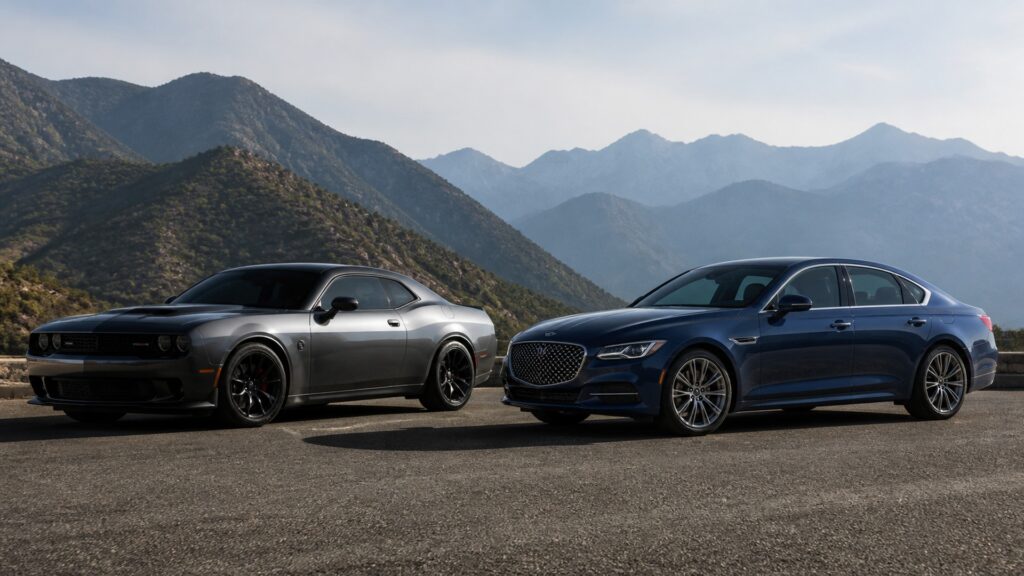
Muscle cars and luxury performance cars can offer similar levels of excitement while placing different emphasis on the experience around it. Muscle-car identity often gives a prominent role to powertrain character, assertive styling, and a recognizable performance tradition. Luxury performance cars combine strong road capability with a broader emphasis on cabin refinement, comfort, and premium accommodation. Those priorities overlap rather than forming a strict technical boundary.

A powerful engine, all-wheel drive, or adjustable suspension can appear in either category. Modern muscle cars can be comfortable and sophisticated, while luxury performance cars can be highly engaging. The useful differences emerge when you compare the complete design: how power is delivered, how the chassis responds, what reaches the cabin, and how the vehicle serves its occupants.

By: Review Streets Research Lab
Updated: October 5, 2026
Explainer · 8-12 min read
muscle cars explainer hero image for Review Streets
What You'll Learn

Understanding Character, Refinement, and Their Overlap

Compare the priorities behind the vehicles instead of assuming a fixed speed or price hierarchy.

  • Distinguish performance identity from measured capability.
  • Compare power delivery and control response.
  • Understand how chassis tuning balances ride and body control.
  • Assess cabin refinement and practical accommodation separately.
  • Recognize why exact configurations matter more than broad labels.

Tip: Two cars can deliver similar acceleration while offering very different experiences before, during, and after it.

Definitions

Six Concepts Behind the Comparison

These ideas separate the parts of the driving experience that are often bundled into one label.

Performance identity

The design, sound, history, and behavior through which a vehicle expresses its character.

  • Example: a car whose styling and powertrain personality are central to its appeal
  • Check: identify the attributes that create the appeal
  • Limit: identity does not establish superiority in every test

Power delivery

How propulsion responds across its operating range and to the driver's input.

  • Example: similar peak outputs producing different everyday acceleration responses
  • Check: consider gearing and input response together
  • Limit: maximum output is only one point in the operating range

Refinement

The management of unwanted noise, vibration, and ride disturbance alongside cabin comfort.

  • Example: a settled and quiet experience during a long journey
  • Check: evaluate the actual configuration on representative roads
  • Limit: a luxury badge does not guarantee every driver's preferred feel

Adaptive damping

The ability to vary damping behavior through a supported control system.

  • Example: a setting changing how suspension movement is controlled
  • Check: check which hardware and settings are fitted
  • Limit: adjustment does not remove tire or physical suspension limits

Accommodation

The usable seating, access, storage, and controls provided for occupants.

  • Example: rear passengers having sufficient space and convenient access
  • Check: try the actual seating positions and routine luggage
  • Limit: a premium interior finish does not prove practical fit

Design tradeoff

A choice that favors some attributes while accepting consequences elsewhere.

  • Example: a tire package emphasizing response while changing ride and noise
  • Check: evaluate both the intended benefit and its everyday effect
  • Limit: the preferred balance differs between drivers

Tip: Character, capability, and refinement are related, but they are not interchangeable measures.

Identity

The Difference Begins With What the Car Emphasizes

A muscle car often makes its performance personality a visible and audible part of its appeal. A luxury performance car usually gives refinement and accommodation a prominent place beside performance. These are tendencies rather than exclusions. The comparison is most useful when it identifies the actual experience each design is trying to deliver instead of declaring one category more serious, more authentic, or universally better.

  • Separate personal appeal from measured capability.
  • Describe the exact qualities each car emphasizes.
  • Allow a vehicle to combine more than one priority.

One driver may enjoy a car that constantly communicates its powertrain character. Another may prefer similar performance in a more subdued everyday experience. Both preferences can be supported by capable engineering.

Powertrain

Similar Performance Can Arrive Through Different Responses

Peak output and acceleration figures do not fully describe propulsion. Throttle response, transmission behavior, sound, and the useful operating range influence how a car feels in routine driving. Current muscle cars and luxury performance cars also use varied propulsion systems. Dodge's Charger offerings and BMW's hybrid M5 illustrate why the comparison should not depend on a single engine or drive-layout rule.

  • Compare response at normal road speeds.
  • Identify the actual transmission and powertrain arrangement.
  • Avoid treating one engine configuration as a complete definition.

Two cars can be quick yet differ in how smoothly or immediately they respond to a small input. That distinction may be more noticeable in daily use than a difference in a maximum-performance figure.

Chassis

Ride and Response Depend on the Complete Setup

Springs, dampers, tires, geometry, and control settings work together to determine ride and body movement. Both categories can use sophisticated chassis equipment. Adjustable damping can vary one part of the balance, but it cannot make every wheel and tire combination feel the same. Ford's Mustang performance equipment and BMW's Adaptive M systems show that chassis sophistication is not exclusive to either description.

  • Compare the fitted tires and suspension options.
  • Test rough pavement as well as smooth roads.
  • Distinguish a change in feel from a change in available grip.

A firmer package may suit a driver who values a particular response but feel tiring on that driver's commute. The useful verdict concerns the configuration and route, not just the category.

Cabin

Refinement and Accommodation Extend Beyond Decorative Materials

A premium cabin is more than its trim finish. Seating support, control placement, noise isolation, climate comfort, and usable space contribute to the experience. Luxury performance cars often prioritize a broad combination of these qualities, but body styles and packages vary. Muscle cars can also provide comfortable equipment. Compare what occupants actually use rather than assuming that an expensive material resolves an unsuitable seat or awkward access.

  • Try all regularly used seating positions.
  • Assess noise and comfort over a realistic journey.
  • Check controls and luggage space through ordinary tasks.

A quiet car with an uncomfortable seat may still be a poor long-distance choice for a particular driver. Refinement is a combined result, not a single amenity.

The complete car

Equipment and Intended Use Matter More Than a Category Verdict

A well-equipped muscle car can overlap with a luxury performance car in comfort and technology, while a more specialized version of either can emphasize different goals. Neither category guarantees the best price, fastest result, or lowest ownership cost. Compare the specific cars, their condition, and the tasks you need them to perform. The category names help frame the discussion but cannot complete it.

  • Use exact configurations and current ownership figures.
  • Separate ordinary road use from event requirements.
  • Choose according to the attributes that matter repeatedly.

For someone who values expressive powertrain character, a particular muscle car may be compelling. For someone who wants performance integrated with frequent passenger travel and refinement, a particular luxury performance car may make more sense.

Quick Reality Check

Different Emphases, Shared Capabilities

Neither description establishes a universal winner.

Muscle-car identity often highlights

A distinctive performance personality expressed through design and powertrain character.

The appeal of a particular model's controls, sound, and tradition.

Luxury performance often highlights

Strong road performance combined with cabin refinement and premium accommodation.

A broad balance of comfort, response, and everyday equipment.

Common Myths

Misconceptions About Muscle Cars and Luxury Performance Cars

Shared technology and varied configurations make simple stereotypes unreliable.

Luxury performance cars are always faster

Results depend on the exact models, conditions, and performance measure.

Muscle cars cannot be comfortable or sophisticated

Modern examples can offer advanced chassis and cabin equipment.

Luxury means an unengaging driving experience

Refinement and engaging response can coexist in the same car.

The more expensive car is automatically the better fit

Practical needs and personal preferences can favor either candidate.

Tip: A useful comparison explains how the cars differ in ordinary use as well as what their specifications claim.

FAQ

Questions About the Two Performance Priorities

Evaluate the complete vehicle rather than assigning qualities by badge.

Can a muscle car have luxury features?

Yes. Equipment and refinement vary, and the categories can overlap.

Does all-wheel drive separate the categories?

No. Drive layouts vary within modern offerings. It is one feature rather than a category boundary.

Is adaptive suspension proof of better comfort?

No. Its effect depends on the hardware, settings, tires, surface, and your preferences.

Why do similar power figures feel different?

Power delivery, gearing, mass, input response, and sound can change the experience.

Which one should I choose?

Compare the exact cars against desired character, comfort, passengers, route conditions, and ownership costs.

Bottom Line

Muscle cars and luxury performance cars differ mainly in the balance of character, refinement, and accommodation they emphasize, with substantial overlap in capability.

Compare power delivery, chassis behavior, cabin experience, and practical use together. A label cannot replace a clear assessment of the particular car.

Next Steps

Go Deeper or Compare Your Options

Use these Review Streets paths to compare related categories and practical next decisions.

Vehicles

Explore the major vehicle categories.

Muscle Cars

Continue with muscle-car systems and ownership.

Further reading: Ford Mustang equipment examples; Dodge Charger powertrain choices; BMW M5 design example; BMW adaptive damping explanation.