What Makes Muscle Cars Different from Sports Cars

Muscle cars and sports cars differ more in emphasis than in a strict mechanical boundary. Muscle cars are strongly associated with an expressive performance identity and substantial power, while sports cars broadly emphasize an engaging driving response through the complete chassis and powertrain. A car can satisfy both descriptions. Modern muscle cars can handle and brake well, and sports cars can be large, powerful, and comfortable.

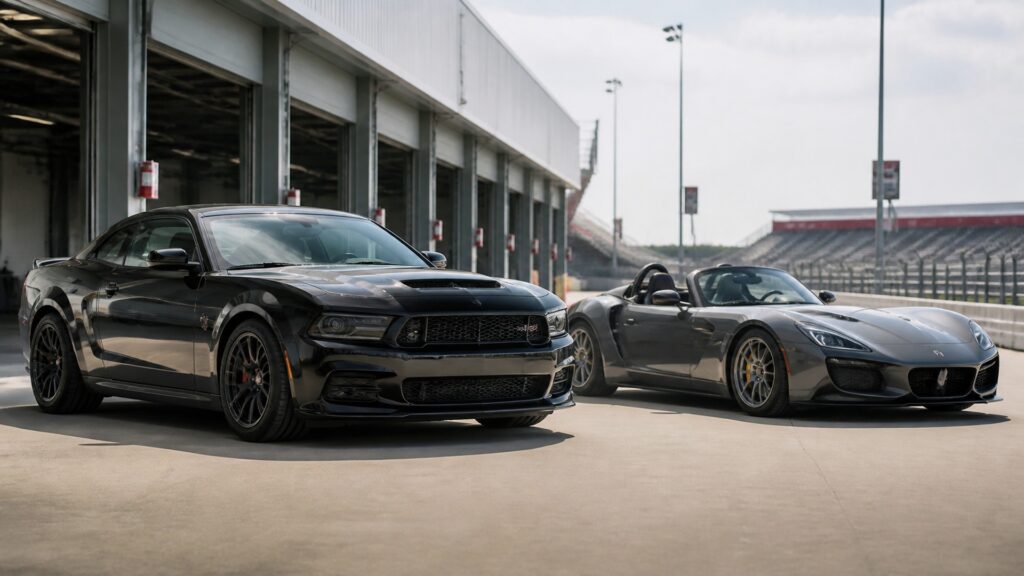
The useful comparison therefore looks at mass, dimensions, power delivery, chassis tuning, and practical packaging rather than assigning every vehicle to an exclusive box. A lightweight roadster and a powerful muscle coupe illustrate different approaches, but neither represents every member of its category. The exact configuration determines how those priorities feel on the road.

By: Review Streets Research Lab
Updated: October 5, 2026
Explainer · 8-12 min read
muscle cars explainer hero image for Review Streets
What You'll Learn

Compare Design Priorities Without Forcing a Boundary

Understand the tendencies behind the labels and the engineering details that matter more.

  • Recognize why the categories overlap.
  • Compare output with mass and power delivery.
  • Connect dimensions and layout with driving response.
  • Assess chassis equipment rather than repeating handling stereotypes.
  • Use the actual passenger and ownership requirements to decide.

Tip: A category label is a starting description. The car's dimensions, equipment, behavior, and intended use provide the useful evidence.

Definitions

Six Concepts for Comparing Muscle Cars and Sports Cars

These concepts support a meaningful comparison without pretending the names are technical standards.

Category overlap

The possibility that one vehicle reasonably fits more than one informal automotive description.

  • Example: a performance coupe described as both a muscle car and a sports car
  • Check: look at the features behind each description
  • Limit: the label alone does not specify capability

Power-to-weight relationship

The amount of available power considered relative to vehicle mass.

  • Example: a lighter car using less power to achieve a responsive result
  • Check: compare mass and output together
  • Limit: traction, gearing, and resistance also affect acceleration

Power delivery

The way propulsion responds across its operating range and to driver input.

  • Example: two cars with similar peak output feeling different in routine acceleration
  • Check: assess response and gearing as well as the peak figure
  • Limit: one maximum value cannot describe the whole experience

Mass distribution

How vehicle mass is arranged across and within the chassis.

  • Example: different powertrain locations influencing chassis loads and packaging
  • Check: consider the entire design
  • Limit: one balance percentage does not guarantee superior handling

Chassis calibration

The coordinated settings of suspension, steering, braking, and related controls.

  • Example: a performance package changing damping and other response characteristics
  • Check: evaluate the exact equipment and tires
  • Limit: a package name does not predict performance on every surface

Packaging

The allocation of space to occupants, luggage, mechanical components, and body structure.

  • Example: a compact two-seat roadster using space differently from a larger coupe
  • Check: check actual access and usable space
  • Limit: exterior size does not directly establish passenger comfort

Tip: Compare measurable details and observed behavior while leaving room for different ways to deliver an enjoyable drive.

Meaning

The Names Describe Traditions and Priorities, Not Exclusive Rules

Muscle-car identity often emphasizes assertive styling and strong propulsion, but that description does not exclude coordinated handling. Sports-car identity covers a wide range of vehicles built around driving enjoyment and response. Manufacturers themselves can use overlapping language. Ford describes the Mustang in sports-car terms while its powerful configurations are also commonly discussed as muscle cars. A comparison should explain the design rather than argue that one label cancels the other.

  • Treat the categories as broad descriptions.
  • Avoid using engine layout as a mandatory definition.
  • Identify the particular vehicles being compared.

A Mustang and a compact roadster may differ substantially, yet both can prioritize the driving experience. The comparison becomes useful when it describes those differences rather than forcing a binary classification.

Propulsion

Large Output and Low Mass Are Different Routes to Response

A vehicle can pursue performance through substantial power, reduced mass, or a combination. Muscle-car appeal frequently gives power delivery a prominent role; some sports cars instead demonstrate how a lighter package can feel responsive without exceptional peak output. Neither approach guarantees the better result in every measure. Gearing, tire grip, aerodynamic resistance, and the operating range all affect what the driver experiences.

  • Compare mass alongside power figures.
  • Consider response at ordinary road speeds.
  • Distinguish acceleration measures from overall driving enjoyment.

Mazda's MX-5 illustrates a lightweight sports-car approach. That example helps explain an alternative priority without implying that every sports car is light or every muscle car is heavy.

Layout

Dimensions and Mass Arrangement Shape the Driving Task

Wheelbase, width, seating position, and the location of major components influence packaging and the work the chassis must do. A compact roadster can feel different from a larger coupe even when both are well tuned. Sports cars themselves use multiple layouts, and muscle-car configurations also vary. A size difference is evidence about the particular pair, not an immutable rule about the categories.

  • Compare actual dimensions and seating position.
  • Consider mass arrangement together with chassis tuning.
  • Include visibility and road environment in the evaluation.

A narrow parking space or a driver's preferred seating position can make the difference tangible before maximum performance is relevant. Physical proportions are part of everyday use as well as engineering.

Chassis

Modern Muscle Cars Cannot Be Reduced to Straight-Line Performance

Brakes, tires, suspension, and control settings determine how a car manages direction changes and deceleration. Modern muscle cars can include sophisticated damping and substantial chassis upgrades, while sports cars vary from road-oriented setups to more specialized configurations. Ford's available Mustang performance equipment provides one example. Compare the fitted package and its intended use rather than assuming that one category automatically corners or stops better.

  • Check the exact tires and suspension equipment.
  • Separate road suitability from event preparation.
  • Judge ride and response on representative surfaces.

Two versions of the same car can differ enough that a category-wide verdict is misleading. A balanced road setup may also suit a particular driver better than a more specialized package.

Ownership

Choose the Particular Car That Fits the Intended Role

The categories become less important when you list the actual requirements: desired response, passenger access, luggage, parking, comfort, and cost. A lightweight two-seat car can be appealing for a particular weekend role; a different performance vehicle may fit shared daily travel better. Neither label establishes affordability or practicality. Test the tasks and compare ownership details for the candidates you would actually buy.

  • Try passenger and cargo requirements directly.
  • Use actual running-cost and insurance information.
  • Choose based on the experience and role you need.

A driver seeking a compact roadster experience may prefer one kind of sports car, while someone drawn to a specific muscle car's powertrain and design may prefer that model. Both choices can reflect informed priorities.

Quick Reality Check

Useful Tendencies, Important Exceptions

The names suggest an emphasis; the complete car establishes the result.

Muscle-car discussions often emphasize

Strong propulsion and a distinctive performance identity.

The appeal of a particular powertrain, styling tradition, and road presence.

Sports-car discussions often emphasize

The complete driving response, including handling and driver involvement.

A wide range of layouts and proportions that can overlap with muscle cars.

Common Myths

Misconceptions About Muscle Cars and Sports Cars

Rigid category rules often hide useful differences between actual cars.

A muscle car cannot also be a sports car

The informal categories can overlap; one label does not necessarily exclude the other.

Muscle cars only work well in a straight line

Modern examples can have advanced chassis systems. Evaluate the actual configuration.

Every sports car is small and light

Sports cars vary considerably in mass, size, layout, and power.

Higher horsepower proves a better driving experience

Response, mass, tires, controls, comfort, and personal preference also matter.

Tip: Ask what is different about the two cars in front of you, not what a stereotype predicts.

FAQ

Questions About the Muscle-Car and Sports-Car Difference

The comparison works best when tied to specific models and priorities.

Is there a strict engineering definition separating them?

There is no universally exclusive boundary in ordinary usage. Design priorities and identity can overlap.

Do all muscle cars require a traditional V8?

Modern manufacturer offerings include other powertrains. Check the actual vehicle rather than relying on one historical pattern.

Which category handles better?

There is no universal answer. Tires, chassis, mass, configuration, and conditions determine the comparison.

Is a lightweight car always faster?

No. Output, grip, gearing, resistance, and the performance measure also affect the result.

How should I make a buying comparison?

Start with the driving experience and practical role you want, then assess the exact equipment, condition, and ownership costs of each candidate.

Bottom Line

Muscle cars and sports cars differ in typical emphasis, but their categories overlap and do not replace a comparison of the complete vehicles.

Look at power delivery, mass, dimensions, chassis behavior, and practical fit. The most useful distinction explains the experience each actual car offers.

Next Steps

Go Deeper or Compare Your Options

Use these Review Streets paths to compare related categories and practical next decisions.

Vehicles

Explore the major vehicle categories.

Muscle Cars

Continue with muscle-car operation and ownership.

Further reading: Ford Mustang classification and equipment; Mazda MX-5 lightweight design example; Ford Mustang chassis examples; Dodge Charger powertrain examples.