What Makes Off-Road Vehicles Different from Luxury Performance Cars

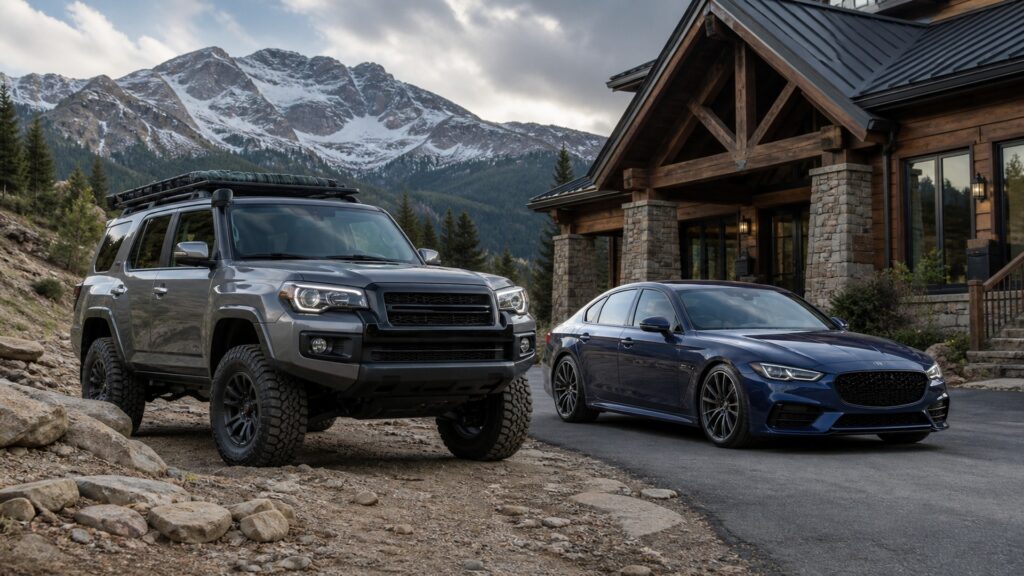
Off-road vehicles and luxury performance cars solve different primary problems. Terrain-focused vehicles balance clearance, traction, wheel movement, and protection for difficult ground. Luxury performance cars combine strong road response with a refined cabin and comfort over ordinary journeys. Both can be powerful and sophisticated, so neither engine output nor the number of electronic settings explains the distinction by itself.

The categories also overlap. Luxury can describe the cabin and ownership experience of a capable four-wheel-drive vehicle, while a road-focused performance car can use all-wheel drive and adjustable suspension. Understanding the difference means looking at what each system is designed to accomplish and the surfaces for which the complete vehicle is intended.

By: Review Streets Research Lab
Updated: October 5, 2026
Explainer · 8-12 min read
off-road vehicles explainer hero image for Review Streets
What You'll Learn

How Terrain Capability and Road Refinement Shape Design

Compare engineering priorities without treating luxury and capability as opposites.

  • Connect vehicle geometry with the surfaces it can accommodate.
  • Distinguish terrain traction aids from road drivetrain tuning.
  • Compare suspension travel with ride and body control.
  • Understand the different jobs of protection and cabin refinement.
  • Recognize vehicles that combine priorities from both categories.

Tip: A shared feature name does not guarantee a shared function. Check what the system changes on the particular vehicle.

Definitions

Six Ideas Behind the Design Comparison

These terms describe different parts of the vehicle's engineering brief.

Terrain geometry

The combination of clearance, wheelbase, and overhangs that affects contact with uneven ground.

  • Example: a short front overhang helping the body approach a sharp rise
  • Check: consider the whole path beneath and around the vehicle
  • Limit: one clearance measurement does not describe every obstacle

Traction management

Mechanical or electronic measures that help use available tire grip.

  • Example: selective brake intervention or differential control managing uneven traction
  • Check: identify the actual mechanism
  • Limit: no system can supply unlimited grip

Suspension articulation

The accommodation of different wheel positions over irregular ground.

  • Example: one wheel moving upward while another follows a depression
  • Check: look at movement and tire loading together
  • Limit: more articulation is not a guarantee of more road precision

Adaptive damping

A system that varies damping behavior under supported control strategies.

  • Example: damping adjusted to balance ride and body movement
  • Check: distinguish damping changes from height or travel changes
  • Limit: an adjustable damper does not necessarily increase clearance

Refinement

The combined control of noise, vibration, ride disturbance, and cabin comfort.

  • Example: reduced unwanted road noise during a long paved journey
  • Check: evaluate the actual tires, seats, and suspension
  • Limit: a luxury label does not establish the result for every configuration

Protective hardware

Equipment intended to shield specified vulnerable parts from some forms of contact.

  • Example: a plate beneath a drivetrain component
  • Check: check the areas covered and supported use
  • Limit: protection has impact limits and adds its own packaging considerations

Tip: Several categories can share the same technology while using different dimensions, components, and calibrations.

Geometry

The Ground Under the Vehicle Changes the Design Brief

Terrain-oriented geometry must account for contact at the front, between the axles, and at the rear. A road-focused luxury performance car can instead be arranged around pavement response, packaging, and aerodynamic goals within its intended use. A low body is not inherently better or worse; it presents a different set of benefits and restrictions. The practical effect appears when the surface departs from the conditions the design expects.

  • Compare overhangs and underbody clearance together.
  • Include the loaded condition in the assessment.
  • Avoid inferring terrain capability from body style alone.

A car can feel composed on a paved road but be unable to clear a raised center ridge. The limitation concerns geometry rather than the sophistication of its drivetrain.

Drivetrain

Similar Drive Layouts Can Serve Different Purposes

Both categories may drive all four wheels. A terrain-focused system may add low-range gearing or differential locking for particular low-speed conditions. A luxury performance car may coordinate drive distribution with road handling and acceleration. These are not universal equipment rules: trims and models differ. The useful distinction is the supported operating task, not the mere presence of an all-wheel-drive badge.

  • Check the actual transfer and differential arrangements.
  • Separate mechanical equipment from selectable mode names.
  • Use the manufacturer's operating limits for each system.

Two vehicles can both distribute drive between axles while only one has additional reduction gearing. That difference can matter more on slow terrain than a comparison of their peak power figures.

Suspension

Wheel Movement, Body Control, and Comfort Require a Balance

Off-road suspension needs to accommodate the intended ground disturbances and influence how the tires stay loaded. Road performance and refinement ask for controlled body motion alongside isolation from unwanted disturbance. Adjustable damping can help vary this balance, but it does not make geometry or tire choice irrelevant. BMW's Adaptive M systems illustrate adjustment aimed at road dynamics and comfort; that is not the same function as additional articulation.

  • Distinguish travel, damping, and ride height.
  • Evaluate comfort on representative surfaces.
  • Consider tires and seats alongside suspension features.

A comfort setting can alter damping without making the underside any higher. A terrain-oriented suspension can have generous movement without duplicating the response of a lower road-focused car.

Environment

Protection and Refinement Address Different Sources of Trouble

Protective plates are intended to reduce exposure of particular components to terrain contact. Cabin refinement deals with noise, vibration, seating, and other aspects of the passenger experience. A vehicle can have both, but neither feature proves the other. Terrain-oriented tires, added hardware, and body arrangements can also affect sound, ride, weight, and packaging, so individual configurations deserve a complete evaluation.

  • Identify what protective equipment actually covers.
  • Assess cabin comfort rather than assuming it from price.
  • Account for equipment effects on weight and usable space.

A quiet cabin does not establish underbody protection, and a visible protective plate does not establish a comfortable highway ride. They are evidence about different parts of the vehicle.

Overlap

Luxury Off-Road Models Show Why the Boundary Is Flexible

Lexus's Overtrail program is a useful example of luxury features combined with dedicated terrain equipment. It demonstrates that comfort and off-road capability can coexist when the vehicle is designed for both. A luxury performance sedan such as the BMW M5 represents a different balance centered on strong road performance and everyday refinement. Neither example makes every vehicle carrying the same brand suitable for the same use.

  • Compare the exact model and equipment package.
  • Separate cabin amenities from terrain specifications.
  • Let the necessary route determine which capability matters.

For regular rough access, a suitably equipped terrain vehicle may be the practical choice. For paved travel where refinement and road response dominate, a luxury performance car may better match the intended experience.

Quick Reality Check

Different Priorities Can Coexist

The comparison is about emphasis and verified capability, not a fixed hierarchy.

Terrain-focused priorities include

Geometry, wheel movement, traction equipment, and protection matched to supported rough-ground use.

Controlled progress when surface height and grip vary.

Luxury road-performance priorities include

Strong road response balanced with cabin refinement and everyday comfort.

Coordinated powertrain and chassis behavior on intended road surfaces.

Common Myths

Misconceptions About Luxury and Terrain Capability

Price and technology count do not reveal the complete design.

Luxury vehicles cannot be capable off-road

Some luxury vehicles are specifically equipped for terrain use. Check their configuration and limits.

Adaptive suspension always means adjustable clearance

Adaptive damping and ride-height adjustment are different functions. A vehicle may have one, both, or neither.

All-wheel drive makes the designs equivalent

Geometry, tires, protection, gearing, and calibration can still differ substantially.

The more expensive vehicle can handle every route better

Price includes many attributes. Route suitability depends on relevant capability rather than total cost.

Tip: Ask what each feature accomplishes and whether that job matches the journey you need to make.

FAQ

Questions About Off-Road and Luxury Performance Designs

Compare the whole specification rather than relying on one shared feature.

Is a luxury SUV automatically an off-road vehicle?

No. Verify the tires, geometry, drivetrain, and supported use of the exact version.

Can both categories offer a comfortable ride?

Yes. The result depends on the design, fitted equipment, road surface, and personal preferences.

Does more suspension adjustment remove all compromises?

No. Adjustments operate within the physical hardware and cannot change every aspect of the vehicle.

Why compare underbody protection separately?

Its purpose is different from cabin comfort or road response, and the coverage and limits vary.

Which design should I prioritize?

Use necessary route demands first, then compare the comfort, response, space, and costs that matter on routine journeys.

Bottom Line

Off-road vehicles emphasize managing difficult ground, while luxury performance cars emphasize road response and refinement; some designs deliberately combine those priorities.

Look at geometry, drivetrain functions, suspension, protection, and cabin behavior together. Shared technology or a premium badge does not make the complete vehicles interchangeable.

Next Steps

Go Deeper or Compare Your Options

Use these Review Streets paths to compare related categories and practical next decisions.

Vehicles

Explore vehicle types and their roles.

Further reading: BMW M5 road-performance and comfort example; BMW adaptive damping explanation; Lexus Overtrail design example; Toyota 4Runner drivetrain example.