What Makes Off-Road Vehicles Different from Sports Cars

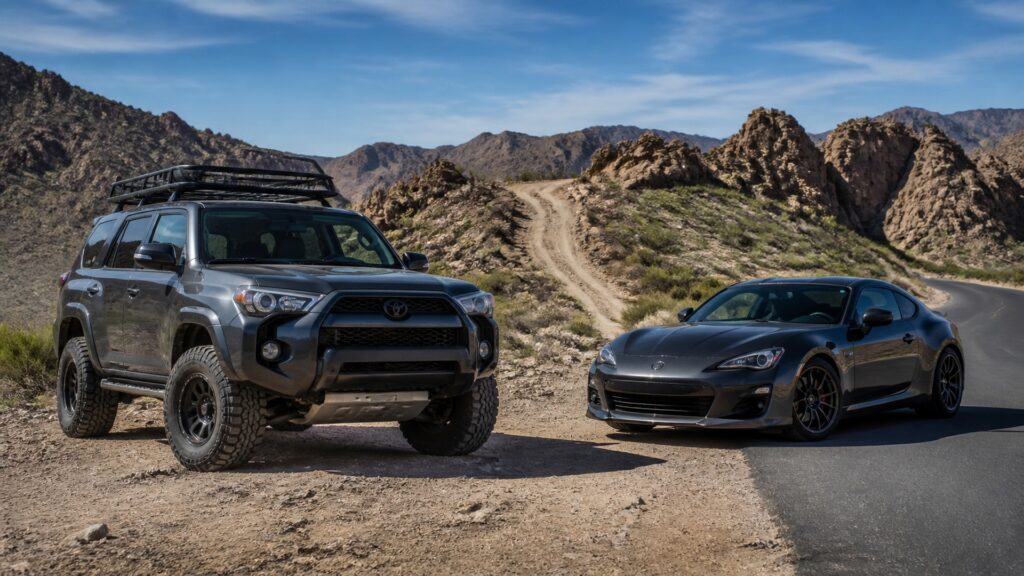
Off-road vehicles and sports cars arrange familiar automotive systems around different demands. A terrain-focused vehicle must manage uneven ground, changing traction, and obstacles beneath and ahead of it. A typical road sports car emphasizes responsive acceleration, braking, and direction changes on pavement. The difference is therefore more than ride height or engine power: it runs through geometry, suspension, tires, gearing, and protection.

Neither category describes every model perfectly. Some sports cars are adapted for rough terrain, and many off-road vehicles are comfortable road transport. The useful comparison is between design priorities and the exact vehicle in front of you. A feature that is valuable on a rocky access track can be unnecessary, or involve a compromise, on a paved daily route.

By: Review Streets Research Lab
Updated: October 1, 2026
Explainer · 8-12 min read
off-road vehicles explainer hero image for Review Streets
What You'll Learn

Two Different Sets of Chassis Priorities

See how terrain access and road response lead to different engineering choices.

  • Connect body geometry with obstacle clearance.
  • Distinguish suspension travel from control of body movement.
  • Understand why tire choice changes with surface and use.
  • Compare slow-speed drive management with road-performance gearing.
  • Recognize models that combine elements of both categories.

Tip: Compare what a feature helps the vehicle do. Height, stiffness, and power are not independent measures of overall quality.

Definitions

Six Concepts Behind the Design Differences

These concepts describe the physical jobs the vehicle must perform.

Breakover clearance

The geometric ability to pass over a crest without the underside between the axles contacting it.

  • Example: a vehicle crossing a raised ridge between its front and rear wheels
  • Check: consider wheelbase and underbody height together
  • Limit: a clearance figure at one point does not fully describe crest clearance

Suspension travel

The available movement of a wheel relative to the vehicle body through the suspension.

  • Example: a wheel moving upward over a bump while the body moves less
  • Check: look at the complete suspension design
  • Limit: more travel alone does not guarantee more grip or a better ride

Articulation

The ability of the suspension to accommodate different wheel positions over uneven ground.

  • Example: wheels following an uneven trail rather than all remaining in one plane
  • Check: consider how the wheels remain loaded over the intended terrain
  • Limit: travel limits and vehicle geometry still apply

Body-motion control

The management of roll, pitch, and continued movement through the chassis setup.

  • Example: a road sports car settling after a direction change
  • Check: assess springs, dampers, geometry, and tires together
  • Limit: the stiffest possible setup is not universally the most effective

Tire design brief

The balance of surface grip, construction, durability, comfort, and other properties a tire is intended to provide.

  • Example: a terrain-oriented tire and a road-performance tire serving different priorities
  • Check: compare approved specifications and intended conditions
  • Limit: a tire category name does not predict every performance measure

Underbody protection

Equipment intended to shield specified vulnerable areas from some kinds of contact.

  • Example: a protective plate positioned beneath a drivetrain component
  • Check: check what is covered and how it is mounted
  • Limit: protection does not make all impacts harmless

Tip: The parts interact. A tire or suspension change can affect more than the single characteristic that attracted your attention.

Geometry

Off-Road Geometry Makes Room for the Ground

An obstacle can contact the front, middle, or rear of a vehicle, so terrain clearance involves more than the distance beneath one component. Overhangs, wheelbase, and underbody shape all matter. Road sports cars can accept a lower stance as part of a design focused on pavement. That choice may support their overall handling and packaging goals while limiting access over sharp rises or deep ruts.

  • Compare approach, crest, and departure constraints.
  • Account for the loaded condition and fitted equipment.
  • Avoid using ride height as a complete capability score.

A tall-looking vehicle with a long overhang can still be limited at a sharp approach. A lower car can be entirely suitable for a smooth route that never presents that obstacle.

Suspension

Wheel Movement and Body Control Answer Different Demands

Uneven terrain asks the suspension to accommodate wheels at different heights and manage repeated disturbances. A sports-car chassis typically places greater emphasis on precise response during road acceleration, braking, and cornering. Both need controlled movement and useful tire contact. The distinction is the balance chosen for the intended surface, not a rule that off-road suspension is simply soft and sports-car suspension is simply hard.

  • Distinguish wheel travel from damping.
  • Assess the surface and speed range the setup supports.
  • Judge the complete chassis rather than one spring or damper.

A setup that feels composed on smooth pavement may run out of useful travel on a deeply uneven route. A terrain-focused setup may permit more body movement while handling those surface changes.

Tires

The Surface Changes What the Tires Need to Deliver

Tires connect both types of vehicle to the ground, but their intended tasks differ. A terrain-oriented specification may prioritize loose surfaces and resistance to certain off-road demands. A sports-car specification may prioritize response and grip under its intended road conditions. There are tradeoffs among noise, feel, durability, and performance, and individual tire models must be assessed on their own merits.

  • Use the correct size, load capability, and fitment.
  • Check the actual tire model and intended conditions.
  • Treat road and terrain performance as multiple measures.

A dramatic tread pattern is not proof of better wet-road braking. Similarly, a tire suited to a sports car on warm pavement is not automatically appropriate for the terrain a four-wheel-drive vehicle can reach.

Drivetrain

Terrain Travel Can Require Control at Very Low Speed

Some off-road drivetrains offer low-range reduction and locking differentials to support controlled progress where grip varies between wheels. A road sports car may instead emphasize gear selection, power delivery, and differential behavior for acceleration and cornering on pavement. There can be shared technology, but its purpose and calibration differ. Not every off-road vehicle has the same mechanical aids, and not every sports car uses the same drive layout.

  • Check which systems are actually fitted.
  • Separate all-wheel drive from low-range availability.
  • Use modes only under their stated conditions.

Two vehicles can both drive all four wheels while offering very different capabilities on a slow, uneven climb. Their geometry, gearing, tire contact, and control systems determine the difference.

Overlap

Specialized Models Show Why the Labels Have Limits

Manufacturers can combine priorities rather than follow a strict category boundary. Porsche's 911 Dakar, for example, adds terrain-oriented changes to a sports-car basis, including increased ground clearance. That does not make every 911 appropriate for the same use. Likewise, a comfortable cabin in a capable four-wheel-drive vehicle does not erase its terrain equipment. Compare the supported use of each configuration rather than relying on the family name.

  • Look for specific design changes and their limits.
  • Avoid extending one special model's capability to a whole range.
  • Choose according to the surfaces you need to travel.

For a paved route and a driver who values road response, a conventional sports car may fit well. For necessary rough-terrain access, the verified capability of a terrain-focused vehicle may be decisive.

Quick Reality Check

Different Priorities, Shared Fundamentals

Both categories depend on tires, suspension, drive, and brakes working together.

Terrain-focused designs often emphasize

Obstacle clearance, wheel movement, traction management, and protection for supported terrain use.

Controlled progress where the surface is uneven and grip changes from wheel to wheel.

Road sports-car designs often emphasize

Responsive acceleration, braking, steering, and body control on intended road surfaces.

A coordinated driving feel shaped by mass, layout, tires, and chassis tuning.

Common Myths

Misconceptions About Off-Road Vehicles and Sports Cars

Simple opposites miss how the engineering choices work together.

The only difference is ground clearance

Geometry, tires, suspension, gearing, protection, and calibration can all differ.

All off-road suspension is soft

Designs vary with terrain and intended use. Travel and damping cannot be reduced to one stiffness label.

Four driven wheels make the categories equivalent

Drive layout is one part of a much larger capability and handling package.

A sports car can never have terrain capability

Specialized models can combine priorities. Their specific changes do not establish capability for every related model.

Tip: Use category labels to begin the comparison, then check the actual design and supported use.

FAQ

Questions About the Engineering Differences

Look at the task a system performs before judging the feature.

Are all off-road vehicles SUVs?

No. Different vehicle forms can be designed for terrain use. Here the comparison concerns passenger vehicles rather than ATVs or motorcycles.

Does more suspension travel improve everything?

No. Travel must work with damping, geometry, tires, packaging, and the intended use.

Can a sports car be driven on any unpaved road?

That depends on the surface, clearance, tires, condition, and manufacturer guidance. Neither a blanket yes nor a blanket no describes every route.

Why does wheelbase matter off-road?

Together with underbody height and shape, it affects how a vehicle clears a crest between the axles. It also influences packaging and maneuverability.

Which category is better?

Neither is better for every task. Compare the exact vehicles against terrain access, road response, passengers, and everyday use.

Bottom Line

Off-road vehicles differ from typical road sports cars because their geometry, chassis, tires, and drivetrain are balanced around different surface demands.

Compare those engineering choices with your actual route. Specialized models can overlap, so the fitted equipment and supported use matter more than the badge.

Next Steps

Go Deeper or Compare Your Options

Use these Review Streets paths to compare related categories and practical next decisions.

Vehicles

Explore the major vehicle categories.

Further reading: Ford terrain geometry and equipment examples; Porsche 911 Dakar design example; NHTSA tire selection guidance; Toyota 4Runner drivetrain equipment example.