What Makes Power Racks & Squat Racks Different from Cable Machines

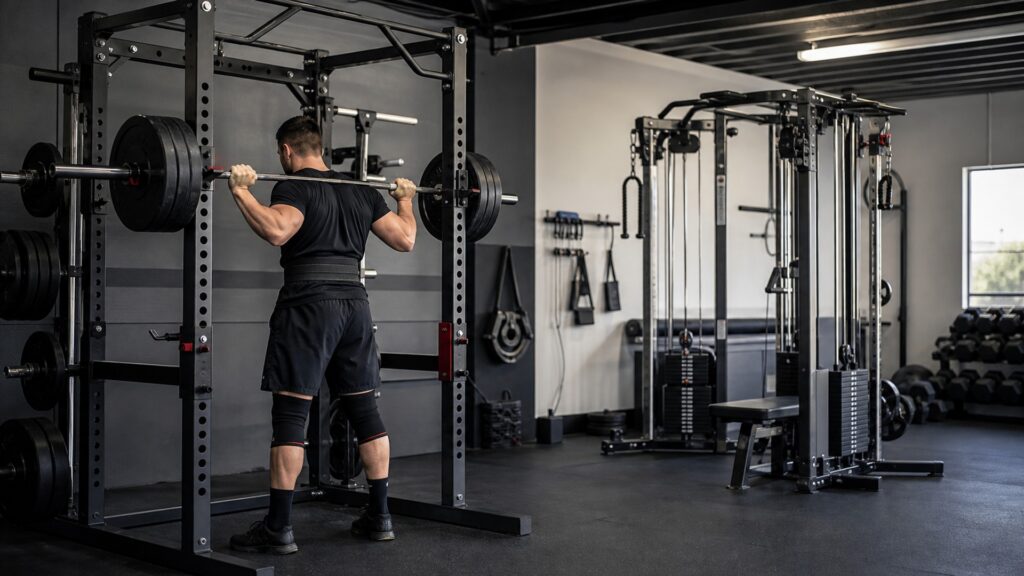
Power racks and squat racks are different from cable machines because racks support a loaded barbell, while cable machines create resistance through pulleys and cables. A rack gives the bar a place to start, finish, and be caught. A cable machine gives the user adjustable lines of pull from different angles.

The practical difference is barbell structure versus cable resistance. Racks are better for squats, bench presses, overhead presses, rack pulls, pull-ups, and heavy barbell work. Cable machines are better for rows, pulldowns, curls, pressdowns, rotations, and accessory exercises from controlled angles.

By: Review Streets Research Lab
Updated: September 25, 2026
Explainer · 8-12 min read
power racks & squat racks explainer hero image for Review Streets
What You'll Learn

How Racks And Cable Machines Differ

A clear comparison of barbell support versus adjustable cable resistance.

  • What racks are designed to support
  • How cable machines create resistance from angles
  • Why racks suit heavy compound lifts
  • Where cable machines are better for accessories
  • How to choose based on the user's main training plan

Tip: Start with the exercises that define the routine. Equipment value comes from supporting those movements safely and repeatedly.

Definitions

Key Concepts Behind Power Racks & Squat Racks Different from Cable Machines

These concepts clarify the practical differences between home strength setups.

Power Rack

A power rack is a frame that supports barbell lifts with uprights, hooks, and safeties.

  • Example: squatting inside a rack with safety straps
  • Check: confirm the rack supports the intended barbell lifts
  • Limit: it does not create cable resistance by itself

Squat Rack

A squat rack supports a barbell for squats and related lifts, usually with a simpler frame than a full rack.

  • Example: two uprights holding a bar at shoulder height
  • Check: review stability and safety options
  • Limit: some models provide limited missed-rep protection

Cable Machine

A cable machine uses pulleys and cables to provide resistance from different directions.

  • Example: a high pulley for lat pulldowns
  • Check: test pulley range and cable smoothness
  • Limit: it does not replace a loaded barbell path

Barbell Support

Barbell support is the rack's ability to hold, start, and catch a loaded bar.

  • Example: J-hooks and safeties for a bench press
  • Check: set hooks and safeties correctly
  • Limit: support still requires correct technique

Line Of Pull

Line of pull is the direction cable resistance travels during an exercise.

  • Example: a cable pulling diagonally during a chop
  • Check: match the cable angle to the movement
  • Limit: angle freedom can require more setup knowledge

Training Priority

Training priority is the main type of exercise the equipment must support.

  • Example: choosing a rack for barbell strength or cables for accessory work
  • Check: list the weekly must-have exercises
  • Limit: some home gyms eventually need both

Tip: The better choice is the one that supports the user's repeated workouts with the clearest setup and fewest compromises.

Core Difference

Racks Hold A Barbell

The defining job of a rack is to support barbell lifting. It gives the user a stable place to unrack, re-rack, and set safeties for loaded movements.

  • Use racks for squats, presses, and rack pulls.
  • Set safeties for the lift.
  • Plan room for plates and bar movement.

Rack value comes from barbell structure.

Cable Difference

Cable Machines Change Resistance Direction

Cable machines are built around pulley angle and attachment choice. They make it easier to train from high, low, side, or diagonal lines of pull.

  • Use cables for pulldowns, rows, and pressdowns.
  • Choose attachments that fit the exercise.
  • Keep the cable path clear.

Cable value comes from adjustable resistance direction.

Strength Work

Heavy Compound Lifts Usually Favor Racks

Squats, bench presses, and overhead presses depend on stable barbell setup. A rack is designed around those loading patterns.

  • Choose rack structure for heavy barbell plans.
  • Match safeties to the lift.
  • Use a compatible bench and bar.

The rack is the better center for barbell strength work.

Accessory Work

Targeted Exercises Often Favor Cables

Cable machines are strong for accessory work because they provide steady tension and flexible angles. That helps with rows, arms, shoulders, core, and rehabilitation-style movements.

  • Use cables to fill gaps around main lifts.
  • Adjust pulley height to the movement.
  • Keep resistance controlled.

Cable machines often complement racks rather than replace them.

Decision

Choose By The Main Training Job

The better first purchase depends on the user's program. Barbell-centered plans should start with rack support. Accessory-heavy or cable-focused routines may start with a cable machine.

  • List weekly must-have exercises.
  • Choose the equipment that handles those exercises best.
  • Add the other category later only if it solves a real gap.

The two machines solve different training problems.

Quick Reality Check

Where Racks And Cable Machines Each Fit

The choice depends on barbell loading versus adjustable cable resistance.

Racks Fit When

The user needs squats, bench presses, overhead presses, rack pulls, or pull-ups.

Safeties and barbell setup are central to the plan.

Cable Machines Fit When

The user needs rows, pulldowns, pressdowns, curls, rotations, and accessory work.

Adjustable lines of pull matter more than a barbell station.

Common Myths

Misconceptions About Racks And Cable Machines

Both are strength tools, but they are not substitutes for the same job.

A cable machine can replace a rack for heavy squats

It can train legs in other ways, but it does not provide the same barbell setup.

A rack can do everything cables do

A rack supports a barbell, but it does not create adjustable cable angles on its own.

Racks are only for advanced lifters

They can help any user whose plan includes barbell lifts.

Cable machines are only light accessories

They can support serious work, but through a different resistance path.

Tip: Judge equipment by the workout it makes more repeatable, not by how complete it sounds.

FAQ

Frequently Asked Questions About Racks And Cable Machines

Short answers for comparing home gym equipment.

Which should I buy first?

Buy the rack first for barbell-centered training and the cable machine first for cable-focused accessory work.

Can one replace the other?

Sometimes for limited routines, but they solve different problems.

Which is better for strength?

Racks are better for heavy barbell strength. Cable machines can build strength through controlled cable movements.

Can they work together?

Yes. Many home gyms use racks for main lifts and cables for accessories.

What is the practical takeaway?

Choose racks for barbell support and cable machines for adjustable resistance angles.

Bottom Line

Power racks and squat racks differ from cable machines by supporting loaded barbells instead of creating pulley-based resistance.

Racks are the better center for barbell lifts, while cable machines are stronger for angle-based accessory work.

Next Steps

Go Deeper or Compare Your Options

Use these Review Streets paths to compare related categories and practical next decisions.

Home Gym Systems

Compare broader all-in-one stations with rack-based training.

Cable Machines

Review cable-focused equipment for accessory and angle-based work.