
What Makes Preventive Health Products Different from Symptom Relief Products

Preventive products are used before a target problem to reduce exposure, strengthen protection, or support a risk-reducing routine. Symptom relief products enter after discomfort or functional limitation appears, aiming to make the experience more manageable without necessarily changing its underlying cause.

The categories can overlap: the same environmental control or supportive device may reduce a trigger and ease symptoms. The decisive questions are when it is used, what pathway it changes, which outcome is measured, and whether relief might hide a concern that needs evaluation.

By: Review Streets Research Lab
Updated: August 13, 2026
Explainer · 8-12 min read
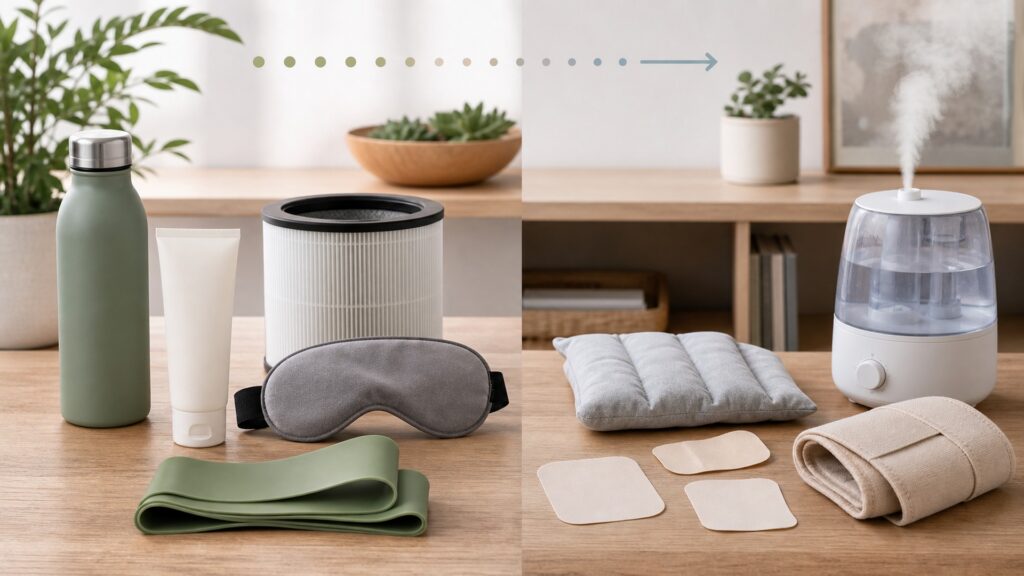
Preventive wellness items contrasted with comfort and symptom-relief products on a clean home table
What You'll Learn

Two Timelines, Two Primary Jobs

Compare prevention and relief through intended use, timing, outcome measures, feedback, and escalation.

  • The defining purpose and boundary of Preventive and Symptom Relief Products
  • The physical or biological pathway involved
  • The variable that most changes the output
  • How conditions and maintenance affect results
  • Which Preventive and Symptom Relief Products claims exceed the mechanism
  • How to apply the distinction in practice

Tip: Read the concept as part of a system, then connect it back to the use case.

Definitions

Key Concepts That Define Preventive and Symptom Relief Products

These definitions connect the main idea to the variables, limits, and practical signals readers need to compare options.

Risk Reduction

An action intended to lower the probability or exposure linked to an outcome

  • Role of Risk Reduction: Describes probability rather than certainty
  • Decision for Risk Reduction: compare conditions only when this risk reduction is relevant
  • Boundary for Risk Reduction: other mechanisms and outcomes require separate evidence beyond this definition

Symptom Relief

A reduction in perceived discomfort or functional disruption

  • Role of Symptom Relief: May occur without treating the cause
  • Decision for Symptom Relief: compare conditions only when this symptom relief is relevant
  • Boundary for Symptom Relief: other mechanisms and outcomes require separate evidence beyond this definition

Intended Use

The job a product is designed and presented to perform

  • Role of Intended Use: Sets the correct comparison
  • Decision for Intended Use: compare conditions only when this intended use is relevant
  • Boundary for Intended Use: other mechanisms and outcomes require separate evidence beyond this definition

Onset

The time between use and an observable effect

  • Role of Onset: Matters especially for relief
  • Decision for Onset: compare conditions only when this onset is relevant
  • Boundary for Onset: other mechanisms and outcomes require separate evidence beyond this definition

Duration

How long the direct effect persists

  • Role of Duration: Separates temporary control from lasting change
  • Decision for Duration: compare conditions only when this duration is relevant
  • Boundary for Duration: other mechanisms and outcomes require separate evidence beyond this definition

Escalation Point

A symptom, result, or time limit that prompts qualified evaluation

  • Role of Escalation Point: Prevents endless self-management
  • Decision for Escalation Point: compare conditions only when this escalation point is relevant
  • Boundary for Escalation Point: other mechanisms and outcomes require separate evidence beyond this definition

Tip: Keep the definitions connected; the strongest answer usually comes from the whole system, not one term.

Operating Path

How the System Produces Its Result

Preventive tools act upstream on exposure or risk, while relief tools act after symptoms appear on comfort or function.

  • Identify the target event
  • Separate cause from sensation
  • Note the intended timing

The same feature can serve different jobs in different contexts.

Core Mechanism

What Performs the Main Work

Barriers, filters, routines, and monitoring support prevention; cooling, compression, moisture, or other mechanisms may provide relief.

  • Name the active pathway
  • Avoid category-wide promises
  • Match evidence to the outcome

A label does not reveal whether the cause changes.

Control Variable

What Changes Performance

Preventive success may be the absence of an event, while relief can be measured by intensity, function, or duration.

  • Choose a relevant measure
  • Set a realistic interval
  • Watch for masking

Different goals need different feedback.

Failure Modes

Where Results Become Misleading

Risk varies, symptoms are subjective, and temporary improvement can occur alongside an unresolved problem.

  • Follow use limits
  • Check contraindications
  • Do not delay urgent care

Relief and reassurance are not equivalent.

Use Case

How to Match the Tool to the Need

Use prevention for a known, addressable risk; use relief for appropriate short-term management with an escalation plan.

  • Read intended-use language
  • Consider combined approaches
  • Stop when limits are reached

Choose according to the timeline and target.

Quick Reality Check

Direct Outcomes Versus Larger Claims

A buyer-first boundary for Preventive and Symptom Relief Products between direct performance and claims requiring more context or evidence.

Where It Works

A well-matched preventive product can reduce a selected exposure or make a protective routine easier to maintain.

A relief product can improve comfort or function while the body recovers or another plan addresses the cause.

Where It Stops

Prevention cannot guarantee an event will never occur.

Relief does not prove the underlying cause is resolved and should not override warning signs or persistent symptoms.

Common Myths

Misconceptions About Preventive and Symptom Relief Products

Common shortcuts and misunderstandings can make the topic seem simpler than it is.

If a product relieves symptoms it treats the cause

Comfort can improve because a product changes sensation, support, temperature, pressure, or moisture without correcting the condition that produced the symptom. Relief and treatment are separate claims requiring separate evidence.

Preventive products must be used forever to work

Duration depends on the risk, exposure, mechanism, and instructions. Some protections are event-specific, some require regular use, and others should be reassessed when circumstances or recommendations change. Real conditions and operating limits still matter.

A preventive label means the product guarantees protection

Prevention works by changing probability, exposure, or an intermediate factor. It cannot control every biological, environmental, or behavioral cause, so responsible claims define the target and acknowledge residual risk. Evidence should match the stated purpose.

Natural symptom relief has no meaningful risks

Natural materials and non-drug mechanisms can still cause irritation, overheating, pressure injury, interactions, contamination, or delayed evaluation. Safety depends on dose, placement, duration, condition, and user context. Use the result within its defined boundary.

Tip: Treat strong claims as starting points for comparison, not final answers.

FAQ

Frequently Asked Questions About Preventive and Symptom Relief Products

Concise answers to common questions readers may have after the main explanation.

Can one product be preventive and provide symptom relief?

Yes. An air cleaner may reduce selected airborne triggers while improving comfort, and protective supports may limit aggravating exposure while easing strain. Evaluate each intended use and outcome separately rather than assuming one proves the other.

How do I judge whether prevention is working?

Use an outcome connected to the mechanism, such as exposure reduction, adherence, or an appropriate measured trend. The absence of a problem in one person rarely proves that a product caused the result.

How long should self-directed symptom relief continue?

Follow the product's duration limits and stop for worsening, persistent, recurrent, severe, or unusual symptoms. The appropriate interval depends on the symptom, cause, individual risk, and whether relief is masking change.

Should prevention and symptom relief be used together?

They can complement each other when their mechanisms and instructions are compatible. One may reduce future exposure while the other improves current comfort, but neither combination eliminates the need to evaluate concerning symptoms.

Bottom Line

Preventive products act before a target event to change risk; relief products act after symptoms appear to improve comfort or function.

Judge each by its intended timeline, mechanism, outcome, and limits—and never let temporary relief substitute for appropriate evaluation.

Next Steps

Go Deeper or Compare Your Options

Use these Review Streets paths to connect the explainer to related categories, comparisons, and next decisions.

Why Preventive Health Matters

Preventive health combines everyday risk reduction, appropriate screening, protective measures, and timely follow-up.