
Warp
Warp is the lengthwise set of yarns in a weave.
- Along the edge: Warp runs parallel to the long edges.
- Other direction: The weft crosses it.
- Fiber names: A warp fiber label applies to this set.
What makes a travel comfort product’s quality easier to judge is a detail that tells you exactly what differs. A blanket can name where each fiber goes in the weave. A sound machine can give a runtime for each way it plays audio. Each specification is useful for a different reason.
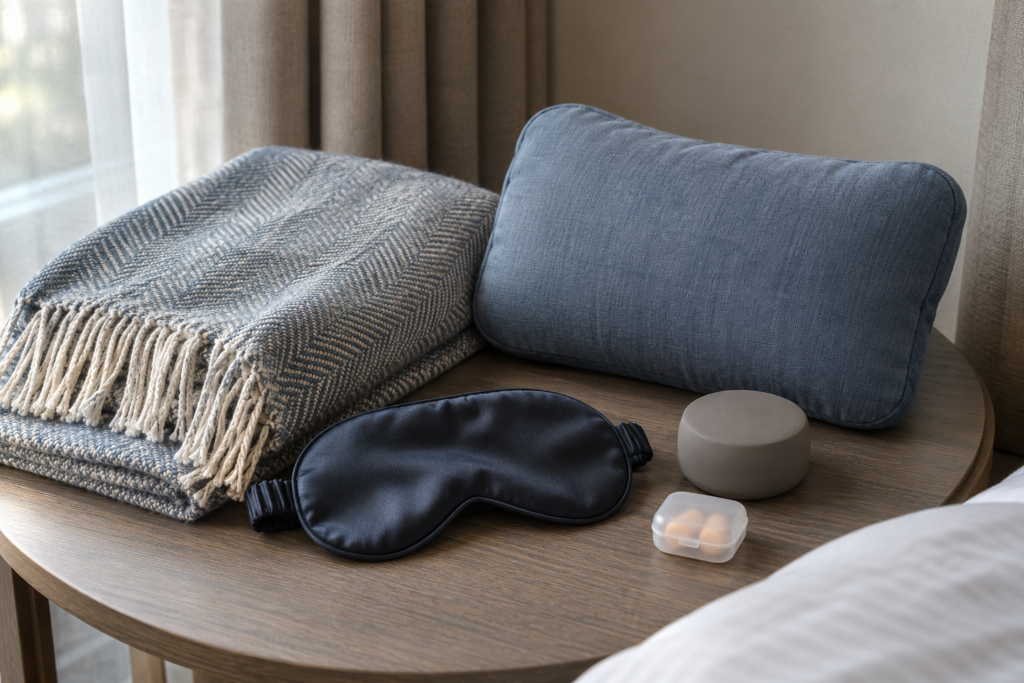
Start with a blanket and follow the same question through four other products. Which part, condition or version of the product does the detail actually describe?
Tip: Try putting a noun immediately after a number as you read. That small change helps you keep track of what the rest of the description refers to.
These terms give you a way into the examples, especially when a familiar word does a specific job in a listing.
Warp is the lengthwise set of yarns in a weave.
Weft is the crosswise set of yarns.
Momme expresses silk fabric weight per reference area.
Temperature-sensitive firmness describes a material that can feel more or less firm as its temperature changes.
This means where the playing audio comes from.
The U.S. rating gives an estimate of sound reduction based on laboratory testing.
Tip: Each term identifies a piece of the description. The examples show why the words next to the term matter just as much.
A blanket description can be as much about where the yarns go as what they’re made of. Garza Marfa’s Desert Blanket in Teal is a useful example because the maker gives the two directions separate fiber names. That turns a list of materials into a description you can picture.
The material list becomes useful in a different way once you can say which yarns are cotton and which are wool. You’re explaining where the fibers go in the cloth.
The mask example moves from placement to measurement. Its silk specification has a number and a unit. Both matter, because the unit supplies the area the weight refers to.
The fabric figure is useful on its own. The finished mask’s weight remains a separate question.
Take the same question to a different kind of description. Here, two pages from the same manufacturer help put a familiar adjective in context.
Different room temperatures can fit the same material description. The adjective starts to make more sense once the circumstances are part of the sentence.
Runtime looks like a natural candidate for one number next to a device’s name. The LectroFan Micro2 documentation gives a figure for each source of audio. Changing the label changes what a line in the spec is about.
Keeping the number with its playback path preserves the meaning of the original entry.
A single model name can sit above more than one rated assembly. On Loop’s U.S. support page for Dream, it matters which tip the rating refers to.
The shortest useful version of either entry includes the tip name. It keeps the information specific even after you leave the page.
These imagined situations put a documented detail next to a different question someone might ask about the same product.
Imagine putting the complete padded mask on a scale with the silk listing open beside it. ASTM International’s public method description identifies fabric mass for a given area as the property its methods measure. That’s the kind of property the momme number describes.
The scale would register the assembled mask, including the padding. Imagine writing the displayed weight and the listing figure on separate lines. One line would answer what the object weighs. The other would describe the fabric with its area-based unit still attached.
Picture an itinerary note for a hypothetical Micro2 session. Part of the session uses the device’s own sounds, then the audio changes to a Bluetooth stream. The note describes a sequence within one session. The manufacturer’s guide describes each path separately.
The entries leave the duration of that combined session open. Adding the two figures would treat separate playback specifications as if they described consecutive parts of one session. An average would also produce a figure that the guide doesn’t give for the example.
A few words can change the subject of a claim. These are plausible readings of the descriptions we’ve just seen.
The two yarn sets interlace within one cloth.
It gives silk fabric weight for a reference area.
A firmness label on its own omits the room condition TEMPUR describes.
Each published maximum applies to its named path.
Loop’s U.S. support entry identifies two distinct ratings.
Tip: A brief description often makes more sense when read as the answer to one specific question.
The wording behind a term or a number can answer some follow-ups. Other questions remain open even with the full entry in view.
Here, filling is another name for weft.
The pattern is the crossing arrangement. Thread count tallies warp and weft yarns in a square inch.
Yes. One momme is about 4.34 grams per square meter. Multiplying the listed 22 by 4.34 gives about 95.5 g/m² as a nominal equivalent for the silk.
The Singapore guidance gives neither degrees nor force measurements. It leaves the size of the change open.
The guide lists white noise, fan and ocean sounds for that entry.
The runtime entry gives that description without a numbered volume setting or a sound level.
Loop’s U.S. product page highlights a model-level figure. Its U.S. Dream support entry places the two tip ratings together.
The two support rows give overall ratings. They leave individual frequencies unspecified.
Tip: A term’s definition and a product’s spec sheet do different jobs. If one supplies a unit and the other gives a figure, read them together.
Follow the detail back to what it describes. Two useful specifications can sit on the same product page and answer entirely different questions. The most useful description names the thing that differs and gives you enough context to tell why that difference belongs in the explanation.
The words beside a number often do the real work. They tell you, for example, whether you’re reading a figure for one earplug assembly. With that context intact, you can carry the description into a conversation without changing what it means.
Continue in the Travel Comfort archives, organized by article format.
Open the lists archive for Travel Comfort.
Go to the Travel Comfort comparisons archive.
Visit the Travel Comfort archive for buying guides.
Choose a retailer
Prices checked regularly. We may earn a commission at no cost to you.