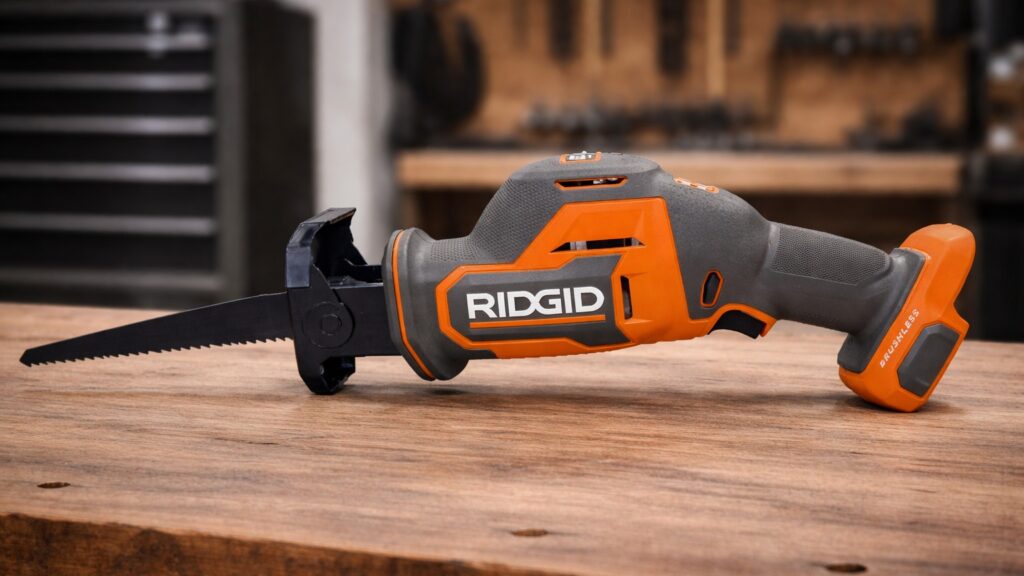
Reciprocating saws and oscillating tools are often grouped together because both rely on rapid blade movement, yet their underlying motion systems are fundamentally different. A reciprocating saw drives a blade in a long, linear stroke, converting rotational motor energy into back-and-forth travel. An oscillating tool, by contrast, moves its blade through a short, high-frequency arc around a central axis. This distinction in motion geometry shapes how force is delivered into the material and how the cutting edge engages the work surface.
This explainer breaks down the mechanical differences between linear reciprocation and oscillation, including stroke length, frequency, and directional force transfer. It also clarifies how blade design and mounting systems interact with each motion type. By the end, the reader will understand how these tools operate at a system level and why their movement patterns define their functional roles.