
What Makes Senior Safety Devices Different from Medication Management

Senior Safety Devices and Medication Management may be marketed for a neighboring goal, but they act differently. For the senior safety versus medication management comparison, senior Safety Devices detect, prevent, or communicate selected hazards involving falls, wandering, fire, medication, access, or emergencies. In this the senior safety versus medication management comparison discussion, by contrast, Medication Management organizes the selection, timing, administration, documentation, storage, and review of medicines.

A useful comparison looks beyond format and popularity. For Senior Safety Devices, examine hazard addressed, detection limits, response time, wear adherence, battery, connectivity, false alarms, and responder plan; for Medication Management, examine current medication list, dose, schedule, indication, adherence, interactions, refills, administration record, and adverse effects. Before relying on senior versus medication comparison, the better fit depends on the specific task, the user's constraints, and whether either product addresses the real problem.

By: Review Streets Research Lab
Updated: August 20, 2026
Explainer · 8-12 min read
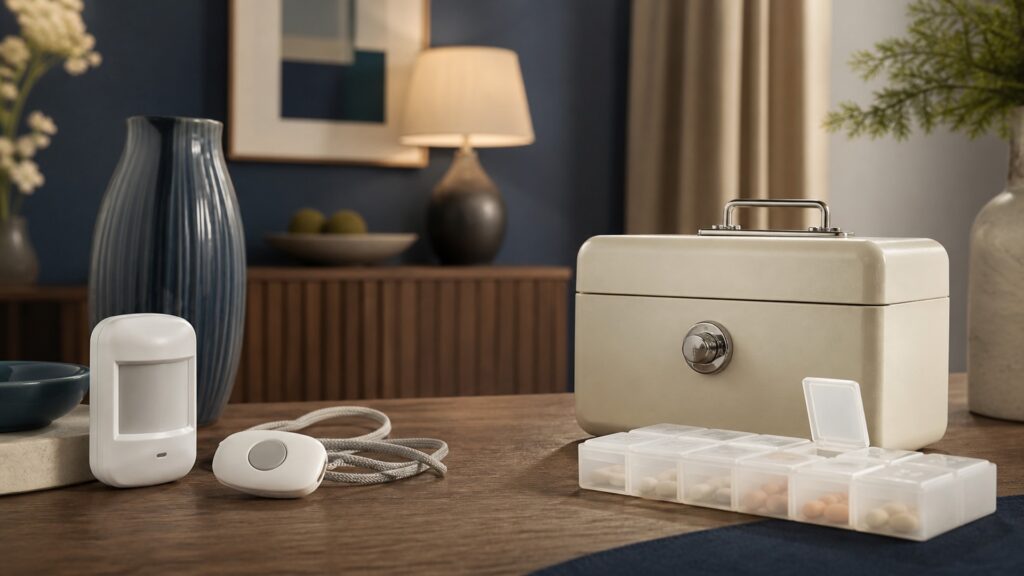
People-free editorial still life illustrating home risk monitoring contrasted with medicine control
What You'll Learn

Separate senior safety devices from medication management

Compare the active pathway, useful measurements, real setting, failure modes, and boundaries that distinguish senior safety devices from medication management.

  • Define the job assigned to senior safety devices
  • Trace how medication management produces its effect
  • Compare senior safety devices measurements
  • Test both options in the intended setting
  • Review the risks unique to each option
  • Choose by function rather than familiar packaging

Tip: Read the concept as part of a system, then connect it back to the use case.

Definitions

Six Concepts That Shape This Decision

These definitions connect the main idea to the variables, limits, and practical signals readers need to compare options.

Senior Safety Devices

When assessing the senior safety versus medication management comparison, the first option has a distinct operating role: Senior Safety Devices detect, prevent, or communicate selected hazards involving falls, wandering, fire, medication, access, or emergencies.

  • Within the senior safety versus medication management comparison, this mechanism makes Senior Safety Devices relevant when the desired job matches that pathway.
  • Within senior versus medication comparison use, evaluate hazard addressed, detection limits, response time, wear adherence, battery, connectivity, false alarms, and responder plan.
  • During a senior versus medication comparison trial, its boundary is important because a safety device reduces selected gaps but cannot eliminate falls, substitute for accessible design, or guarantee rescue.

Medication Management

For this the senior safety versus medication management comparison question, the alternative has its own operating role: Medication Management organizes the selection, timing, administration, documentation, storage, and review of medicines.

  • For the senior safety versus medication management comparison, the alternative belongs in the comparison because it changes a different part of the user's problem.
  • In this the senior safety versus medication management comparison discussion, evaluate current medication list, dose, schedule, indication, adherence, interactions, refills, administration record, and adverse effects.
  • When considering senior versus medication comparison, its limit remains clear: an organizer can prompt or release medicine but cannot prescribe, reconcile changes, or prove that a dose was taken.

Mechanism match

Within senior versus medication comparison use, the degree to which the selected option can act on the problem it is being asked to solve.

  • For senior safety devices, the active pathway differs from the one used by medication management.
  • State the target before comparing features, brands, or prices.
  • With senior versus medication comparison in view, a plausible mechanism cannot guarantee a useful outcome for a particular person.

Measurement context

In a senior versus medication comparison decision, the conditions under which a reading, symptom, or functional result is observed.

  • A fair senior safety devices and medication management comparison requires compatible timing, technique, and expectations.
  • For someone evaluating senior versus medication comparison, record baseline conditions and use the same outcome during the trial.
  • Within senior versus medication comparison use, a single favorable reading may reflect noise, natural variation, or temporary expectation.

Practical fit

At follow-up for senior versus medication comparison, how well an option matches the user's body, task, environment, routine, skill, and available support.

  • With senior versus medication comparison in view, the technically stronger option can fail when setup or daily burden prevents consistent use.
  • Before relying on senior versus medication comparison, test the complete routine described by adding a fall alert or door sensor after defining who receives an alarm and what that person can do and using reminders or dispensers when the regimen is already verified and responsibility for exceptions is clear.
  • In a senior versus medication comparison decision, showroom convenience does not prove long-term fit or safe independent use.

Escalation boundary

For someone evaluating senior versus medication comparison, the point at which self-directed product use should stop and qualified assessment becomes more important.

  • Within senior versus medication comparison use, the key risks include missed events, alarm fatigue, surveillance without consent, dead batteries, network outages, and delayed response as well as wrong drug or dose, duplicate therapy, missed changes, access by children, device failure, and false confirmation of swallowing.
  • During a senior versus medication comparison trial, define warning signs and stop rules before either option is used.
  • At follow-up for senior versus medication comparison, neither category should delay urgent or condition-specific care when symptoms warrant it.

Tip: Keep the definitions connected; the strongest answer usually comes from the whole system, not one term.

Purpose

Start by assigning one job to Senior Safety Devices and Medication Management

When assessing the senior safety versus medication management comparison, the defining role of Senior Safety Devices fits when it addresses the stated goal: Senior Safety Devices detect, prevent, or communicate selected hazards involving falls, wandering, fire, medication, access, or emergencies. Within the senior safety versus medication management comparison, the separate pathway of Medication Management may be the better match: Medication Management organizes the selection, timing, administration, documentation, storage, and review of medicines. Write the problem in one sentence before comparing specifications.

  • Name the user's desired outcome
  • Describe the task for Senior Safety Devices
  • Describe the task for Medication Management
  • Separate immediate relief from long-term change

A clear purpose stops Senior Safety Devices and Medication Management from becoming interchangeable labels.

Pathway

Trace what each option actually delivers

For this the senior safety versus medication management comparison question, the active pathway for Senior Safety Devices should be checked through hazard addressed, detection limits, response time, wear adherence, battery, connectivity, false alarms, and responder plan. For the senior safety versus medication management comparison, the pathway for Medication Management should be checked through current medication list, dose, schedule, indication, adherence, interactions, refills, administration record, and adverse effects. With senior versus medication comparison in view, those observations answer different questions and should not be collapsed into a single better-or-worse score.

  • Identify the active input in senior safety devices
  • Identify the active input in medication management
  • Match settings and dose to directions
  • Avoid feature counting without mechanism

Mechanism explains why senior safety devices and medication management can produce different results in the same user.

Fit

Test both options in the environment where they matter

In this the senior safety versus medication management comparison discussion, a realistic senior safety devices trial may involve adding a fall alert or door sensor after defining who receives an alarm and what that person can do. When assessing the senior safety versus medication management comparison, a realistic medication management trial may involve using reminders or dispensers when the regimen is already verified and responsibility for exceptions is clear. When considering senior versus medication comparison, setup time, comfort, skill, cleanup, power, storage, and assistance can decide which option remains usable.

  • Recreate the normal routine
  • Include setup and cleanup
  • Count help and maintenance
  • Check access during disruption

With senior versus medication comparison in view, practical fit can reverse a decision that looked obvious from the product description.

Evidence

Measure an outcome that belongs to the stated job

Within the senior safety versus medication management comparison, for Senior Safety Devices, record hazard addressed, detection limits, response time, wear adherence, battery, connectivity, false alarms, and responder plan. For this the senior safety versus medication management comparison question, for Medication Management, record current medication list, dose, schedule, indication, adherence, interactions, refills, administration record, and adverse effects. During a senior versus medication comparison trial, keep timing and other changes stable enough to interpret the result, and distinguish temporary sensation from a meaningful improvement in function.

  • Choose one primary outcome
  • Record baseline conditions
  • Limit simultaneous changes
  • Review burden as well as benefit

A useful senior safety devices and medication management comparison produces a decision, not merely more data.

Safety

Plan around different failure patterns

For the senior safety versus medication management comparison, with Senior Safety Devices, watch for missed events, alarm fatigue, surveillance without consent, dead batteries, network outages, and delayed response. In this the senior safety versus medication management comparison discussion, with Medication Management, watch for wrong drug or dose, duplicate therapy, missed changes, access by children, device failure, and false confirmation of swallowing. Before relying on senior versus medication comparison, product directions, individual vulnerability, and changing symptoms should determine stop rules rather than the assumption that consumer products are automatically low risk.

  • Read contraindications
  • Protect vulnerable users
  • Stop after adverse effects
  • Escalate serious symptoms

The safer choice between senior safety devices and medication management depends on the user and the exact conditions.

Quick Reality Check

What Senior Safety Devices and Medication Management can and cannot establish

With senior versus medication comparison in view, the category can be assessed through its mechanism, practical fit, and a defined outcome. Before relying on senior versus medication comparison, its value remains bounded by individual conditions, measurement quality, and the limits of consumer products.

What a careful review can show

When assessing the senior safety versus medication management comparison, a structured trial can reveal whether a plan involving senior safety devices changes hazard addressed, detection limits, response time, wear adherence, battery, connectivity, false alarms, and responder plan under realistic conditions.

For someone evaluating senior versus medication comparison, clear stop rules can identify burden, adverse effects, and the point at which the plan should change.

What the result cannot prove

Within the senior safety versus medication management comparison, a favorable response to senior safety devices cannot by itself diagnose the original problem or predict every future outcome.

Senior Safety Devices and Medication Management cannot replace professional assessment when severe, persistent, unexplained, or rapidly changing symptoms are present.

Common Myths

Misconceptions That Distort the Decision

Common shortcuts and misunderstandings can make the topic seem simpler than it is.

For this the senior safety versus medication management comparison question, myth: one senior safety devices approach works the same way for everyone

Before relying on senior versus medication comparison, users differ in anatomy, diet, health, technique, environment, medicines, expectations, and baseline function. For the senior safety versus medication management comparison, for senior safety devices, the relevant evidence is hazard addressed, detection limits.

In this the senior safety versus medication management comparison discussion, myth: more intensity always makes senior safety devices more effective

For someone evaluating senior versus medication comparison, a stronger dose, tighter fit, longer session, larger serving, or higher setting can increase burden without improving the target. When assessing the senior safety versus medication management comparison, the pathway for senior safety.

Within the senior safety versus medication management comparison, myth: a quick improvement proves senior safety devices solved the cause

At follow-up for senior versus medication comparison, short-term changes can reflect natural variation, expectation, rest, timing, or temporary symptom modulation. For this the senior safety versus medication management comparison question, a useful response may still matter, but senior safety devices.

Myth: consumer availability makes senior safety devices and medication management risk free

Consumer availability does not remove device or treatment hazards. Review contraindications, personal medical context, correct technique, adverse effects, and escalation thresholds before using senior safety devices and medication management; availability alone is not evidence of effectiveness or harmlessness.

Tip: Treat strong claims as starting points for comparison, not final answers.

FAQ

Questions to Ask Before Choosing

Concise answers to common questions readers may have after the main explanation.

What should be checked before trying senior safety devices?

For the senior safety versus medication management comparison, define the intended outcome, review directions and contraindications, establish baseline conditions, and confirm that the planned use reflects how senior safety devices detect, prevent, or communicate selected hazards involving falls, wandering, fire.

In this the senior safety versus medication management comparison discussion, how can someone evaluate the effect of senior safety devices?

With senior versus medication comparison in view, track hazard addressed, detection limits, response time, wear adherence, battery, connectivity, false alarms, and responder plan under comparable conditions and connect the result with daily function. Before relying on senior versus medication comparison.

When assessing the senior safety versus medication management comparison, when should a plan involving senior safety devices be changed or stopped?

When considering senior versus medication comparison, stop when instructions require it, adverse effects appear, symptoms worsen, the product is damaged or contaminated, the burden exceeds value, or the defined trial shows no meaningful benefit. Escalate serious changes promptly.

When is professional guidance appropriate for senior safety devices and medication management?

Seek guidance for severe, persistent, unexplained, or rapidly changing symptoms; significant medical conditions; pregnancy; childhood use; complex medicines; recent surgery or injury; or uncertainty about whether senior safety devices and medication management fits the actual problem.

Bottom Line

Evaluate senior safety devices and medication management through the job, active pathway, useful measurements, daily setting, and main failure modes. With senior versus medication comparison in view, topic-specific evidence is more valuable than a long feature list or a broad wellness promise.

Before relying on senior versus medication comparison, keep the boundary visible: a safety device reduces selected gaps but cannot eliminate falls, substitute for accessible design, or guarantee rescue, while an organizer can prompt or release medicine but cannot prescribe, reconcile changes, or prove that a dose was taken. In a senior versus medication comparison decision, use defined outcomes and stop rules so the decision can change when the evidence or circumstances change.

Next Steps

Go Deeper or Compare Your Options

Use these Review Streets paths to connect the explainer to related categories, comparisons, and next decisions.