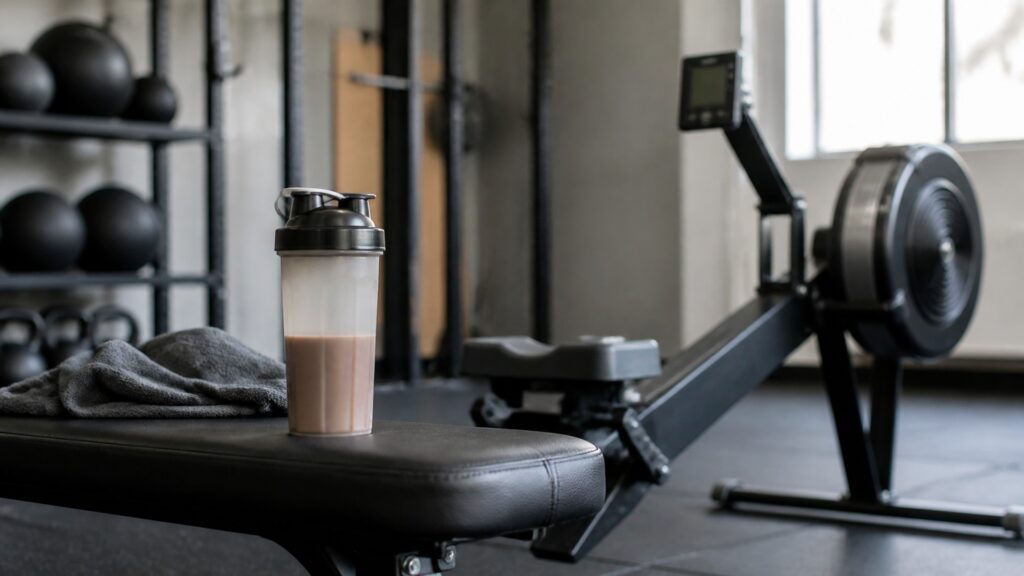
Mixing Accessory
A mixing accessory helps combine powders and liquids so a drink is easier to prepare, carry, and consume.
- Example: a bottle with a wire ball or internal grid for protein powder
- Check: look at seal, mixing insert, capacity, and cleaning
- Limit: it does not create the workout
Fueling Support
Fueling support helps the user manage fluids, protein, electrolytes, or other drink mixes around training.
- Example: keeping a recovery shake ready after a session
- Check: match the bottle size and spout to how it will be used
- Limit: the bottle cannot replace a nutrition plan or training program
Training Machine
A training machine provides the resistance, motion path, and feedback used during exercise.
- Example: a rowing machine that tracks pace, distance, stroke rate, and output
- Check: test resistance feel, frame stability, monitor, and storage
- Limit: it requires effort, space, and regular use
User Effort
User effort is the physical work the person supplies during the session.
- Example: driving with the legs and pulling the handle during rowing intervals
- Check: separate workout intensity from accessory convenience
- Limit: a bottle supports effort but does not produce it
Routine Fit
Routine fit describes where a product belongs before, during, or after training.
- Example: using a shaker after rowing to drink a prepared recovery shake
- Check: map the product to the exact moment it helps
- Limit: a useful accessory can still be unnecessary for some routines
Ownership Burden
Ownership burden is the space, cost, cleaning, and maintenance a product adds.
- Example: rinsing a bottle after every shake versus storing and maintaining a rower
- Check: compare daily friction as well as purchase price
- Limit: lower burden does not mean higher training impact