
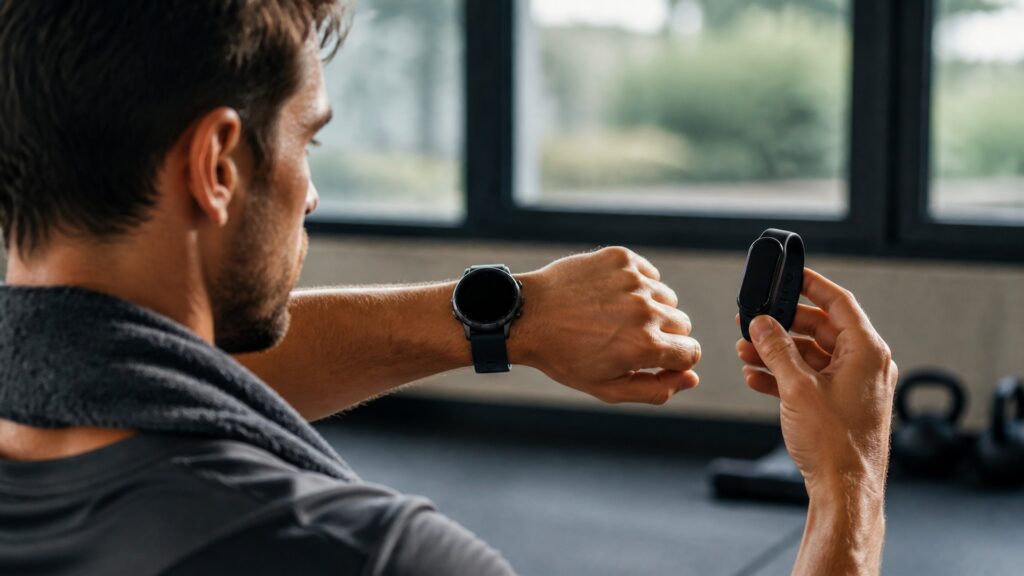
What Makes Smartwatches Different from Dedicated Fitness Trackers

Smartwatches and dedicated fitness trackers overlap so much that the difference can look blurry. Both may count steps, estimate heart rate, track workouts, monitor sleep, and sync with an app. The split is in the center of gravity: a smartwatch is a small phone companion, while a dedicated tracker is usually a narrower fitness and activity device.

That center of gravity changes battery life, interface, comfort, notification behavior, and how distracting the device feels. The question is not which category is more advanced. It is whether the wearable should manage daily digital life or stay focused on movement data.

By: Review Streets Research Lab
Updated: September 2, 2026
Explainer · 8-12 min read
smartwatches explainer hero image for Review Streets
What You'll Learn

What to Understand About Smartwatches vs Dedicated Fitness Trackers

This explainer separates the main mechanism, tradeoffs, limits, and decision points behind Smartwatches vs Dedicated Fitness Trackers.

  • The central question behind What Makes Smartwatches Different from Dedicated Fitness Trackers.
  • Which signals, movement patterns, or equipment constraints define Smartwatches vs Dedicated Fitness Trackers.
  • How app ecosystem, notification stack, and third-party apps affect the answer.
  • Where the useful rule of thumb stops being reliable.
  • Which setup or fit details change the practical result.
  • Why the explanation should not be turned into a medical or performance guarantee.
  • Where to go next on Review Streets without padding through breadcrumb ancestors.

Tip: For Smartwatches vs Dedicated Fitness Trackers, start with the behavior you need to explain, then check whether the device, tool, or drill actually creates that behavior.

Definitions

Key Concepts That Define Smartwatches vs Dedicated Fitness Trackers

These definitions connect the main idea to the variables, limits, and practical signals readers need to compare options.

Smartwatch

Smartwatch gives readers a concrete way to evaluate Smartwatches vs Dedicated Fitness Trackers through app ecosystem.

  • Signal 1: watch how app ecosystem changes the drill, metric, fit, or device behavior.
  • Comparison role: separates context from broad labels.
  • Limit: product, setup, surface, and mode still matter.

Dedicated fitness tracker

Dedicated fitness tracker gives readers a concrete way to evaluate Smartwatches vs Dedicated Fitness Trackers through notification stack.

  • Signal 2: watch how notification stack changes the drill, metric, fit, or device behavior.
  • Comparison role: separates context from broad labels.
  • Limit: product, setup, surface, and mode still matter.

App ecosystem

App ecosystem gives readers a concrete way to evaluate Smartwatches vs Dedicated Fitness Trackers through third-party apps.

  • Signal 3: watch how third-party apps changes the drill, metric, fit, or device behavior.
  • Comparison role: separates context from broad labels.
  • Limit: product, setup, surface, and mode still matter.

Training metric

Training metric gives readers a concrete way to evaluate Smartwatches vs Dedicated Fitness Trackers through battery tradeoff.

  • Signal 4: watch how battery tradeoff changes the drill, metric, fit, or device behavior.
  • Comparison role: separates context from broad labels.
  • Limit: product, setup, surface, and mode still matter.

Battery tradeoff

Battery tradeoff gives readers a concrete way to evaluate Smartwatches vs Dedicated Fitness Trackers through fitness band.

  • Signal 5: watch how fitness band changes the drill, metric, fit, or device behavior.
  • Comparison role: separates context from broad labels.
  • Limit: product, setup, surface, and mode still matter.

Notification layer

Notification layer gives readers a concrete way to evaluate Smartwatches vs Dedicated Fitness Trackers through training metrics.

  • Signal 6: watch how training metrics changes the drill, metric, fit, or device behavior.
  • Comparison role: separates context from broad labels.
  • Limit: product, setup, surface, and mode still matter.

Tip: If a claim about Smartwatches vs Dedicated Fitness Trackers ignores app ecosystem or notification stack, it is probably skipping the most important context.

Core Difference

A Smartwatch Is Broader; a Fitness Tracker Is Narrower

A smartwatch usually combines fitness tracking with calls, messages, apps, payments, voice features, and richer screen interaction. A dedicated tracker usually strips that down to activity, sleep, heart-rate, and workout summaries.

  • Smartwatches can reduce how often the phone comes out.
  • Dedicated trackers can keep attention on health and activity basics.
  • Both categories may share sensors and metrics.
  • The difference is workflow, not just feature count.
  • A narrower device can be better when fewer interruptions are desired.

The device's job description shapes the whole experience.

Battery

Battery Life Reflects the Feature Burden

Smartwatch features usually need more screen time, processing, radios, and app activity. Dedicated trackers often last longer because they run smaller displays, simpler software, and fewer always-on smart features.

  • Bright displays and third-party apps use power.
  • GPS workouts shorten battery life in either category.
  • Simple trackers can go longer between charges.
  • Charging cadence affects sleep tracking continuity.
  • Battery claims depend on settings and actual use.

Battery is not only a spec; it reflects how much the wearable is trying to do.

Interface

Screens and Apps Change Attention

A smartwatch invites interaction. It can show messages, calendars, music controls, maps, and apps. A dedicated fitness tracker often uses a smaller display or lighter interface that asks less from the user.

  • Large screens make quick replies and app controls easier.
  • Smaller trackers can be less distracting during the day.
  • Always-on displays trade convenience for battery use.
  • Notifications can support convenience or create noise.
  • Some users want fewer smart prompts on a fitness device.

The interface determines whether the wearable behaves like a dashboard or a quiet sensor.

Fitness Depth

Dedicated Does Not Always Mean Less Capable

A dedicated tracker can be simple, but some focused devices offer strong activity, sleep, or heart-rate features. A smartwatch can be powerful, but its fitness experience depends on sensors, software, and the user's preferred app ecosystem.

  • Feature lists should be checked metric by metric.
  • A simple tracker may cover steps and sleep well.
  • A sport-focused watch may outperform a general smartwatch for training tools.
  • App compatibility can matter as much as sensor hardware.
  • No category label guarantees tracking accuracy.

Fitness capability has to be judged by the metrics and workflow the user actually needs.

Decision Boundary

Choose by Digital Life Versus Quiet Tracking

The practical difference is attention. Choose a smartwatch if the wearable should extend phone functions. Choose a dedicated tracker if the goal is lightweight wear, longer battery, and simpler activity feedback.

  • Smartwatch: stronger for apps, messages, controls, and all-day digital convenience.
  • Dedicated tracker: stronger for simplicity, lighter wear, and longer charging intervals.
  • Check whether sleep tracking matters before choosing a short-battery device.
  • Check notification settings if distraction is a concern.
  • Treat both categories' health metrics as estimates.

The best device category is the one whose interruptions and tradeoffs match daily use.

Quick Reality Check

Where Smartwatches vs Dedicated Fitness Trackers Helps and Where It Needs Context

A useful explanation of Smartwatches vs Dedicated Fitness Trackers should clarify the main pattern without pretending one rule covers every user, device, surface, or training goal.

What Smartwatches vs Dedicated Fitness Trackers Clarifies

It explains why app ecosystems, notifications, screens, battery life, and simplicity separate the categories.

It gives readers a better way to compare Smartwatches vs Dedicated Fitness Trackers without relying on vague claims or category labels.

Where the Shortcut Breaks Down

It does not mean every smartwatch tracks poorly or every dedicated tracker is simple; individual models vary widely.

Individual products, bodies, workouts, surfaces, sensors, and app algorithms can change the result, so broad claims need context.

Common Myths

Misconceptions About Smartwatches vs Dedicated Fitness Trackers

Common shortcuts and misunderstandings can make the topic seem simpler than it is.

Smartwatches vs Dedicated Fitness Trackers is just a preference

Preference matters, but this topic has real mechanics behind it. The useful comparison looks at app ecosystem, notification stack, and the way the setup changes behavior.

The bigger or more advanced option is automatically better

A more complex tool or device can add useful capability, but it can also add distraction, setup demands, battery tradeoffs, or movement changes that do not fit the goal.

One metric or cue tells the whole story

Single numbers and simple cues are easy to remember, but they miss context. Fit, surface, load, sensor placement, activity type, and user intent can all change the meaning.

The same rule applies to every workout

The better rule depends on the task. A recovery question, a footwork drill, a GPS workout, and a strength session each ask the equipment or wearable for different information.

This explanation proves a health or performance outcome

It does not. The article explains mechanisms and decision boundaries; medical concerns, injury questions, and individualized programming require qualified guidance and more context.

Tip: Treat strong claims as starting points for comparison, not final answers.

FAQ

Frequently Asked Questions About Smartwatches vs Dedicated Fitness Trackers

Concise answers to common questions readers may have after the main explanation.

What is the simplest way to understand Smartwatches vs Dedicated Fitness Trackers?

Start with the main job: what the tool, device, or metric is supposed to reveal. Then check the setup details that control whether that job is actually happening.

Is Smartwatches vs Dedicated Fitness Trackers always important?

No. It matters most when the decision depends on the mechanism described here. In simpler situations, comfort, consistency, cost, or basic usability may matter more.

Can the category label be trusted by itself?

Not fully. Labels are helpful starting points, but movement pattern, sensor placement, shell design, app behavior, battery life, fit, or stated product use often matter more.

What should readers avoid assuming?

Avoid assuming the explanation guarantees safety, recovery, calorie burn, injury prevention, or sport performance. Those claims need evidence and individual context beyond the category label.

How should this guide a comparison?

Use it to ask better questions. Compare the feature or tool against the task it must perform, then check whether the limits described here matter for your situation.

Bottom Line

Smartwatches vs Dedicated Fitness Trackers matters when it changes the behavior readers are actually trying to understand.

The practical takeaway is to classify Smartwatches vs Dedicated Fitness Trackers by mechanism and use context: what it measures, constrains, absorbs, displays, or asks the body to do, and where that explanation has limits.

Next Steps

Go Deeper or Compare Your Options

Use these Review Streets paths to connect the explainer to related categories, comparisons, and next decisions.

Wearable Fitness Trackers

Use this hub to compare watches, bands, rings, and heart-rate tools after the form-factor difference is clear.

Basic Activity Trackers

Use this path when the lighter, simpler end of the tracker category is more relevant than a full smartwatch.

Heart Rate Trackers Reviews

Use this path when the deciding factor is sensor placement and workout signal quality rather than screen size or app features.

Quick Summary

Smartwatches vs Dedicated Fitness Trackers Explained

  • Smartwatches vs Dedicated Fitness Trackers should be judged by behavior, not label alone.
  • app ecosystem and notification stack are central clues.
  • Setup, fit, surface, activity type, and user context can change the answer.
  • Single scores or simple cues should not be treated as guarantees.
  • Next Steps should lead to related Review Streets destinations, not ancestor padding.
  • The explanation is practical context, not individualized medical or training advice.