What Makes Sports Cars Different from Luxury Performance Cars

Sports cars generally put driver involvement and road response near the center of the design. Luxury performance cars combine strong performance with a broader expectation of refinement, comfort, and convenient travel. The difference is the balance of priorities, not a rule that one is faster or the other cannot handle well.

The terms overlap. A sports car can have an expensive, comfortable cabin, and a luxury performance car can have excellent steering, brakes, and circuit capability. Look at how the actual vehicle allocates space, weight, equipment, and control settings. Those choices explain more than its price or the badge on the trunk.

By: Review Streets Research Lab
Updated: October 1, 2026
Explainer · 8-12 min read
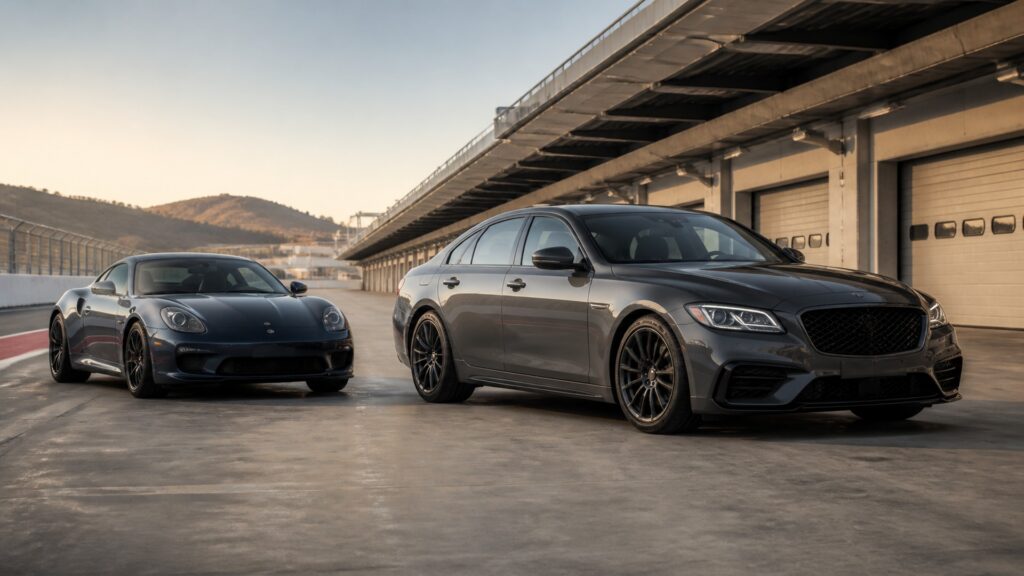
sports cars explainer hero image for Review Streets
What You'll Learn

How Different Design Priorities Shape the Car

Compare packaging, refinement, controls, and ownership without treating the categories as opposites.

  • Define sports-car focus and luxury-performance breadth.
  • See how passenger space and equipment influence the design brief.
  • Distinguish refinement from a lack of response.
  • Understand why selectable modes create overlap.
  • Compare the complete vehicle rather than one measurement.

Tip: The most revealing question is which qualities the manufacturer balances together, not which category is supposedly superior.

Definitions

The Design Choices Behind the Labels

These characteristics often differ in degree rather than being present in only one category.

Driver involvement

The interaction a driver experiences through control feel, response, and seating position.

  • Example: a roadster whose appeal centers on steering and gear selection
  • Check: assess the actual controls and road behavior
  • Limit: an expensive or powerful car can also be highly involving

Refinement

The reduction or management of noise, vibration, and harshness for comfortable travel.

  • Example: a cabin designed to remain restful on long journeys
  • Check: evaluate sound and ride on realistic surfaces
  • Limit: quietness does not establish weak handling

Packaging priority

How cabin, cargo, mechanical components, and body dimensions are arranged around intended use.

  • Example: two-seat packaging compared with a performance sedan's passenger layout
  • Check: check the actual usable space
  • Limit: not every sports car has two seats or every luxury car ample room

Performance breadth

The range of driving and everyday duties a car is designed to combine.

  • Example: a fast road car accommodating passengers and luggage
  • Check: identify which duties the vehicle genuinely supports
  • Limit: a broad brief still involves compromises

Chassis calibration

The settings that shape suspension, steering, and related vehicle behavior.

  • Example: adaptive dampers offering different responses for different situations
  • Check: read what the systems change and assess the car itself
  • Limit: a selectable mode does not change every physical limitation

Equipment tradeoff

The benefits and costs of adding convenience, comfort, or performance hardware.

  • Example: additional seat functions serving long-distance comfort
  • Check: consider usefulness, complexity, and service needs
  • Limit: more equipment is not automatically better for every owner

Tip: A particular model can combine these qualities in an unusual way. Treat broad descriptions as a starting point.

Purpose

Sports-Car Focus and Luxury-Performance Breadth Are Different Briefs

A sports-car design often concentrates attention on how the driver interacts with the car. A luxury performance design also needs to make strong performance coexist with refinement and everyday duties. This distinction is about emphasis. It does not set a minimum power figure, exclude comfort from sports cars, or imply that a luxury car cannot be engaging.

  • Look at the stated role and the actual experience.
  • Avoid using price as the definition.
  • Compare the qualities that are prioritized together.

A compact roadster and a powerful sedan can both be rewarding, but they ask different questions of cabin space, equipment, and ordinary travel.

Space and mass

Packaging Reveals the Intended Use

A focused layout may dedicate less space to passengers or luggage. A broader road-car brief may need additional seating, access, storage, and convenience equipment. These choices affect the vehicle as a whole, although neither weight nor body style follows an absolute category rule. Some sports cars are substantial grand tourers; some luxury performance cars are relatively focused coupes.

  • Measure usable space rather than counting nominal seats.
  • Consider access and driving position.
  • Compare actual dimensions and specifications.

Mazda's MX-5 is an example of compact two-seat sports-car packaging. It illustrates one approach, not a requirement that every sports car follow the same layout.

Refinement

Comfort and Response Are Not Mutually Exclusive

Noise isolation, seat design, suspension tuning, and powertrain behavior all influence refinement. Luxury performance cars place considerable emphasis on making those elements work during longer journeys. A sports car may expose more sound or road feel, but harshness itself is not proof of better performance. The useful distinction is what the driver experiences and accepts.

  • Assess ride and noise on representative roads.
  • Separate informative response from tiring harshness.
  • Check seating comfort over a realistic period.

A car can communicate clearly while remaining comfortable. Another can feel dramatic without being particularly precise. The sensory impression needs to be judged carefully.

Adjustment

Modes Can Broaden the Character of One Car

Adaptive systems allow some cars to vary parts of their response. BMW describes the M5's suspension settings as supporting both dynamic driving and long-distance comfort. That helps explain why a luxury performance model can cover a wide range of situations. However, settings cannot remove the car's dimensions, fitted tires, or all of its physical compromises.

  • Read exactly what each setting changes.
  • Compare modes on the actual model.
  • Do not treat a sport label as evidence of different hardware.

Two vehicles with similar mode names can behave differently. Equipment, calibration, and condition still determine the result.

Ownership

The Difference Continues Beyond the Test Drive

The car's priorities shape its use, but costs and practicality remain model-specific. Tire sizes, service needs, equipment complexity, condition, and insurance arrangements deserve separate comparison. A focused sports car may be entirely workable as a daily vehicle for one owner, while a luxury performance car may better meet another owner's regular passenger and travel needs.

  • List the duties the car must perform.
  • Obtain estimates for the actual model and specification.
  • Consider how often each strength will be used.

The category distinction becomes useful when it explains a real tradeoff: accepting less luggage for a preferred layout, for example, or choosing a more versatile cabin without giving up strong performance.

Quick Reality Check

Where Each Set of Priorities Helps

The categories describe emphasis rather than a universal ranking.

Sports-car focus is useful when

The particular layout and driving interaction are central to the appeal.

Its practical compromises fit the owner's intended role.

Luxury-performance breadth is useful when

Refinement and regular travel duties matter alongside performance.

The owner values a broader mix of comfort, space, and response in one vehicle.

Common Myths

Misconceptions About the Category Difference

Performance and refinement can coexist in many forms.

Luxury performance cars are simply slower sports cars

Some offer exceptional acceleration and handling. The distinction concerns the overall brief, not a speed hierarchy.

A sports car cannot be luxurious

Many combine involvement with premium materials and comfort. The categories can overlap.

Two seats define a sports car

Seating is one packaging choice, not a universal definition.

More road noise means more useful feedback

Noise and harshness can be tiring without telling the driver anything valuable about response.

Tip: Use the labels to ask better questions, then let the actual car answer them.

FAQ

Questions About Sports Cars and Luxury Performance Cars

Most boundaries are matters of emphasis, not strict exclusions.

What is the central difference?

Sports cars generally emphasize driving interaction, while luxury performance cars explicitly balance performance with refinement and broader travel needs.

Can the same car belong to both categories?

Yes. Some vehicles combine a focused sports-car layout with substantial luxury and comfort.

Does purchase price identify the category?

No. Price alone does not establish the design priorities or driving experience.

Which is better for a long journey?

Often the more refined and practical configuration, but the answer depends on the actual seats, ride, noise, luggage needs, and occupants.

How should I compare two candidates?

Assess their real packaging, controls, comfort, equipment, and ownership needs rather than relying on the category label or a single performance figure.

Bottom Line

Sports cars and luxury performance cars differ mainly in how they balance involvement, refinement, and everyday usefulness.

Their capabilities overlap. Examine the actual design and equipment to understand which compromises each car makes.

Next Steps

Go Deeper or Compare Your Options

Use these Review Streets paths to compare related categories and practical next decisions.

Vehicles

Compare vehicle designs by their intended roles.

Sports Cars

Review sports-car characteristics and practical compromises.

Further reading: Mazda MX-5 design and equipment; BMW M5 performance and comfort features.