
Stair Climber
A stair climber creates repeated climbing-style effort through steps or pedals.
- Example: stepping upward on moving stairs
- Check: test step height and speed
- Limit: can feel intense quickly
Stair climber machines differ from compact ellipticals because they emphasize climbing-style stepping instead of a compact guided stride. A stair climber asks the user to lift through repeated steps, while a compact elliptical moves the feet through a smaller oval pedal path.
The difference matters because stair climbers can feel more intense and leg-focused, while compact ellipticals may feel smoother and easier to sustain in small spaces.
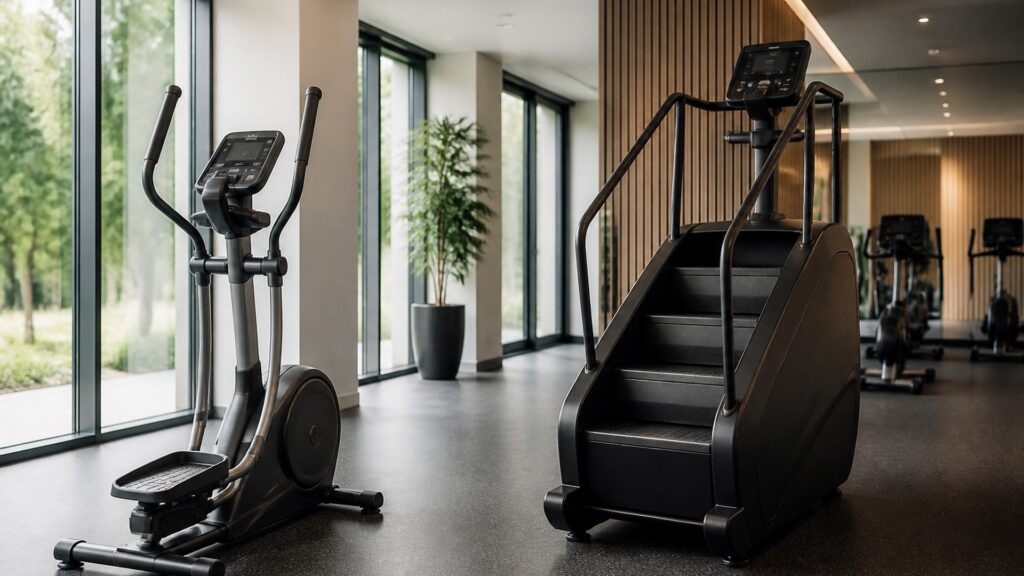
A practical comparison of climbing effort, compact stride, stability, intensity, and room fit.
Tip: Choose by the motion the user wants to repeat, not just the footprint.
These concepts explain the practical differences between step climbing and compact stride cardio.
A stair climber creates repeated climbing-style effort through steps or pedals.
A compact elliptical guides the feet through a shorter stride path.
Climbing demand is the leg and cardio effort created by repeated upward stepping.
Stride smoothness is how continuous and comfortable the elliptical path feels.
Support use is how handles or rails help balance.
Small-space fit is how well the machine works in the available room during use.
Tip: A machine that fits the room still has to fit the user's preferred motion.
A stair climber asks the user to keep lifting through a climbing pattern. That can create strong cardio and leg demand quickly.
The stair climber is the better fit when climbing effort is the goal.
A compact elliptical usually provides a smoother, smaller stride path. It may be easier to sustain for users who do not want stair-like effort.
The compact elliptical is better when smooth standing cardio matters more.
Climbing-style motion often feels harder sooner than compact elliptical stride. That can be useful for shorter sessions but too demanding for easy cardio.
Harder is useful only when the user comes back to it.
Stair climbers often depend more on rail support for balance, while compact ellipticals may use handles for rhythm or stability. In both cases, heavy leaning changes the workout.
Support should help control, not hide poor fit.
Choose the stair climber for climbing intensity and lower-body demand. Choose the compact elliptical for smoother compact stride and easier sustained pacing.
The better machine supports the workout the user will repeat.
Both can work in home cardio, but they serve different preferences.
The user wants climbing-style effort and leg demand.
Shorter, higher-effort cardio sessions are the goal.
The user wants smoother standing cardio in a smaller machine.
Lower sustained effort is easier to repeat.
The machines are not just two versions of small cardio equipment.
Stair climbers step upward, while compact ellipticals stride.
They can be harder, but the best cardio tool is repeatable.
Resistance and cadence can still create useful effort.
Movement comfort and stability matter just as much.
Tip: Compare the session feel before comparing feature lists.
Short answers for choosing between climbing and compact stride cardio.
A stair climber is the better match.
A compact elliptical is usually better for smoother standing stride.
The stair climber often feels harder sooner, but effort depends on settings and pace.
It depends on the exact model and operating clearance.
Choose the stair climber for climbing effort and the compact elliptical for smoother compact stride.
Stair climber machines differ from compact ellipticals by emphasizing climbing-style stepping instead of guided compact stride.
Choose by preferred effort, session length, support needs, stability, and the motion the user will repeat.
Use these Review Streets paths to compare related categories and practical next decisions.
Compare stair-climbing cardio categories.
Review smaller stair-machine options.
Compare more home cardio equipment.
Choose a retailer
Prices checked regularly. We may earn a commission at no cost to you.