What Makes Standard Reading Glasses Different from Folding Reading Glasses

Standard reading glasses and folding reading glasses can use the same lens strength, but they are built around different priorities. One is mainly an everyday near-vision frame; the other is a compact tool designed to be carried when space matters and full-size storage is inconvenient during travel.

The difference is less about magnification and more about frame architecture. Hinges, bridge design, lens alignment, case size, and fit stability determine whether folding readers feel like a clever backup or a compromise during longer reading sessions with books, menus, labels, or close work.

By: Review Streets Research Lab
Updated: August 24, 2026
Explainer · 8-12 min read
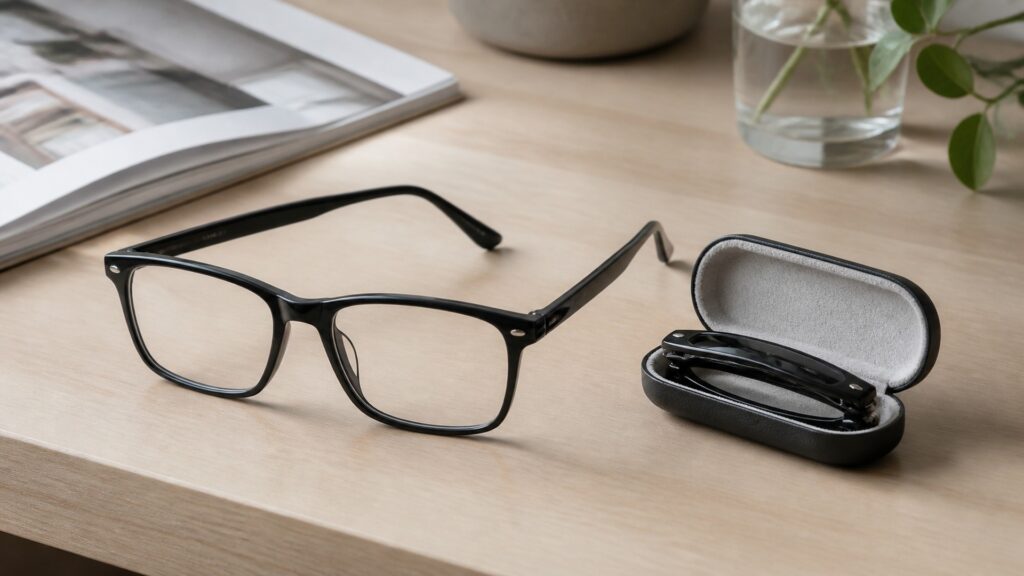
what makes standard reading glasses different from folding reading glasses hero image
What You'll Learn

How Frame Design Separates Standard and Folding Readers

A practical explanation of portability, alignment, hinge complexity, and everyday comfort.

  • Why the same lens strength can feel different in two frame designs
  • How a folding bridge changes storage and alignment
  • Why extra hinge points add both convenience and wear points
  • How full-size frames support a more stable reading posture
  • When compact carry matters more than long-session comfort
  • Why folding readers often work best as backup pairs

Tip: Read the concept as part of a system, then connect it back to the use case.

Definitions

Key Concepts That Define Standard Reading Glasses vs. Folding Reading Glasses

These definitions connect the main idea to the variables, limits, and practical signals readers need to compare options.

Full-Size Frame

A conventional reading-glasses frame with fixed front geometry and temples that fold only at the sides.

  • ['Meaning: Keeps the lens front in a stable shape', 'Practical signal: Feels more like everyday eyewear', 'Limit: Takes more room in a bag or case']

Folding Bridge

A center joint that lets some readers collapse smaller than normal glasses.

  • ['Meaning: Adds a moving point between the lenses', 'Practical signal: Shrinks the frame for pocket storage', 'Limit: Can add alignment and durability tradeoffs']

Temple Hinges

The side joints where the arms fold. Folding readers may add extra hinge points beyond standard temples.

  • ['Meaning: More joints create more compact storage', 'Practical signal: Easier to carry in tight spaces', 'Limit: More movement can mean more wear points']

Lens Alignment

The way both lenses sit relative to the eyes. Stable alignment helps the reader feel natural during near work.

  • ['Meaning: Lenses need to sit consistently in front of each eye', 'Practical signal: Less fiddling when reading for longer periods', 'Limit: Bent joints can shift the fit']

Compact Case

A small storage format that protects folded readers while keeping them portable.

  • ['Meaning: Makes backup readers easier to carry', 'Practical signal: Fits pockets, purses, glove boxes, or travel kits', 'Limit: Small cases can be misplaced or cramped']

Wear Stability

How secure the glasses feel on the nose and ears during normal reading movement.

  • ['Meaning: Affects comfort during longer sessions', 'Practical signal: Less slipping and less readjustment', 'Limit: Fit varies by face shape and frame quality']

Tip: Keep the definitions connected; the strongest answer usually comes from the whole system, not one term.

Frame Geometry

Standard Readers Keep the Lens Front More Stable

A standard reader has fewer moving parts across the front of the frame. That simpler geometry helps the lenses sit in a consistent position each time you put them on, which matters when you read for longer stretches.

  • The front frame is usually one continuous structure
  • Lens spacing is less dependent on a center joint
  • The temples fold for storage without collapsing the lens front
  • A stable frame reduces repeated adjustment during near tasks
  • The tradeoff is bulkier storage compared with folding designs

Standard readers are usually the more natural choice when the glasses live on a desk, nightstand, or face for extended reading.

Portability Mechanism

Folding Readers Use Extra Joints to Shrink the Carry Size

Folding readers add a bridge joint or extra temple folds so the frame can collapse into a smaller case. That is useful for a pocket, purse, travel kit, glove box, or emergency pair, especially when full-size readers would be left behind.

  • The folding bridge can reduce the footprint dramatically
  • Extra temple folds make the case shorter or narrower
  • Compact storage makes backup placement more realistic
  • Small cases protect lenses only if the glasses are folded correctly

Folding readers solve the availability problem: the useful pair is the one you actually have with you.

Alignment Tradeoff

More Moving Parts Can Affect Lens Position

Any joint that moves can also loosen, bend, or settle slightly out of position. With reading glasses, small alignment changes can affect how centered the lenses feel, especially if the frame already sits differently on the nose than a full-size pair.

  • A folding bridge can introduce tiny shifts between lenses
  • Loose hinges may make one side sit lower or farther forward
  • Compact arms can change pressure behind the ears
  • Frequent folding and unfolding adds handling wear

The tradeoff is not that folding readers are bad; it is that portability depends on mechanisms that need to stay aligned.

Comfort Over Time

Long Reading Sessions Favor Fit Stability

For a quick restaurant menu, folding readers can be perfect. For an hour of reading, a full-size frame may feel steadier because it usually offers broader temples, a more predictable bridge, and fewer moving joints near the lenses.

  • Short tasks emphasize convenience
  • Long tasks reveal slipping, pressure points, or crooked fit
  • Larger frames may provide a more comfortable field of view
  • Frequent adjustments can interrupt reading flow

Duration changes the priority from carrying convenience to stable comfort.

Practical Check

Choose Standard for Primary Use and Folding for Backup Carry

The easiest distinction is role. A standard pair is usually better as the main reader when comfort and reliability matter. A folding pair is often better as a second pair that lives in a bag, car, pocket, or travel pouch.

  • Use the same diopter strength only if it matches your near task
  • Check whether the folding bridge locks squarely and feels stable
  • Prefer full-size readers for daily reading at home or work
  • Use folding readers where compact carry prevents being stuck without glasses

A folding pair is a portability strategy; a standard pair is usually the default comfort strategy.

Quick Reality Check

Where Folding Readers Help and Where Standard Readers Stay Simpler

The useful distinction is role-based: compact backup convenience versus everyday frame stability.

What Folding Readers Clarify

They show how much value comes from having readers available in small spaces and unexpected moments.

They also separate lens strength from frame design, because portability can change comfort without changing diopters.

Where the Shortcut Breaks Down

Compact design can introduce extra joints, smaller parts, and more opportunities for looseness or misalignment.

A folding pair may be convenient enough for quick tasks but less comfortable than a standard frame for long reading sessions.

Common Myths

Misconceptions About Standard Reading Glasses vs. Folding Reading Glasses

Common shortcuts and misunderstandings can make the topic seem simpler than it is.

Folding readers are weaker than standard readers

The folding design does not determine lens strength. A folding pair and a standard pair can share the same diopter power; what changes is frame structure, storage size, and fit behavior.

Standard readers are always more durable

Standard frames often have fewer moving parts, but durability still depends on materials, hinge quality, storage habits, and handling. A poorly made standard frame can fail sooner than a well-made folding pair.

Folding readers are only novelty glasses

Their compact design can be genuinely useful as a backup pair for restaurants, travel, cars, or pockets. The limitation is usually long-session comfort, not the basic usefulness of the format.

If the lenses are the same, the experience is identical

Lens power is only one part of reading comfort. Frame width, bridge stability, lens alignment, temple pressure, and how consistently the glasses sit can change the experience during real use.

Tip: Treat strong claims as starting points for comparison, not final answers.

FAQ

Frequently Asked Questions About Standard Reading Glasses vs. Folding Reading Glasses

Concise answers to common questions readers may have after the main explanation.

Are folding reading glasses optically different from standard readers?

Not necessarily. Many folding readers use ordinary reading lenses. The main difference is the frame architecture that lets the glasses collapse into a smaller shape for easier daily carry and storage.

Do folding readers break more easily?

They can have more potential wear points because of extra hinges or a folding bridge. Actual durability depends on build quality, how often they are folded, and whether they are stored in a case.

Are standard readers better for long reading?

Often, yes. A full-size frame usually feels more stable and requires less adjustment, which can matter when reading books, documents, instructions, or close work for longer periods at home daily.

When are folding readers the smarter choice?

They are useful when portability is the main problem: travel, restaurants, pockets, glove boxes, purses, or backup storage where a full-size case would be inconvenient to carry around conveniently every day.

Should I buy the same strength in folding and standard readers?

Use the strength that matches your near task and feels comfortable. If the same strength feels different, frame fit, lens position, or bridge stability may be the reason instead today.

Bottom Line

Standard reading glasses and folding reading glasses can correct the same near-focus need, but they solve different practical problems.

Standard readers favor stable everyday comfort. Folding readers favor compact availability. The best choice depends on whether the glasses are your primary reading tool or the pair you keep nearby so you are not caught without one.

Next Steps

Go Deeper or Compare Your Options

Use these Review Streets paths to connect the explainer to related categories, comparisons, and next decisions.

Vision Care

See broader Review Streets explainers and guides for everyday vision-care decisions.

Quick Summary

Standard Reading Glasses vs. Folding Reading Glasses Explained

  • The lens strength can be the same in both formats.
  • Standard frames usually offer steadier everyday geometry.
  • Folding readers trade simplicity for compact storage.
  • Extra joints can affect alignment and long-session comfort.
  • Folding pairs often work best as portable backups.