
Assisted Range
Assisted range is movement made easier by a strap, band, block, or support surface.
- Example: using a strap to reach a hamstring stretch
- Check: keep the stretch controlled
- Limit: assistance should not force pain
Stretching tools and elliptical machines are different because one supports mobility work while the other provides low-impact cardio. A stretching tool helps with position, leverage, and range; an elliptical creates repeated exercise movement.
That difference matters because the products should be judged by separate standards. Stretching tools are about support, control, grip, and tension. Ellipticals are about stride feel, resistance, stability, footprint, and training consistency.
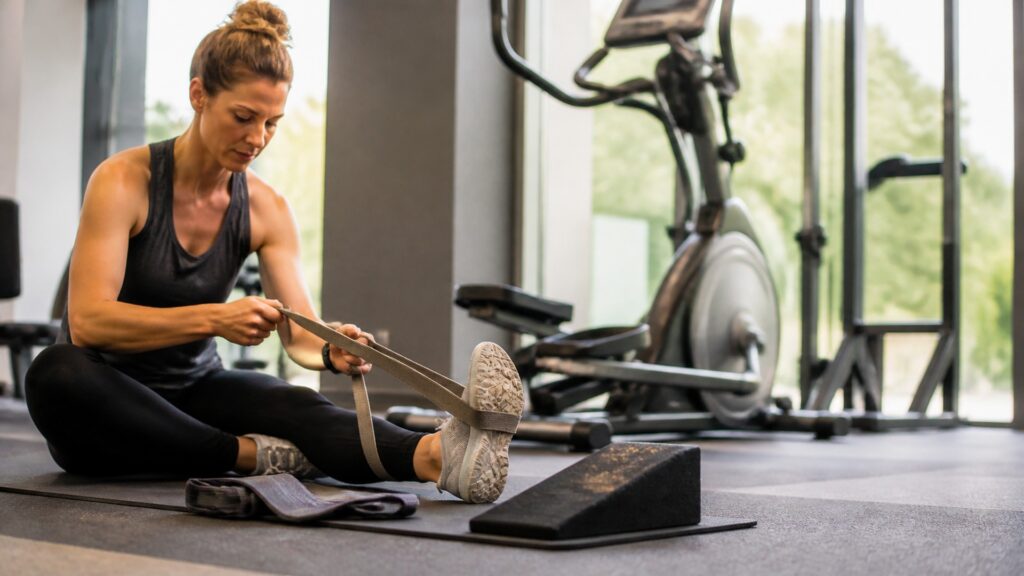
A practical comparison of mobility support and cardio equipment.
Tip: Ask whether the product supports a position or supplies the workout.
These concepts explain how stretching tools support position, leverage, range, and control.
Assisted range is movement made easier by a strap, band, block, or support surface.
Leverage is how a tool helps the user apply or reduce force.
Position support helps the body stay aligned during mobility work.
Tension control is the ability to increase or decrease stretch intensity.
Routine fit is how well a tool matches the stretch sequence the user repeats.
Safety boundary is the point where useful stretch becomes strain or pain.
Tip: A stretching tool should make a position easier to control, not force the body into range.
A stretching tool is used around movement to support range or alignment. An elliptical is used during training to create repeated low-impact effort.
The categories differ by role.
Stretching tools need useful grip, support, length, and tension control. Ellipticals need smooth motion, stability, resistance, and a usable console.
Useful criteria match the product job.
Stretching tools are usually small and inexpensive. Ellipticals are large machines that need room and regular use.
The bigger product should solve a bigger training need.
A user might stretch before or after an elliptical workout while the machine remains the cardio tool.
Complementary tools do not need to compete.
If the need is controlled mobility support, compare stretching tools. If the need is low-impact cardio, compare ellipticals.
The right choice follows the job.
One product supports mobility. The other provides cardio.
You need support, reach, or leverage for mobility work.
You want a small tool for controlled stretching.
You want repeatable low-impact cardio.
You have space and motivation for a dedicated machine.
The products support different parts of fitness.
They support mobility but do not create aerobic training.
Cardio equipment can still leave room for mobility support.
A small tool may solve the current routine gap more directly.
Intensity means different things for mobility tools and cardio machines.
Tip: Compare mobility support and cardio equipment separately.
Short answers about mobility tools and cardio machines.
No. Stretching tools support positions and range. Ellipticals provide cardio training.
Yes. Stretching tools can fit before or after elliptical workouts.
Compare grip, support, length, tension, stability, and ease of setup.
Compare stride feel, resistance, stability, footprint, noise, and console features.
Use stretching tools for mobility support and ellipticals for low-impact cardio.
Stretching tools and elliptical machines differ because one supports mobility while the other provides cardio training.
They can fit the same routine, but stretching tools are judged by controlled support and ellipticals are judged by movement quality.
Use these Review Streets paths to compare related fitness categories and practical buying decisions.
Explore straps, blocks, bands, wheels, and other mobility-support tools.
Compare related recovery and mobility categories.
Review a related explainer before choosing a tool.
Choose a retailer
Prices checked regularly. We may earn a commission at no cost to you.