What Makes Swim Accessories Different from Rowing Machines

Swim accessories differ from rowing machines because swim accessories support pool-based skill practice, comfort, and water feedback, while rowing machines provide dry-land cardio through a seated pull-and-slide motion. One supports swimming in water; the other is a complete indoor conditioning machine.

The difference matters because swim accessories can improve breathing, body position, kick, pull, and visibility in the pool. Rowing machines are better when the goal is measurable dry-land conditioning, repeatable intervals, and a full-body cardio session without pool access.

By: Review Streets Research Lab
Updated: October 1, 2026
Explainer · 8-12 min read
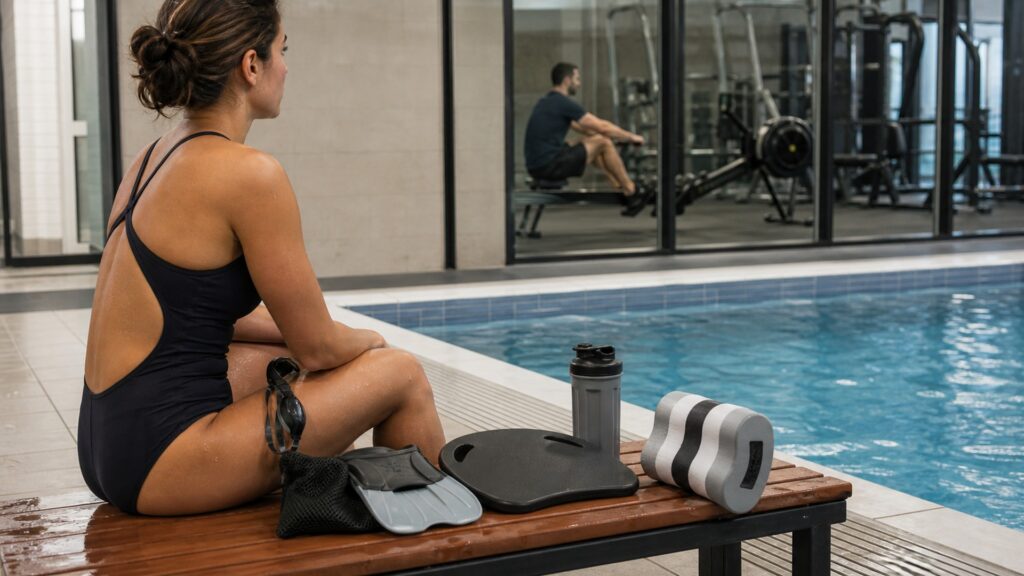
swim accessories explainer hero image for Review Streets
What You'll Learn

How Pool Tools Differ From Rowing Machines

A practical comparison of swim skill practice, water feedback, rowing mechanics, conditioning, and access.

  • Why swim tools are not dry-land machines
  • How rowing machines guide a pull-and-slide pattern
  • Where swim accessories support water skills
  • Why access and measurement differ
  • How to choose by the session goal

Tip: Choose swim accessories for water-skill practice and rowing machines for measured dry-land conditioning.

Definitions

Key Concepts Behind Swim Accessories Versus Rowing Machines

These terms explain the practical differences between pool tools and indoor rowing.

Dry-Land Cardio

Dry-land cardio is conditioning done outside the water on machines or other land-based equipment.

  • Example: using an exercise bike or elliptical machine
  • Check: compare the conditioning goal
  • Limit: land machines do not practice water skills

Water Skill

A water skill is a swimming action such as kicking, pulling, breathing, rotation, or body alignment.

  • Example: using a snorkel to focus on stroke timing
  • Check: choose tools that support the skill
  • Limit: skill work may not match land-cardio convenience

Joint Loading

Joint loading is the stress placed on joints by impact, resistance, posture, or repetition.

  • Example: pool drills reducing impact compared with standing cardio
  • Check: notice shoulders, hips, knees, and back
  • Limit: swim tools can still overload shoulders

Session Access

Session access is how easily the workout can happen with the available location and setup.

  • Example: choosing a bike when no pool lane is available
  • Check: start with the setting available today
  • Limit: access does not decide every training goal

Technique Load

Technique load is the attention and coordination needed to perform the activity well.

  • Example: using paddles only after basic pull mechanics are controlled
  • Check: keep the drill simple enough to repeat
  • Limit: too much equipment can distract from the stroke

Conditioning Transfer

Conditioning transfer is how well fitness from one activity helps another activity.

  • Example: bike intervals supporting general endurance but not swim breathing rhythm
  • Check: separate general fitness from swim-specific practice
  • Limit: transfer is rarely complete

Tip: The right equipment choice depends on how resistance is created, adjusted, and repeated.

Setting

Swim Accessories Need Water

Swim accessories are useful when the session happens in a pool or open-water setting and the goal involves swimming skills.

  • Check pool access.
  • Use allowed tools.
  • Match gear to the swim set.

Water setting is the swim accessory advantage.

Machine

Rowers Provide A Complete Cardio Station

A rowing machine supplies the seat, handle, resistance, monitor, and repeatable stroke path in one setup.

  • Track time, distance, and pace.
  • Set resistance appropriately.
  • Use technique that protects the back.

Rowers are built for measurable dry-land work.

Skill

Pool Tools Train Swim-Specific Skills

Kickboards, pull buoys, fins, paddles, and snorkels can focus on body line, breathing, kick, pull, and rotation.

  • Use tools for one skill at a time.
  • Retest without the tool.
  • Keep drills short and controlled.

Swim skills need water feedback.

Movement

Rowing Uses A Different Pattern

Rowing is a seated leg drive, hip swing, and arm pull. It can build conditioning, but it does not practice swim timing or breathing.

  • Use rowing for general fitness.
  • Keep stroke mechanics clean.
  • Do not treat rowing as stroke practice.

Conditioning transfer is not the same as skill transfer.

Decision

Choose By Training Outcome

If the workout needs swim technique, use pool tools. If it needs indoor intervals or measurable conditioning, use the rower.

  • Use swim tools for water skills.
  • Use rowers for dry-land cardio.
  • Combine both when the plan needs both.

The session goal decides.

Quick Reality Check

Where Swim Accessories Beat Rowers And Where Rowers Stay Better

Both can support fitness, but they do different work.

Swim Accessories Win When

The user needs breathing, body position, kick, pull, or water comfort practice.

The workout depends on pool feedback.

Rowing Machines Win When

The user needs measurable dry-land conditioning.

The workout needs a repeatable cardio machine without pool access.

Common Myths

Misconceptions About Swim Accessories And Rowers

A conditioning machine does not replace pool-skill tools.

Rowing replaces swim drills

It can support fitness, but it does not practice water position or breathing.

Swim accessories are just resistance tools

Many accessories provide comfort, visibility, buoyancy, or feedback.

Both train the same pull

Rowing pull mechanics differ from swimming pull mechanics.

Access does not matter

Pool access and machine access often decide the practical choice.

Tip: Use swim accessories for swimming skills and rowers for measurable dry-land conditioning.

FAQ

Frequently Asked Questions About Swim Accessories And Rowers

Short answers for practical equipment and training decisions.

What is the main difference?

Swim accessories support pool practice, while rowing machines provide dry-land cardio.

Can rowing help swimmers?

It can support general conditioning, but it does not replace water technique work.

When are swim accessories better?

Use them when the goal is breathing, body position, kick, pull, or water comfort.

When is a rowing machine better?

Use it for indoor intervals, pacing, and full-body cardio without a pool.

What is the practical takeaway?

Choose pool tools for swim skills and rowing machines for measured conditioning.

Bottom Line

Swim accessories differ from rowing machines because they support swimming practice in water instead of dry-land rowing cardio.

The better choice depends on whether the session needs water skills or measurable conditioning.

Next Steps

Go Deeper or Compare Your Options

Use these Review Streets paths to compare related categories and practical next decisions.

Fitness

Browse fitness equipment and training gear.