What Makes Track Cars Different from Luxury Performance Cars

Track cars prioritize repeatable performance on a closed circuit. Luxury performance cars combine strong acceleration and handling with a broader road-driving brief: a comfortable cabin, everyday convenience, and refinement over long journeys. The difference is where the engineering compromises fall, not simply which car has more horsepower.

These categories overlap. A luxury performance model can be well suited to track days, while a road-legal track-focused car may retain air conditioning and comfortable seats. Compare the exact version, its preparation requirements, and your intended use. A dedicated racing car is another step again, with eligibility and support needs that should not be assumed from the words track car.

By: Review Streets Research Lab
Updated: October 1, 2026
Explainer · 8-12 min read
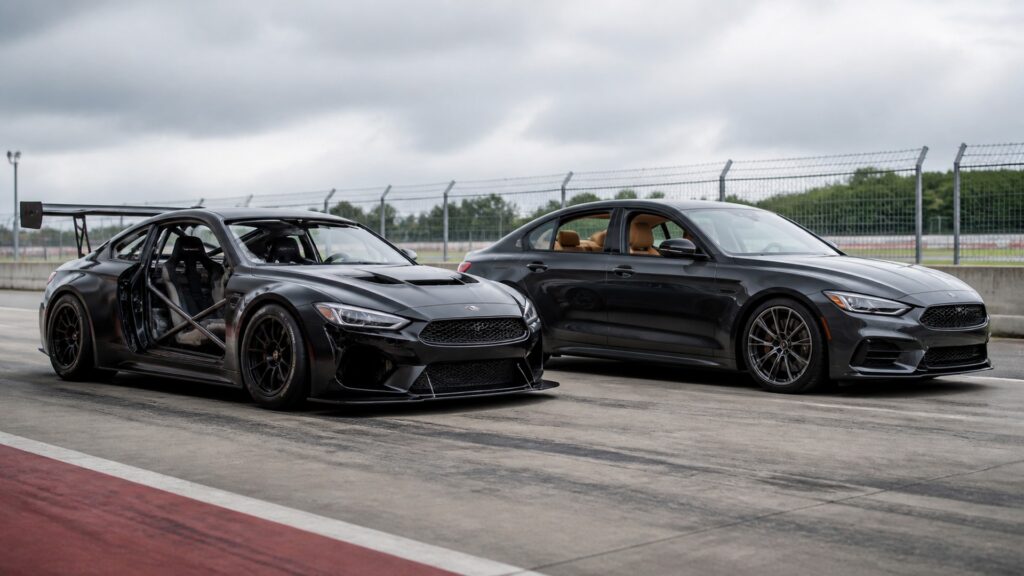
track cars explainer hero image for Review Streets
What You'll Learn

Circuit Consistency Versus Fast, Refined Road Travel

The meaningful differences emerge during repeated laps, daily driving, and the work between events.

  • Why sustained braking and cooling matter beyond peak output
  • How tire and chassis choices change comfort and response
  • Why a premium cabin does not rule out circuit capability
  • How road-legal track cars differ from dedicated competition cars
  • Which ownership compromises are worth accepting for your use

Tip: Compare actual equipment and manufacturer guidance before drawing conclusions from a category label.

Definitions

Six Distinctions Behind the Comparison

Each describes a different part of the car or the job it must do.

Circuit specialization

Design or preparation that puts repeated closed-course driving ahead of some road comforts.

  • Example: a car with a circuit-oriented suspension setup and service plan
  • Check: identify which concessions the specific car actually makes
  • Limit: a track-focused badge does not establish condition or event eligibility

Luxury performance

Road-car performance combined with cabin refinement, convenience, and everyday usability.

  • Example: a powerful sedan that also carries passengers comfortably on a long trip
  • Check: assess comfort and practicality alongside performance equipment
  • Limit: luxury features do not tell you how the brakes and cooling handle repeated laps

Thermal capacity

The ability of components and cooling systems to manage heat during sustained use.

  • Example: brakes and driveline cooling supporting successive circuit sessions
  • Check: consult preparation instructions and operating limits for the exact version
  • Limit: high peak engine output does not prove adequate cooling for every activity

Chassis calibration

The coordinated suspension, steering, alignment, and control settings that shape vehicle response.

  • Example: a circuit setup prioritizing body control over isolation from rough pavement
  • Check: consider the surfaces and speeds the setup was designed for
  • Limit: the firmest available setting is not automatically the best one

Tire operating conditions

The temperatures and surfaces in which a particular tire is intended to work.

  • Example: a circuit-oriented tire with different wet-weather and temperature limits from a road tire
  • Check: read the fitted tire manufacturer's instructions
  • Limit: more dry grip does not imply better performance in every condition

Ownership support

The inspections, consumables, storage, and transport needed to keep a car available for its intended use.

  • Example: planning replacement pads and tires before a season of events
  • Check: price the planned use rather than purchase alone
  • Limit: an affordable car can still be expensive to run frequently

Tip: A balanced road car and a circuit specialist may share hardware but use different settings, tires, and preparation.

Design priorities

The Difference Begins With the Job the Car Must Do

A luxury performance car must make fast driving compatible with ordinary journeys. Seats, noise isolation, passenger space, and convenience all have value even when the car is never taken to a circuit. A track-focused car may give some of those things lower priority so that response, consistency, and preparation receive more attention. Neither description establishes a universal performance ranking.

  • Separate occasional track days from regular circuit use.
  • Check the exact model, package, and modifications.
  • Distinguish a road-legal specialist from a dedicated race car.

For example, someone who commutes all week and attends an occasional instructed event has a different brief from someone transporting a car to the circuit most weekends.

Repeated loads

Several Laps Ask More Than One Acceleration Run

An acceleration figure captures a narrow part of performance. Circuit driving repeatedly combines acceleration, braking, and cornering, with heat accumulating in tires, brakes, and powertrain systems. A useful track-focused configuration supports that repeated demand. A powerful luxury car may also do so, but its actual cooling equipment and track-use instructions deserve inspection rather than assumption.

  • Look for model-specific preparation and cooldown guidance.
  • Check brake, tire, and fluid requirements together.
  • Treat warnings or changed behavior as reasons to stop and investigate.

Two cars with similar straight-line speed can have different preparation needs and different limits over a session. More power is not a substitute for adequate thermal support.

Response and ride

Tires and Chassis Settings Shape the Compromise

A track-oriented setup may favor precise response and body control on a suitable circuit. On imperfect public roads, the same choices can bring a firmer ride, greater noise, or less forgiving behavior. Luxury performance cars often offer adjustable settings to cover a wider range of conditions. Those settings alter the feel of the car; they do not change the fitted tire's operating limits or replace mechanical preparation.

  • Evaluate the tire specification rather than wheel appearance.
  • Assess comfort on the roads you actually use.
  • Use supported settings for the vehicle and activity.

A driver who spends hours on rough roads may value a compliant road setup more than a sharper circuit response. A regular track participant may accept the opposite tradeoff.

Cabin and equipment

Comfort Features and Track Capability Can Coexist

A stripped cabin is one way to reduce equipment and weight, but it is not the definition of a track car. Some circuit-focused road cars retain familiar comforts, and some luxury performance cars have substantial track capability. Conversely, adding a wing or replacing seats does not turn a road car into a coherently prepared competition vehicle.

  • Inspect seating access, visibility, and passenger needs.
  • Check aerodynamic and chassis equipment as a coordinated specification.
  • Have safety-related modifications assessed against applicable event rules.

Porsche's 2024 introduction of the 911 GT3 and Touring version illustrates the overlap: the Touring version omits the fixed rear wing while retaining the GT3's circuit-focused lineage. Exterior appearance alone is an incomplete guide.

Ownership

Compare the Whole Season With the Whole Week

The track-focused option may suit frequent circuit use while asking more of the owner between events. Consumables, inspections, storage, and transport can matter as much as the purchase. A luxury performance car may be easier to live with every day, but that does not guarantee inexpensive track running. Vehicle weight, tire sizes, component prices, condition, and use all affect the practical commitment.

  • Estimate tires, brakes, servicing, and event preparation.
  • Plan how the car gets home if it cannot be driven.
  • Include road comfort and passenger duties in the decision.

An eligible existing road car and instruction may be a sensible starting point for an occasional participant. A dedicated car becomes easier to justify when regular circuit use creates needs that the everyday car cannot reasonably meet.

Quick Reality Check

Which Priorities Point Toward Each Choice?

The categories describe different priorities, with substantial room for overlap.

A track-focused car fits when

Repeated circuit use is central, and the chosen configuration supports the intended sessions.

You can accommodate its comfort compromises and provide the necessary maintenance, storage, and transport.

A luxury performance car fits when

Daily travel, passengers, and refinement remain important alongside performance.

Any planned track use is within the exact car's supported capabilities and the organizer's requirements.

Common Myths

Misconceptions About Track Cars and Luxury Performance Cars

Price, power, and appearance cannot settle this comparison.

The track car always has more power

Track specialization concerns the whole vehicle and sustained use. A luxury performance car can have greater peak output without being the better fit for a particular circuit program.

Luxury equipment makes a car unsuitable for track days

Comfort and track capability can coexist. Suitability depends on the actual configuration, preparation, condition, and event requirements.

A large wing proves the car is track-ready

Aerodynamic appearance says little about brake condition, cooling, tires, or preparation. Assess the complete vehicle.

Track mode turns a road car into a race car

A mode changes selected control settings. It does not supply missing hardware, perform an inspection, or establish competition eligibility.

Tip: Ask what a feature changes in use, then check the limits that remain.

FAQ

Questions About Choosing Between the Two

Start with how the car will be used and what the specific version supports.

Can a luxury performance car also be a track car?

Yes. A suitable luxury performance car can serve regular circuit use when its configuration, preparation, and support fit the activity. The categories are not mutually exclusive.

Are all track cars road legal?

No. Some are road cars with a circuit focus, while others are dedicated competition vehicles. Verify the exact vehicle's road-use status and equipment before planning to drive it to an event.

Is a dedicated track car necessary for a first event?

Not automatically. NASA's HPDE program accommodates a range of suitable cars and provides novice instruction. Confirm the current requirements with your chosen organizer and prepare the car accordingly.

Which one costs less to run?

There is no category-wide answer. Compare the actual tire and brake costs, service needs, event frequency, and transport arrangements for each candidate.

What should I check before buying?

Read the applicable manufacturer guidance, inspect condition and modification history, confirm event suitability, and assess the road duties the car must still perform.

Bottom Line

Track cars place circuit performance and repeatability near the center of their design; luxury performance cars balance speed with refinement and everyday use.

Choose from the actual specification and ownership demands. A comfortable car can be track-capable, and a track-focused car can still be road-usable.

Next Steps

Go Deeper or Compare Your Options

Use these Review Streets paths to compare related categories and practical next decisions.

Vehicles

Compare the broader range of vehicle roles.

Track Cars

Review track-focused choices against your planned circuit use.

Further reading: NASA HPDE participation and preparation; BMW M guidance on circuit settings; Porsche GT3 and Touring design choices. Follow the instructions for the exact vehicle and event.