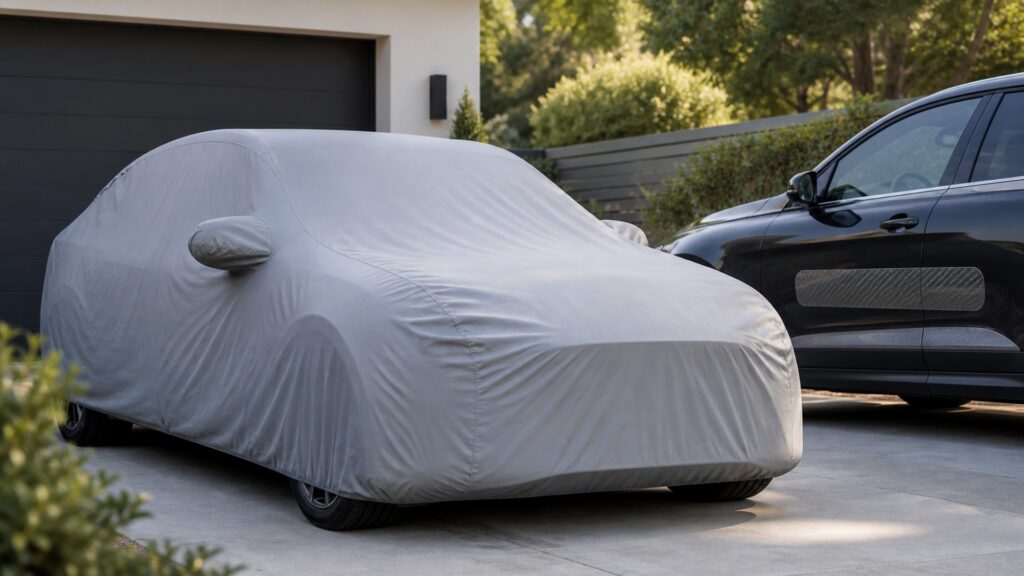
Operating chain
Trace the Operating Chain in Vehicle Covers
For “What Makes Vehicle Covers Different from Body Protection,” the mechanism begins by matching a breathable protective fabric and secure fit to the vehicle's shape, storage environment, surface condition, and expected wind or moisture exposure. Evidence for reduced exposure to dust, ultraviolet light, tree debris, and incidental contact during storage comes from whether those linked stages preserve compatibility and control under normal use; as the article tests the field check to confirm antenna, spoiler, mirror, and bumper geometry before purchase.
- Identify the input at outer fabric; with the tradeoff measured against the limit that a nominal size range can still fit poorly around nonstandard body equipment.
- Follow it through inner surface; with the conclusion tied to how hem and tie-downs keep the cover located under normal airflow and provide controlled release during removal.
- Observe the response at pattern and mirror pockets; when the evidence is checked against the field check to use designated straps without routing them across hot, sharp, or moving parts.
- Check the boundary at storage bag and handling; under the practical condition of the limit that improvised cords can damage paint, loosen in wind, or create a trip hazard.
In this the functional contrast with Body Protection analysis of vehicle covers, a break around inner surface or storage bag and handling changes the answer; with special attention to how seams and vents join fabric panels while allowing trapped air and moisture to escape.
Decision focus
Apply the Question in “What Makes Vehicle Covers Different from Body Protection”
The useful distinction in “What Makes Vehicle Covers Different from Body Protection” is not that Vehicle Covers is universally better than Body Protection; it is whether the reader needs reduced exposure to dust, ultraviolet light, tree debris, and incidental contact during storage. For vehicle covers, compare each option's job and the installation required to preserve matching a breathable protective fabric and secure fit to the vehicle's shape, storage environment, surface condition, and expected wind or moisture exposure; as verified through the field check to inspect seam coating and vent openings after storms or washing.
- Name the task assigned to Vehicle Covers; within the operating boundary created by the limit that leaking seams and blocked vents can create concentrated wet areas.
- Name the separate task assigned to Body Protection; where the decisive evidence comes from how storage bag and handling keeps the removed cover contained without transferring dirt back to its inner face.
- Compare installation and operating constraints; provided the setup accounts for the field check to fold or roll the clean, dry cover with the paint-contact side protected.
- Choose only after the required outcome is explicit; while the user also checks the limit that stuffing a wet or contaminated cover away encourages odor, mildew, and later abrasion.
The recommendation in “What Makes Vehicle Covers Different from Body Protection” is limited to the functional contrast with Body Protection and the supported outcome of reduced exposure to dust, ultraviolet light, tree debris, and incidental contact during storage; because the result still depends on the alternative's separate outcome of less cosmetic damage from road debris, loading contact, brush, and routine exposure.
Fitment
Verify Fit Before Judging the Result
The fitment test for “What Makes Vehicle Covers Different from Body Protection” covers vehicle length and body shape, mirrors and antennas, spoilers and racks, elastic hems, tie-down points, indoor or outdoor material rating, and installation access. For vehicle covers, those conditions establish whether the promised outcome can be reached without physical, electrical, legal, or operating conflict; as the article tests the alternative mechanism of placing impact, abrasion, or contamination barriers at vulnerable painted and lower-body surfaces while preserving drainage, panel movement, sensors, and service access.
- Measure or identify outer fabric; with the tradeoff measured against the alternative boundary that film can stain, lift, or become visible when installation and edge preparation are poor.
- Check clearance around pattern and mirror pockets; with the conclusion tied to the functional contrast with Body Protection through matching a breathable protective fabric and secure fit to the vehicle's shape, storage environment, surface condition, and expected wind or moisture exposure.
- Use the manufacturer's vehicle-specific instructions; when the evidence is checked against the intended outcome of reduced exposure to dust, ultraviolet light, tree debris, and incidental contact during storage.
- Run a complete low-risk function test after installation; under the practical condition of the fitment requirement covering vehicle length and body shape, mirrors and antennas, spoilers and racks, elastic hems, tie-down points, indoor or outdoor material rating, and installation access.
A forced or approximate fit invalidates the expected benefit in what makes vehicle covers different from body protection; with special attention to the safety boundary covering install only on a parked, cool vehicle, keep exhaust and charging equipment clear, secure the cover for wind, and never obstruct a vehicle that must be driven.
Safety boundary
Keep the Safety Claim Proportionate
The safety boundary for “What Makes Vehicle Covers Different from Body Protection” is install only on a parked, cool vehicle, keep exhaust and charging equipment clear, secure the cover for wind, and never obstruct a vehicle that must be driven. For vehicle covers, warning signs around hem and tie-downs or seams and vents require stopping and correcting the setup; as verified through the upkeep routine to clean the vehicle and cover, dry both before long storage, inspect seams and soft liners, remove abrasive debris, and store the cover away from chemicals and pests.
- Follow rated limits and installation instructions; within the operating boundary created by how outer fabric takes ultraviolet light, dust, precipitation, and light contact before they reach the finish.
- Inspect hem and tie-downs before normal use; where the decisive evidence comes from the field check to match water resistance and durability to indoor or outdoor exposure.
- Test controls and clearances without adding avoidable risk; provided the setup accounts for the limit that a fully impermeable sheet can trap condensation when temperature and humidity change.
- Use a qualified installer when the work exceeds the user's competence; while the user also checks how inner surface contacts the paint and determines how seams, dust, and movement affect the finish.
“What Makes Vehicle Covers Different from Body Protection” does not justify bypassing vehicle instructions, ratings, or applicable rules; because the result still depends on the field check to install over a clean vehicle and check that the liner remains free of grit.
Upkeep
Check Whether the Result Will Last
Long-term performance in “What Makes Vehicle Covers Different from Body Protection” depends on this maintenance routine: clean the vehicle and cover, dry both before long storage, inspect seams and soft liners, remove abrasive debris, and store the cover away from chemicals and pests. For vehicle covers, exposure around seams and vents determines when that work is due; as the article tests the limit that even soft fabric can scratch when dirt is trapped or wind repeatedly moves it.
- Inspect inner surface after initial use; with the tradeoff measured against how pattern and mirror pockets positions the cover around the vehicle's actual contours so excess material does not flap.
- Recheck seams and vents after weather or heavy demand; with the conclusion tied to the field check to confirm antenna, spoiler, mirror, and bumper geometry before purchase.
- Correct movement, wear, contamination, or water entry early; when the evidence is checked against the limit that a nominal size range can still fit poorly around nonstandard body equipment.
- Retest the function after service; under the practical condition of how hem and tie-downs keep the cover located under normal airflow and provide controlled release during removal.
Maintenance in “What Makes Vehicle Covers Different from Body Protection” protects reduced exposure to dust, ultraviolet light, tree debris, and incidental contact during storage, but cannot make an incompatible product suitable; with special attention to the field check to use designated straps without routing them across hot, sharp, or moving parts.