
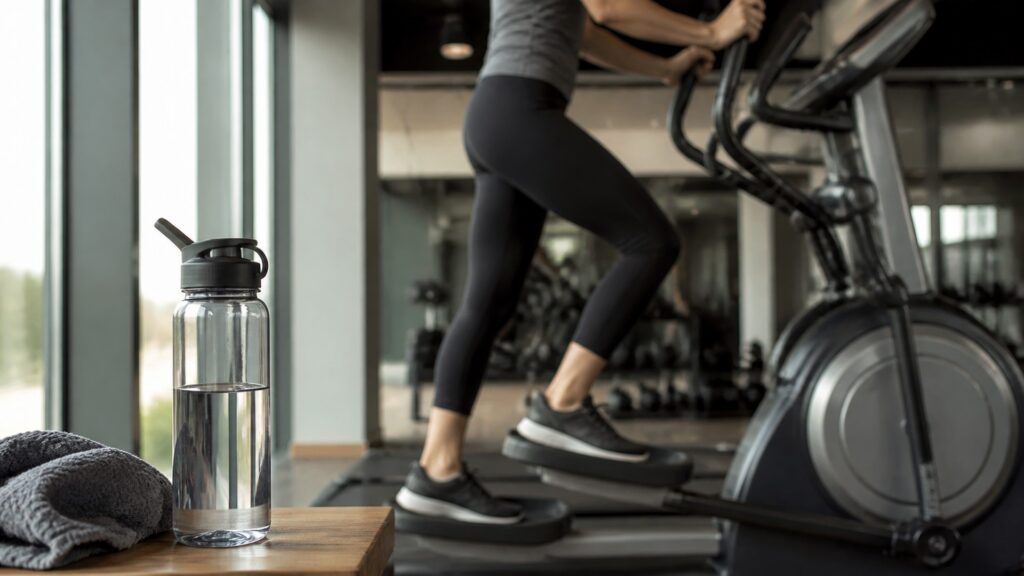
What Makes Water Bottles Different from Elliptical Machines

Water bottles and elliptical machines are different because one carries fluid and the other provides exercise. A water bottle supports hydration around a routine; an elliptical creates a repeatable low-impact cardio session.

That difference matters because the products should not be judged by the same standards. A bottle is about access, sealing, capacity, cleaning, and carry fit. An elliptical is about motion, resistance, stability, metrics, space, and long-term training use.

By: Review Streets Research Lab
Updated: September 29, 2026
Explainer · 8-12 min read
water bottles explainer hero image for Review Streets
What You'll Learn

How Water Bottles And Ellipticals Differ

A practical comparison of hydration support and cardio equipment.

  • Why water bottles are support tools rather than exercise machines
  • How ellipticals create the workout through motion and resistance
  • Which features matter for each product category
  • Where the two products can work together
  • Why cost, space, and maintenance expectations differ
  • How to compare each product against its real job

Tip: Separate hydration access from cardio training before comparing features or prices.

Definitions

Key Concepts Behind The Difference

These terms explain why a bottle and a cardio machine belong to different decisions.

Hydration Tool

A hydration tool makes fluids easier to carry, drink, refill, and clean around daily activity or workouts.

  • Example: a bottle kept beside an elliptical during a session
  • Check: judge the cap, capacity, seal, and cleaning access
  • Limit: it does not create exercise

Cardio Equipment

Cardio equipment creates a repeatable exercise session by guiding movement and resistance.

  • Example: an elliptical used for low-impact intervals
  • Check: judge stride feel, resistance range, frame stability, and console
  • Limit: it does not solve hydration by itself

Exercise Output

Exercise output is the work produced during training.

  • Example: time, resistance, cadence, or calories shown by an elliptical
  • Check: separate machine metrics from drinking convenience
  • Limit: metrics vary by machine and should not be treated as perfect

Fluid Access

Fluid access is how easily the user can drink when needed.

  • Example: a bottle that fits in the elliptical's holder
  • Check: confirm the bottle is reachable during the session
  • Limit: access does not decide fluid needs

Footprint

Footprint is the physical space a product needs for storage and use.

  • Example: a bottle in a bag versus an elliptical on the floor
  • Check: measure the real use space, not just product dimensions
  • Limit: small items can still be poorly designed

Maintenance Burden

Maintenance burden is the cleaning, inspection, and upkeep required after use.

  • Example: washing a bottle compared with checking a machine's moving parts
  • Check: include daily and long-term upkeep
  • Limit: different burdens cannot be compared only by time

Tip: The bottle supports the person using the machine; it does not replace the machine's training role.

Main Difference

A Bottle Carries Fluid While An Elliptical Creates Movement

A water bottle is a portable container. An elliptical is a cardio machine with pedals, handles, resistance, and a guided motion path. They can appear in the same workout, but they are doing different jobs.

  • The bottle supports hydration.
  • The elliptical supplies the cardio session.
  • The bottle may sit nearby while the machine is used.

The difference is role, not just size or price.

Feature Criteria

The Best Features Are Category-Specific

For a water bottle, the important details are cap design, leak resistance, capacity, grip, insulation, and cleaning access. For an elliptical, the important details are stride feel, resistance, stability, controls, noise, and footprint.

  • Bottle reviews should focus on handling and maintenance.
  • Elliptical reviews should focus on training feel and durability.
  • A shared fitness setting does not create shared criteria.

Each product should be evaluated by the problem it solves.

Commitment

The Ownership Commitment Is Completely Different

A water bottle is a low-cost, portable item that can be replaced easily. An elliptical is a larger equipment purchase that requires space, assembly, and consistent use to justify the investment.

  • Bottles can be tested with little risk.
  • Ellipticals need a realistic training plan.
  • Maintenance and storage expectations are not comparable.

The bigger product asks for a bigger commitment.

Together

They Can Work Together In One Session

A user might fill a water bottle, place it near the elliptical, complete a cardio workout, and refill afterward. The bottle supports access to fluids while the machine supports movement.

  • Bottle placement can improve drinking access.
  • Machine design can include a bottle holder.
  • The routine benefits when both roles are clear.

Complementary products should not be forced into a winner-take-all comparison.

Practical Check

Choose Based On Whether You Need Hydration Support Or Cardio Access

If the current problem is that water is not available or easy to carry, compare bottles. If the current problem is a lack of indoor cardio equipment, compare ellipticals.

  • Name the missing function.
  • Use the right criteria for that function.
  • Avoid treating a container like a machine or a machine like a container.

Clear categories lead to better buying decisions.

Quick Reality Check

Where Each Product Belongs

One product supports fluid access. The other supports cardio training.

Water Bottles Belong When

You need water nearby during workouts, commutes, work, travel, or outdoor activity.

You care about sealing, capacity, drinking comfort, and cleaning.

Elliptical Machines Belong When

You want a dedicated indoor cardio option with low-impact movement.

You have the budget, space, and routine to use a training machine consistently.

Common Myths

Misconceptions About Water Bottles And Ellipticals

The products can share a workout without solving the same problem.

A water bottle is workout equipment like an elliptical

It supports workouts, but it does not create resistance, movement, or conditioning by itself.

An elliptical replaces the need for a good bottle

The machine provides exercise. The bottle still helps keep fluids close and easy to drink.

The expensive product is always the more important one

An elliptical has a larger training role, but a bottle may solve a more immediate daily friction.

Fitness products should be compared by intensity

Intensity matters for machines. For bottles, usefulness comes from access, sealing, and cleaning.

Tip: A good comparison respects the category job instead of forcing both products into one scorecard.

FAQ

Frequently Asked Questions About Water Bottles Versus Ellipticals

Short answers about hydration tools and cardio machines.

Are water bottles and ellipticals alternatives?

No. A water bottle carries fluid. An elliptical provides a cardio workout.

Can a water bottle help elliptical workouts?

Yes. It can keep water or electrolytes nearby, especially if it fits the machine's holder.

What should I compare in a water bottle?

Compare leak resistance, cap design, capacity, material, grip, insulation, and cleaning access.

What should I compare in an elliptical?

Compare stride feel, resistance, frame stability, noise, console features, footprint, and long-term comfort.

What is the practical takeaway?

Use a water bottle for hydration access and an elliptical for cardio training. Judge each product by its own job.

Bottom Line

Water bottles and elliptical machines differ because one supports hydration while the other provides exercise.

They can belong to the same workout, but a bottle is judged by fluid access and daily convenience while an elliptical is judged by training quality and equipment commitment.

Next Steps

Go Deeper or Compare Your Options

Use these Review Streets paths to compare related fitness categories and practical buying decisions.

Water Bottles

Explore the category before comparing individual products.