
Hydration Tool
A hydration tool makes fluids easier to carry, drink, refill, and clean.
- Example: a water bottle kept near a rower during intervals
- Check: judge cap, capacity, seal, and cleaning access
- Limit: it does not provide exercise
Water bottles and rowing machines are different because one supports hydration and the other creates exercise. A water bottle carries fluid before, during, or after training; a rowing machine provides a full-body cardio and conditioning session.
The difference matters because the buying criteria are completely different. Bottles are judged by capacity, cap design, sealing, material, carry fit, and cleaning. Rowers are judged by resistance feel, frame stability, monitor quality, storage, and training experience.
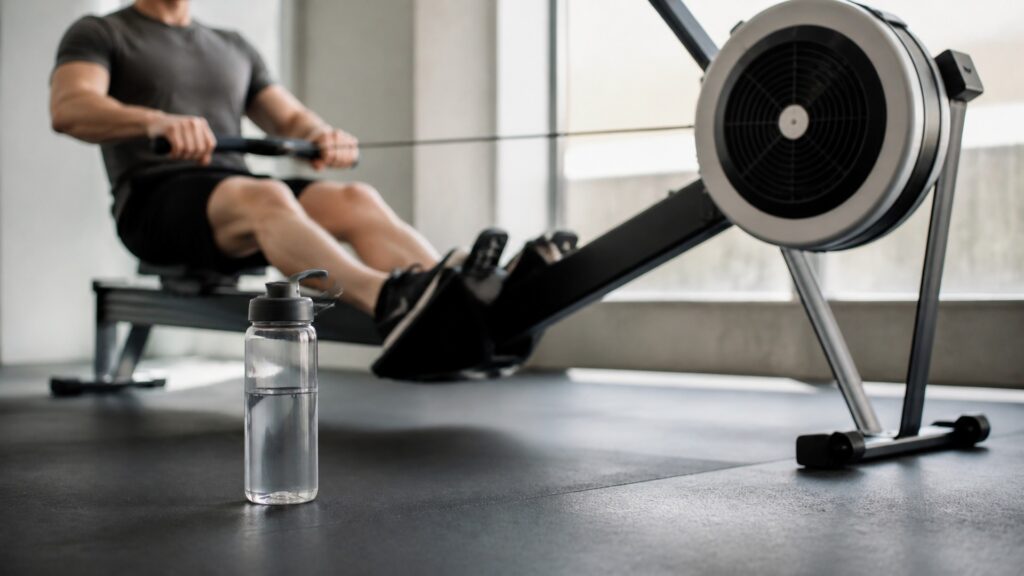
A practical comparison of hydration support and training equipment.
Tip: Ask whether the product carries fluid or creates the workout. That separates the categories quickly.
These terms explain why hydration tools and rowing machines belong to different decisions.
A hydration tool makes fluids easier to carry, drink, refill, and clean.
A training machine creates a repeatable exercise session through movement and resistance.
Workout output is the effort produced and measured during training.
Fluid access is how easily the user can reach and drink water when needed.
Space commitment is the room needed for storage and use.
Maintenance burden is the cleaning, inspection, and upkeep required after use.
Tip: A bottle supports the person doing the workout. A rower supplies the workout.
A water bottle is a portable container. A rowing machine uses a handle, seat, rail, footrests, and resistance system to create a repeated training motion.
The categories differ by role, not just by size.
For bottles, the important details are leak resistance, drinking access, capacity, grip, material, and cleaning. For rowers, the important details are resistance type, stroke feel, stability, noise, monitor quality, and storage.
A fair comparison uses the right scorecard for each product.
A water bottle is low-cost, portable, and easy to replace. A rowing machine is a larger equipment purchase that requires floor space, storage planning, and regular use to justify it.
A larger machine should solve a larger training need.
A user might keep a bottle near the rower, sip between intervals, then refill after training. The bottle supports fluid access while the rower provides the workout.
Complementary products should not be forced into a direct rivalry.
If water access is the problem, compare bottles. If indoor full-body cardio is the problem, compare rowing machines. If both matter, solve each with its own criteria.
Clear categories make the decision simpler.
One product supports hydration. The other provides training.
You need water nearby during workouts, travel, work, or daily routines.
You care about sealing, capacity, drinking comfort, and cleaning.
You want a repeatable indoor cardio and conditioning workout.
You have the space, budget, and motivation for a dedicated training machine.
They can share a workout without doing the same job.
It supports training but does not create resistance, movement, or conditioning.
The rower creates exercise. The user still needs fluid access and recovery planning.
A rower has a larger training role, but a bottle may solve a daily friction more immediately.
Intensity belongs to the machine. Bottle usefulness comes from access, sealing, and cleaning.
Tip: Compare each product by the job it performs in the routine.
Short answers about hydration tools and rowing equipment.
No. A bottle carries fluid. A rowing machine provides exercise.
Yes. It can keep water or electrolytes nearby between rowing efforts.
Compare leak resistance, cap design, capacity, material, grip, insulation, and cleaning access.
Compare resistance feel, frame stability, storage, monitor features, noise, and rowing comfort.
Use a water bottle for hydration access and a rowing machine for cardio training.
Water bottles and rowing machines differ because one supports hydration while the other provides exercise.
They can belong to the same workout, but bottles are judged by fluid access and rowers are judged by training quality.
Use these Review Streets paths to compare related fitness categories and practical buying decisions.
Compare bottle designs for workouts, daily hydration, and travel.
Explore related gear for fluids, powders, and workout fueling routines.
Review the equipment category separately from hydration accessories.
Choose a retailer
Prices checked regularly. We may earn a commission at no cost to you.