
Water Rower
A water rower uses a seated sliding stroke and paddles moving through a water tank.
- Example: pulling a handle while the tank churns with each stroke
- Check: try the full stroke at normal effort
- Limit: tank care is part of ownership
Water resistance rowers differ from compact ellipticals because they use a seated rowing stroke and a water tank to create effort. Compact ellipticals use standing pedal motion in a smaller cardio frame. Both can support low-impact workouts, but they ask for different movement, space, balance, and maintenance.
The rower is usually better when the user wants a rowing feel, handle pull, and responsive water drag. The compact elliptical is usually better when the user wants upright stepping with less technique and a smaller standing station.
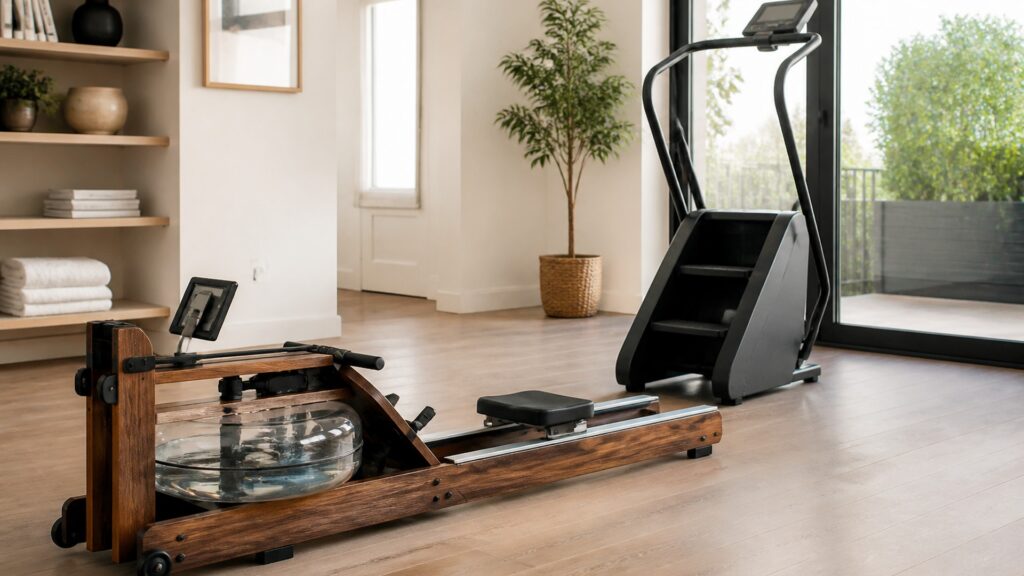
A practical comparison of water-tank rowing, compact standing stride, sound, space, and ownership.
Tip: Compare the movement and ownership needs together. A good workout feel still has to fit the room.
These terms explain the practical differences between the two cardio options.
A water rower uses a seated sliding stroke and paddles moving through a water tank.
A compact elliptical uses standing pedal motion in a smaller frame.
Water drag is resistance created when paddles move through water.
Standing stride is the upright pedal motion used on an elliptical.
Ownership care includes the setup and maintenance needed after purchase.
Room fit is how well the machine works in the available space during use and storage.
Tip: The better choice is the one whose motion and ownership demands fit the user's routine.
A water rower asks the user to sit, slide, press with the legs, and pull a handle. The resistance comes from paddles moving through water, so the effort responds to the stroke.
The rower is the better fit when rowing motion is the goal.
A compact elliptical keeps the user upright on pedals. It removes the rowing stroke and usually asks less technique, but stability and stride length still matter.
The elliptical is the better fit when standing cardio is the goal.
Water resistance changes naturally with stroke effort. Compact ellipticals usually rely on a resistance setting and cadence. The difference affects pacing, sound, and how the user controls intensity.
Resistance feel should support the workout, not distract from it.
A water rower can be long and heavier because of the tank, though some models store upright. A compact elliptical may fit a smaller area but often stays assembled and needs stable floor space.
The best machine is the one that fits both use and storage.
Choose the water rower for a rowing stroke, tank feel, and seated full-body rhythm. Choose the compact elliptical for upright stepping, simpler motion, and a smaller standing cardio setup.
The machines overlap as cardio tools, but not as movement experiences.
Both machines can support low-impact cardio, but they fit different preferences.
The user wants seated rowing with responsive water drag.
The water sound, stroke rhythm, and tank care fit the home.
The user wants standing low-impact stepping with less rowing technique.
A smaller fixed cardio station fits the space better.
The choice is about movement and ownership, not just cardio calories.
The rower is seated and stroke-based, while the elliptical is standing and stride-based.
It is better only if the user likes the tank feel and accepts the care requirements.
They still need stable floor space and comfortable stride clearance.
Ease matters, but the machine also has to match the workout the user wants.
Tip: The best water rower is smooth, stable, and easy to maintain in the actual home.
Short answers about tank resistance, sound, setup, and maintenance.
A water rower is the better choice because it provides the rowing stroke and tank resistance.
A compact elliptical is usually better when the user wants upright stepping.
The water rower usually asks more care because the tank may need treatment and inspection.
It depends on the room. The rower may store upright but needs length during use. The compact elliptical may use less length but must feel stable.
Choose the water rower for seated rowing feel and the compact elliptical for standing stride cardio.
Water resistance rowers differ from compact ellipticals by using seated rowing and water-tank drag instead of standing pedal motion.
The right choice depends on preferred motion, resistance feel, room fit, balance, sound, and maintenance tolerance.
Use these Review Streets paths to compare related categories and practical next decisions.
Explore the broader rowing-machine category.
Compare water resistance with magnetic resistance.
Compare more home cardio options.
Choose a retailer
Prices checked regularly. We may earn a commission at no cost to you.