
Weight Bench
A weight bench is a support surface used for strength exercises.
- Example: lying on a bench for dumbbell press
- Check: review stability, height, pad shape, and angle settings
- Limit: it does not provide resistance on its own
Weight benches are different from cable machines because benches support body position, while cable machines provide resistance. A bench gives the user a stable surface for pressing, rowing, sitting, bracing, and positioning. A cable machine uses pulleys and a weight source to create load from different angles.
The practical difference is support surface versus resistance system. Weight benches usually work with dumbbells, barbells, racks, Smith machines, or bodyweight movements. Cable machines create their own pulling resistance through handles, bars, ropes, or straps.
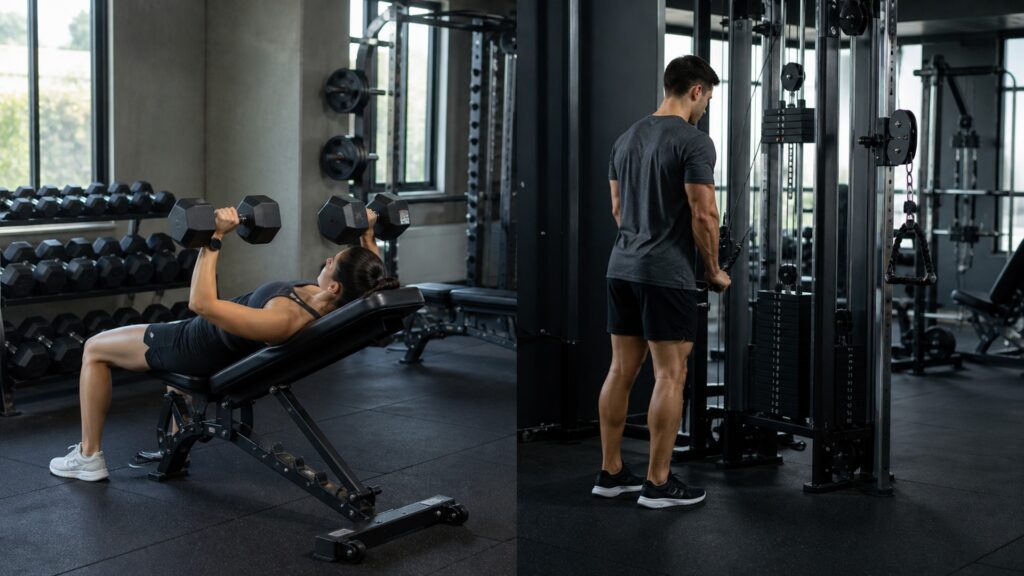
A clear comparison of body support versus adjustable cable resistance.
Tip: Start with the exercises the weight benches must support every week, then judge features by whether they make those movements easier to repeat.
These concepts clarify how weight benches fit real home strength training decisions.
A weight bench is a support surface used for strength exercises.
A cable machine uses pulleys and cables to provide resistance from different directions.
Support surface is the bench pad that positions the body during exercise.
Line of pull is the direction cable resistance travels.
Equipment pairing is how one tool works with another.
Training role is the job the equipment performs in the workout.
Tip: The best choice is the one that matches the user's repeated workouts, available space, and setup habits.
A weight bench positions the lifter. It helps make pressing, rowing, seated, and supported movements more stable.
The bench's job is support, not resistance.
Cable machines create resistance through a pulley system. The user pulls handles, ropes, cuffs, or bars against that load.
The cable machine's job is adjustable resistance.
A bench becomes more useful when paired with dumbbells, barbells, racks, Smith machines, or even cables. It supports positions those tools need.
A bench is often part of a larger setup.
Cable machines can train angles and movements that a bench alone cannot provide. They are useful for pulling, isolation, core, and accessory work.
Cables solve a different problem than benches.
If the user needs a stable surface for free-weight or rack exercises, choose the bench. If the user needs adjustable resistance, choose the cable machine.
The better purchase depends on what the home gym lacks.
The choice depends on body support versus cable resistance.
The user needs stable body positioning for presses, rows, core, or rack work.
Dumbbells, barbells, or machines already provide resistance.
The user needs adjustable lines of pull and built-in resistance.
Rows, pulldowns, rotations, and isolation work drive the routine.
The two tools solve different parts of strength training.
It usually needs dumbbells, barbells, racks, cables, or bodyweight exercises.
They provide resistance, but many exercises still benefit from a stable bench.
One supports the body, while the other supplies resistance.
Usefulness depends on the missing function in the setup.
Tip: Broad equipment claims deserve a practical setup check before they influence a purchase.
Short answers for comparing home gym equipment.
Buy the bench first if free-weight or rack exercises need support. Buy the cable machine first if adjustable resistance is the bigger gap.
Yes. Benches can support seated, incline, or lying cable exercises when the setup fits.
Not fully. It provides different resistance and movement options.
No. They provide support and positioning.
Choose benches for support and cable machines for adjustable resistance.
Weight benches differ from cable machines because benches support body position while cable machines create resistance.
A strong home gym may use both, but each tool solves a different training problem.
Use these Review Streets paths to compare related categories and practical next decisions.
Explore bench styles, adjustments, and home-gym fit.
Compare rack-based strength setups that often pair with benches.
Review cable-focused equipment for angle-based accessory work.
Choose a retailer
Prices checked regularly. We may earn a commission at no cost to you.