
Weight Bench
A weight bench is a support surface for strength exercises.
- Example: lying on a bench for dumbbell press
- Check: review stability, height, and pad support
- Limit: it does not hold a barbell by itself
Weight benches are different from power racks and squat racks because benches support the body, while racks support the barbell. A bench provides a stable surface for pressing, rowing, seated work, and positioning. A rack provides uprights, hooks, and safeties for loaded barbell lifts.
The two tools often work together. A bench can slide into a rack for bench press, incline press, or seated work, but it does not replace the rack's bar support or safeties.
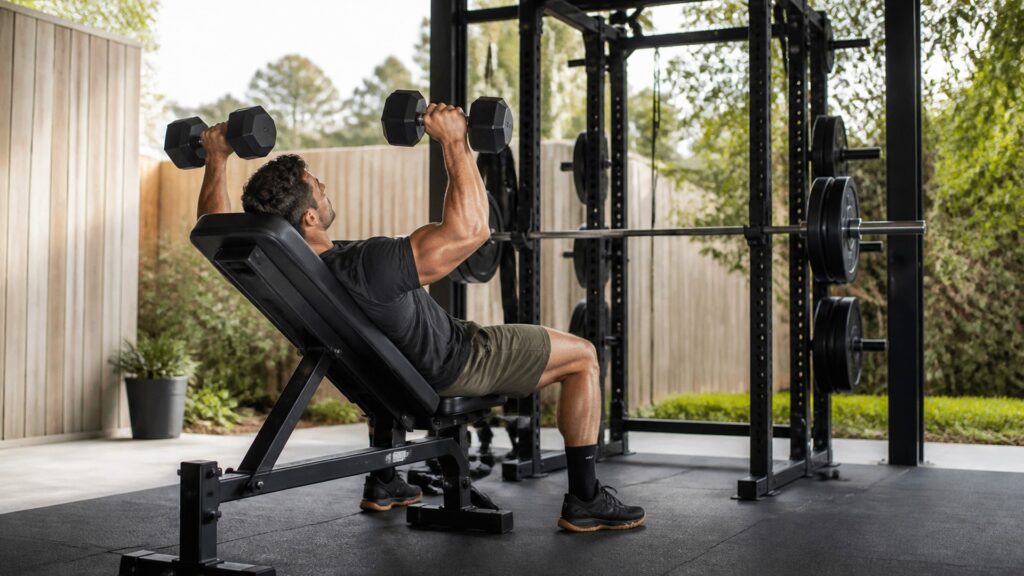
A clear comparison of body support versus barbell support.
Tip: Judge a weight bench by the exercises it makes stable, repeatable, and practical in the actual training space.
These concepts clarify how bench design affects home strength training decisions.
A weight bench is a support surface for strength exercises.
A power rack supports barbell lifts with uprights, hooks, and safeties.
A squat rack supports a barbell from uprights, often with a simpler frame than a full power rack.
Body support is the bench's role in positioning the lifter.
Bar support is the rack's role in holding and catching a loaded bar.
Setup pairing is how the bench and rack work together.
Tip: A bench is useful when its height, pad, angles, and stability match the user's repeated exercises.
A bench positions the body for pressing, rows, seated work, and bracing. It does not hold the bar or catch missed lifts.
The bench's job is stable body positioning.
Power racks and squat racks hold the barbell at a starting height and may provide safeties for missed reps.
The rack's job is barbell support.
A barbell bench press is a good example of the difference. The rack supports the bar, while the bench supports the lifter.
The two tools solve different parts of the same lift.
A bench cannot hold a loaded bar in the air. A rack cannot provide a pad for pressing or supported rows unless a bench is added.
Clear roles make the setup safer and more useful.
If the user needs a stable surface, choose the bench. If the user needs barbell hooks and safeties, choose the rack.
The right first purchase depends on the gap in the home gym.
The choice depends on body support versus barbell support.
The user needs a stable pad for pressing, rows, seated work, or dumbbell training.
Resistance tools are already available or planned.
The user needs hooks, safeties, and a station for barbell lifts.
Squats, bench press, overhead press, or rack pulls are central.
They often work together, but they are not the same tool.
A barbell bench press also needs bar support unless using dumbbells.
A rack holds the bar, but the lifter still needs body support for bench exercises.
Length, height, wheels, and rack depth can affect fit.
The more important tool is the one that solves the missing function.
Tip: A bench feature matters only when it improves setup, stability, or repeatable exercise quality.
Short answers for choosing and using weight benches.
For barbell bench press and many rack-based routines, yes, both are commonly used together.
Yes, with dumbbells, bodyweight exercises, cables, or other tools.
Yes, for squats, overhead presses, pull-ups, and other standing barbell work.
Check bench height, length, rack depth, safety height, and bar path.
Benches support the body; racks support the bar.
Weight benches differ from power racks and squat racks because benches support the lifter while racks support the barbell.
Many home gyms need both, but each tool solves a different part of the setup.
Use these Review Streets paths to compare related categories and practical next decisions.
Explore bench styles, adjustment features, and home-gym fit.
Compare rack setups that often pair with weight benches.
Review cable-focused equipment for accessory and angle-based work.
Choose a retailer
Prices checked regularly. We may earn a commission at no cost to you.