When Foot Care Make Sense in a Beauty Routine

A separate foot-care step makes sense when there’s a specific cosmetic change you want and your routine leaves it unaddressed. A suitable moisturizer you already own may cover mildly dry heels. If the result matters enough to make room for another step, decide what you’d count as enough before adding it.

By: Review Streets Research Lab
Updated: November 25, 2026
Explainer · 9–12 min read
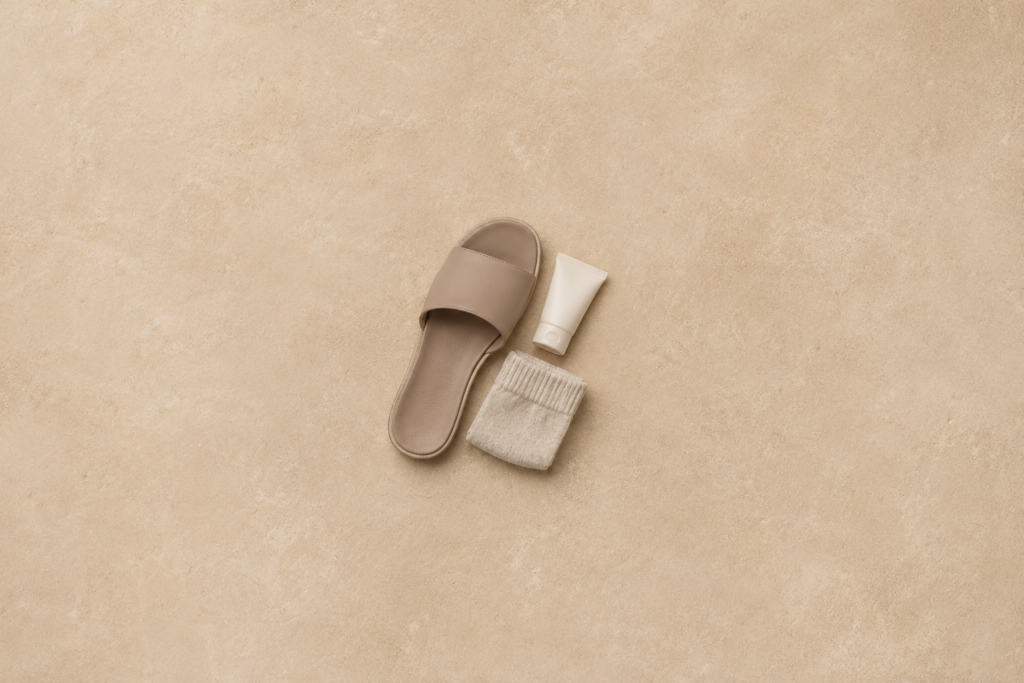
A taupe slide sandal, a plain moisturizer tube and a folded knit sock on a warm beige surface.
Start here

What you’ll learn

Start with the result you’d notice, then look at what already serves that cosmetic purpose.

  • How to name the change you want in one part of your foot.
  • How to describe the texture you’re noticing.
  • How to judge what your current moisturizer already does for you.
  • What to look for if you notice the same spot after wearing one pair of shoes.
  • How to weigh a cosmetic goal against extra time, cost or effort.
  • How to tell when you’d be comfortable leaving your routine as it is.
  • When a foot change or risk factor calls for professional advice.

Tip: Name one place and one change you’d notice. For example, you might want your heels to look smoother in sandals.

Key terms

Words for what you notice

These terms help you describe what brought your attention to your feet and what you want to do about it.

Cosmetic goal

A result you want from ordinary grooming, such as a change in how skin looks.

  • Area: The part you care about may be as specific as the back of a heel.
  • Appearance: An even-looking surface is one possible goal.
  • Preference: The change is worth pursuing only if it matters to you.

Dry heel skin

Skin on the heel that has lost too much water.

  • Appearance: Dry skin can look chapped.
  • Air: Low humidity can contribute to dryness.
  • Observation: A dry feel describes what you notice. The cause may still be unclear.

Callus

A broad patch of thickened skin.

  • Texture: The patch can feel hard.
  • Shape: A callus typically spreads over more skin than a corn.
  • Function: Thickening can protect the area from irritation.

Pressure point

A spot that bears a concentrated load.

  • Shoe contact: A toe can press against a shoe.
  • Rubbing: Movement at that contact point can create rubbing.
  • Weight: Pressure can build under the ball of the foot.

Leave-on moisturizer

A skin moisturizer meant to stay on after you apply it.

  • Action: It helps keep water from leaving the skin.
  • Location: Suitability can depend on where you want to use it.
  • Feel: How a moisturizer feels on the skin matters to whether it suits you.

Reduced foot sensation

Less ability to feel what’s happening in your feet.

  • Pain: An injury can escape your attention if you feel less pain.
  • Temperature: Heat and cold can be harder to sense.
  • One cause: Diabetes-related nerve damage is one reason this can happen.

Tip: Describe what you see or feel in plain language. Where a patch sits and how it feels are useful details even when you’re unsure what to call it.

The goal

Name the change you want

A useful beauty step starts with something you’d like to change. Give that change a location and a description before deciding whether it deserves a place in your routine.

  • Pinpoint the area. The back of one heel is a clearer starting point than the whole foot.
  • Describe what would count as enough. For example, you might want one rough edge to catch less on a sock.
  • Notice the texture. A heel that feels dry prompts a question about moisture. A distinct patch of thick skin prompts a question about contact and pressure.
  • Give the goal a reason. If it only mattered for a particular occasion, decide whether it still matters today.
  • Leave yourself an option to pass. If there’s no cosmetic change you want, there’s no extra beauty step to justify.

Once you can say what would count as enough, you have a way to judge what you already do.

Your routine

See what you already cover

Look at what actually reaches the heel. Start with the steps you already take and give each one a purpose.

  • Check what you rinse away. Then see whether anything stays on the heel to hold in moisture.
  • You can consider your usual moisturizer for mild heel dryness if the skin is intact, the label allows it and you tolerate it.
  • There’s a reason to consider something separate if the heel still feels drier than you’d like or your usual product can’t be used there.

If the heel already feels the way you want, another product would give you a second step for the same job.

The pattern

Look at when it comes back

When a foot concern comes and goes, the timing and location can help you decide what to look at first.

  • Heated indoor air in winter can be dry enough to draw moisture from skin. If your heels feel dry around that time, consider the season when deciding whether the extra step needs a permanent place.
  • Notice whether the same shoe rubs the same spot. Repeated rubbing or concentrated pressure can lead skin in that area to thicken.
  • If pressure is behind a callus, the thickening often fades gradually once that pressure stops. That makes the contact point worth your attention when deciding whether to spend time on the surface.

Use the pattern to decide where to look first. If you still can’t account for the spot, leave the cause open.

The tradeoff

Decide whether to keep the extra step

An extra step has to fit the routine you’ll actually keep. A small gain in how your heel looks or feels may be worth the effort to you, especially if it fits into something you already do.

  • Think about the nuisance you’ll notice. If you dislike how a product feels on your feet, that counts against keeping it for a small cosmetic change.
  • For the same goal at the same spot, weigh a swap, an addition or leaving things as they are. A swap limits the number of steps you’re asking yourself to keep.
  • Give yourself a reason to revisit the choice. If you added the step for a particular season or occasion, reassess it when that reason passes.

Keep the step for as long as the change you value is worth the time, cost and feel of using it.

Care boundaries

Know when to get professional advice

If heel cracks are severe or fail to improve, talk with a dermatologist. For a suspected corn or callus, both the symptoms and your health matter when deciding whether to seek advice.

  • Seek professional advice if a suspected corn or callus bleeds, drains, causes severe pain or causes pain that keeps you from normal activities.
  • If you have diabetes, leave corn or callus removal to a professional and skip over-the-counter removers. If you have poor circulation or a weakened immune system, get advice before trying to treat a suspected corn or callus yourself.
  • With diabetes, dry, cracked skin on your foot or a new blister or sore is a reason to contact your regular clinician or foot specialist promptly.

These are reasons to pause the cosmetic decision and ask a clinician what care fits your situation.

In practice

Two everyday examples

One example asks whether a product you own fills a gap. The other asks whether an occasion still gives you a reason to keep a step.

The cream already on the shelf

Imagine your heels feel mildly dry and the skin is intact. There’s a body cream you tolerate on the shelf and its directions allow you to use it there. If it meets the moisture goal, one routine step can cover both areas.

If your usual cream can’t be used on that area, the decision opens up again. If the dry feel barely registers, you might leave the space on the shelf empty.

The step you set aside for sandals

Imagine you gave an extra grooming step a specific job before a weekend away. You wanted the backs of your heels to look more even in sandals. You liked the look enough to make time for the step that weekend.

Back home, you’re wearing closed shoes again and the look of your heels matters less to you. Picture an ordinary evening. If you’d rather use the time for something else, leaving the step out follows from what you want now.

Assumptions

What foot-care shortcuts can miss

Appearance, time and effort can all lead you to expect more from a beauty step than the step can deliver.

Does every visible callus need to go?

A mild, unbothersome callus may need no treatment if you have no complicating risk factors.

Does time in the bath already take care of dry heels?

A long bath can leave skin drier and aggravate dry, cracked heels. If your goal is less heel dryness, think about that separately from the time you set aside for a bath.

Is taking off more hard skin better?

Removing too much thickened skin can cause bleeding and infection. A smoother feel is a small goal to weigh against those consequences.

Does a lack of pain tell me the skin is fine?

Diabetes-related nerve damage can dull the feeling in your feet. A cut or blister can escape your attention even when the skin is injured.

Does the look of the packaging tell me what a foot product is for?

Look for the stated use. In the U.S., a product meant to treat or prevent disease has a drug purpose even if it also has a cosmetic purpose.

Tip: Before you keep a step, name the change you would want to see again. That gives you a reason to check whether the result is worth the effort.

Frequently asked questions

Foot-care questions

Product wording, an itch or an existing prescription can change what you need to know before adding a step.

What if my moisturizer makes my heel itchy or sore?

Stop using an optional moisturizer if it makes the skin itchy or sore. Ask a dermatologist about ongoing irritation.

Is unscented the same as fragrance-free?

An unscented product can contain ingredients that hide other smells. For dry, sensitive skin, the American Academy of Dermatology recommends looking for fragrance-free products.

Can I add moisturizer if I use a prescribed corticosteroid on my feet?

If you use a prescribed corticosteroid on your feet, ask your prescriber or pharmacist how a moisturizer would fit on the same area. Have the names of both products handy.

What if I’m unsure whether a hard spot is a callus?

Corns and calluses can be hard to tell apart from warts. A clinician can assess an unclear spot before you try to change how it feels.

What if the skin between my toes is itchy and peeling?

Itching and peeling between the toes can occur with athlete’s foot. A clinician can help if the symptoms persist or you’re unsure what’s causing them.

Must I swap lotion for cream?

The AAD generally favors creams and ointments for dry skin. If your lotion suits intact heels and keeps them comfortable, it can stay.

Can plain petroleum jelly from my heels get on my sheets?

Yes. Plain petroleum jelly can leave grease on bedding. That’s worth factoring in if you’re choosing a step you’ll be comfortable keeping.

Can toenail color be my only foot-specific beauty step?

Yes. If color is all you’re after, polish serves that cosmetic purpose. You can leave your skin-care routine as it is.

Tip: If you’re asking about a skin reaction or a prescription, bring the packaging or a photo of the label so you can identify exactly what you used.

Bottom line

There’s room for foot care in a beauty routine when the step has a job you still want done. Let the result you care about set the bar for keeping it, whether that means using something you own or making room for a separate step.

When a suspected callus hurts enough to interrupt normal activities, the useful next step is to ask a clinician what’s going on.

Related reading

More on foot care

Browse the Foot Care archives by format.