
Target Zone
A small exposed area where a stick can be applied efficiently.
- Examples: Nose, ears, hands, cheeks, tattoos
- Benefit: Quick coverage
- Limit: Needs multiple passes
A sunscreen stick is most useful when the alternative is skipping reapplication because lotion feels messy, inconvenient, or hard to pack. Its compact solid format makes it practical for travel pouches, sports bags, school bags, hikes, beach walks, and quick face or hand touch-ups.
That convenience should be used strategically. Sticks are excellent for targeted areas and maintenance, but lotions usually remain better for first-layer coverage on arms, legs, shoulders, and other large surfaces where measured, generous application is easier.
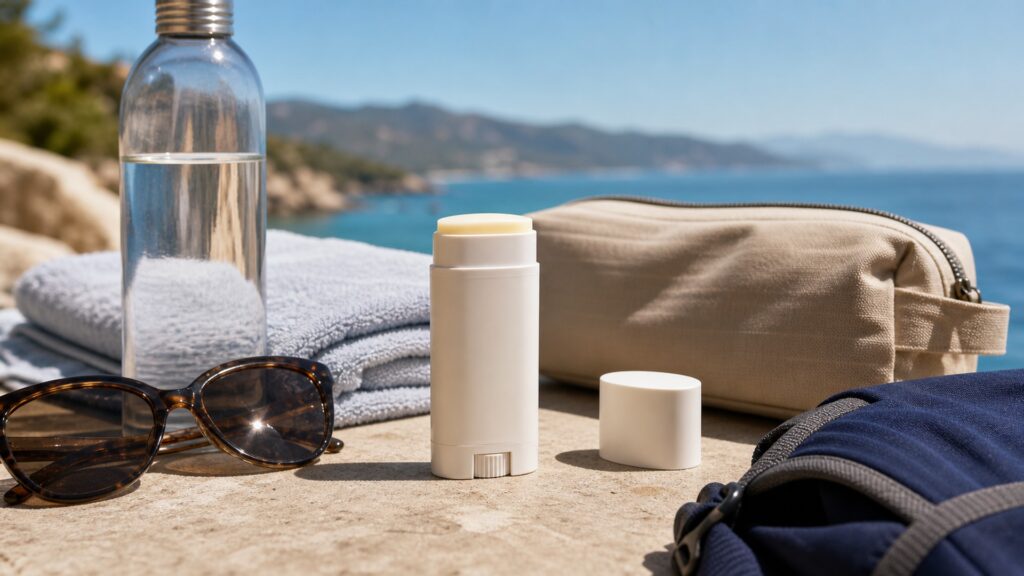
A use-case guide to travel, sports, targeted zones, reapplication, and stick-versus-lotion decisions.
Tip: Read the concept as part of a system, then connect it back to the use case.
These definitions connect the main idea to the variables, limits, and practical signals readers need to compare options.
A small exposed area where a stick can be applied efficiently.
Renewing sunscreen away from the bathroom or beach bag setup.
Packaging that is compact, solid, and low-spill.
Application during activities involving sweat, movement, or gear.
The initial generous sunscreen application before exposure.
A later application used to restore worn or removed sunscreen.
Tip: Keep the definitions connected; the strongest answer usually comes from the whole system, not one term.
Sunscreen only helps when it is actually applied. Sticks reduce mess and packing friction, making top-ups more likely during travel, sports, and everyday errands.
The benefit is not that sticks are stronger; it is that they are easier to keep using.
Travel creates practical sunscreen problems: limited bag space, spills, airport rules, sandy hands, and quick transitions. A solid stick handles many of those problems well.
Travel is one of the strongest reasons to own a stick.
Sports create sweat, wiping, gear friction, and repeated exposure. A water-resistant stick can be useful for top-ups, especially on the face, but technique still matters.
For sports, sticks are maintenance tools, not excuses to skip a strong first layer.
Arms, legs, shoulders, and backs require generous, continuous coverage. A stick can technically cover them, but it is slow and easy to under-apply.
The right format depends on area size and application precision.
A balanced routine uses lotion for the main layer and a stick where convenience improves follow-through. That pairing keeps protection practical.
Sticks work best as reliable companions to a broader sunscreen plan.
Sunscreen sticks can improve compliance in real life, but they do not remove the need for adequate amount and broad coverage.
Travel, sports bags, kids' bags, and quick face or hand top-ups are strong fits.
Small exposed zones are easier to maintain with a stick than with a messy lotion bottle.
Full-body first layers are usually faster and more reliable with lotion.
Very hot storage can soften sticks and change application feel.
Common shortcuts and misunderstandings can make the topic seem simpler than it is.
It can be useful for everyday errands, school bags, sports, commuting, and outdoor work.
The format is convenient, but the skin still needs enough deposited sunscreen.
Sweat, water, and towel drying still call for reapplication according to product directions.
It can, but most people get better coverage by pairing sticks with lotions or creams for large areas.
Tip: Treat strong claims as starting points for comparison, not final answers.
Concise answers to common questions readers may have after the main explanation.
Use it for targeted zones, travel, sports bags, face touch-ups, hands, ears, and reapplication when lotion would be inconvenient.
Yes. Their solid, compact format reduces spill risk and makes carry easier.
They can be, especially water-resistant sticks for targeted top-ups, but sweat and rubbing still require reapplication.
For large areas, lotion is usually better as the first layer. Use sticks for targeted areas and later maintenance.
They can soften in heat. Store them away from excessive heat and replace products that become gritty, contaminated, or hard to apply.
Sunscreen sticks are most valuable when portability makes reapplication more likely.
Use them for travel, sports, and targeted zones, while relying on lotions or creams when large-area first-layer coverage needs to be generous and fast.
Use these Review Streets paths to connect the explainer to related categories, comparisons, and next decisions.
Explore Review Streets coverage in Skincare for related sunscreen context and product paths.
Explore Review Streets coverage in Sun Protection for related sunscreen context and product paths.
Explore Review Streets coverage in Sunscreen Sticks for related sunscreen context and product paths.
Choose a retailer
Prices checked regularly. We may earn a commission at no cost to you.